



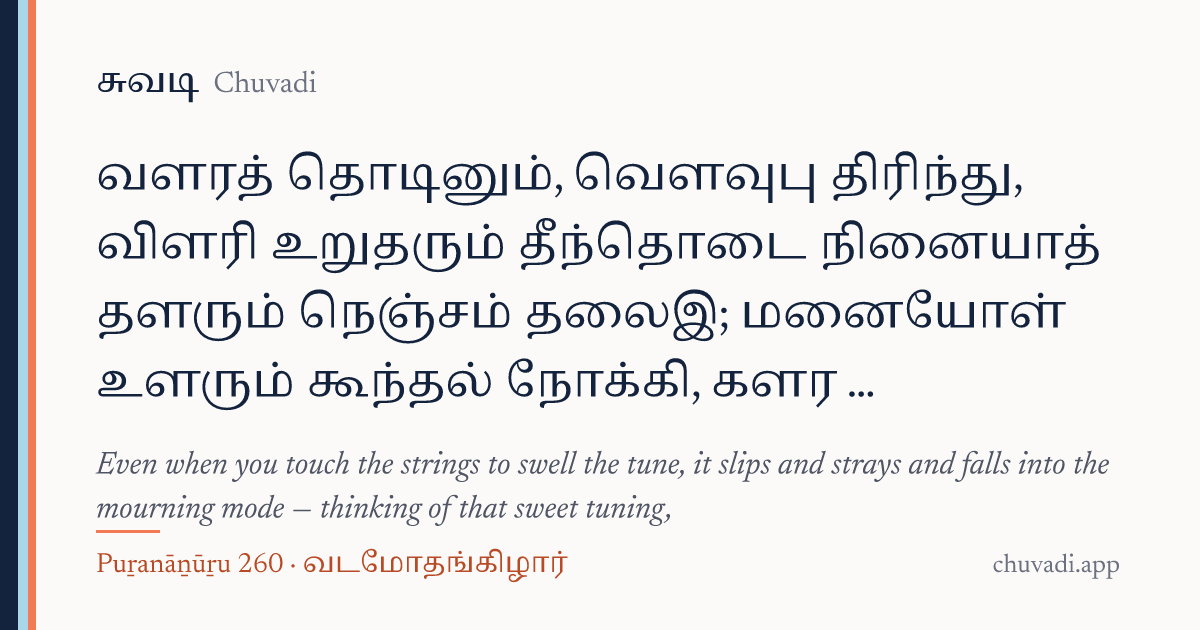
புறநானூறு 260
பாடல் · The poem
Tap a word to see where else it occurs.
பொருள் · Meaning in TamilAI
பாணனே! இசையை வளர்க்க நரம்பைத் தொட்டாலும், அது நழுவித் திரிந்து, இரங்கல் பண்ணாகிய விளரியில் போய் விழுகிறது; அந்த இனிய நரம்புக்கட்டை நினைத்து உன் நெஞ்சம் தளர்ந்து அஞ்சுகிறது; உன் மனைவியின் அவிழ்ந்த கூந்தலைப் பார்க்கிறாய்; உவர்நிலத்தில் கள்ளி நிழலில் உள்ள தெய்வத்தை வாழ்த்தி, பசியால் ஒட்டிய இடுப்போடு, உருகிக் கைகூப்பித் தொழுது, "அவனைக் காணமாட்டேனோ?" என்று கேட்டுக்கொண்டு வருகிறாய். உன் நல்வாழ்வின் நிலையைக் கேள்: அவன் புரவைப் பெற்று உண்ணுவதும், இரவில் எழுந்து துயர்கொள்வதும் ஆகிய இரண்டுமே கைக்குள் இருப்பதுபோல மிக அருகில் உள்ளன. முன்னே உள்ள ஊரில் எழுந்த ஆரவாரத்தைக் கேட்டு வந்து, தன் ஊரின் நீண்ட ஆநிரையைக் கவர்ந்த கொடிய மறவர்கள் எய்த அம்பு வெள்ளத்தைத் துடிப்பறையைத் தெப்பமாகக் கொண்டு கடந்து, வெற்றி கண்டு, அவர்களைக் கொன்று, கவர்ந்ததை விடுவித்தான். உலகம் வருந்தும்படி வளைத்துக்கொண்ட பாம்பின் கூரிய பல்லிலிருந்து தப்பிய நிலவைப் போல, மறவர்களின் கையிலிருந்து தப்பிய கன்றுகளோடு கூடிய பல பசுக்களின் நிரையோடு புகழ் பெற்றவனாக வந்தான். பின்பு, தோலை உரித்துவிட்ட பாம்பைப் போல, அவன் மட்டும் செல்வதற்கு அரிய மேலுலகத்துக்குச் சென்றுவிட்டான். அவன் உடலோ, காட்டுச் சிற்றாற்றின் கடினமான கரையில், காற்று மோத, கம்பத்தோடு அசையும் இலக்கைப் போல, அம்புகளோடு அசைந்துகொண்டு அங்கேயே கிடந்தது. உயர்ந்த புகழும் நிறைவு கொள்ளும்படி விளங்கிய அவன் பெயர், இளமயிலின் அழகிய தோகை சூட்டப்பட்டு, பிறர் இடம் கொள்ள முடியாத சிறு வழியின் அருகே, துணியால் அமைத்த பந்தலின் கீழ் உள்ள நடுகல்லின் மேல் இருக்கிறது.
இது கரந்தைத் திணை; பகைவர் கவர்ந்த ஆநிரையை மீட்பதைச் சொல்வது. போரில் வீழ்தல், கையறுநிலை, பாணனுக்குச் சொல்லும் பாட்டு, புகழ்ப்பாட்டு எனப் பல துறைகள் இதற்குக் குறிக்கப்பட்டுள்ளன. வடமோதங்கிழார் பாடியது; வீரனின் பெயர் சொல்லப்படவில்லை. இருபத்தைந்தாம் அடியின் அமைப்பு உறுதியாகத் தெரியவில்லை.
ஆங்கிலம் · English translationAI
Translation
- Even when you touch the strings to swell the tune, it slips and strays
- and falls into the mourning mode — thinking of that sweet tuning,
- your faltering heart filled with dread; seeing your wife's
- hair come loose; in the salt waste,
- praying to the god in the shade of the spurge,
- with a waist pinched by hunger, melting, joining your hands in worship,
- 'Shall I not see him?' — so asking you come,
- O bard! Listen to how your good fortune now stands:
- whether you hoped to eat by joining his patronage, or, rising at night,
- to suffer grief — both
- are near at hand, close as if held in your palm;
- he appeared at the outcry from the town in front; the fierce men
- who seized his own town's long herd,
- their flood of loosed arrows he crossed, with the drum for his raft;
- he brought victory, killed them, and set free the seized cattle,
- and like the moon that, from the serpent that encircled it and left the world forlorn,
- escapes its sharp fangs, so from the warriors'
- hands the many cows with their calves escaped;
- he came with the herd, a man whose praise is told;
- like a snake that has cast its skin, he himself
- went to the world that is hard to reach; his body,
- on the steep bank of the little forest stream, struck by the wind,
- like a target shaking with its post,
- shaking with the arrows, stayed behind there;
- his name, which rose until even high fame had its fill,
- crowned with the lovely feathers of the gentle peacock,
- by a narrow path where others cannot take its place,
- stands on a stone, under a canopy of cloth.
What the poem says
Vaṭamōtaṅkiḻār's poem, the longest in this group, is in karantai tiṇai, the recovery of stolen cattle. The edition lists several possible turai: the falling of a hero in battle, kaiyaṟunilai (grief of the bereaved), and also a song addressed to a bard (pāṇpāṭṭu) and a praise poem; the poem has something of all of these.
It begins with the bard. His lute keeps slipping out of tune into viḷari, the mode of mourning; his wife's hair has come loose; he prays at a spurge shrub in the waste, and comes asking whether he will see his patron again. All these are ill omens, and the speaker confirms them: both the hope of a meal and the night of grief are close at hand.
Then the story. When enemy raiders seized his village's cattle and the alarm went up, the hero went out, crossed their storm of arrows with the war-drum as his raft, killed them and freed the herd, which escaped as the moon escapes the eclipse-serpent's fangs. He came back with the cattle and with fame. But, like a snake shedding its skin, he himself left for the other world, while his body stayed on the stream bank, quivering with arrows like a target shaking on its post.
The ending describes the memorial: his name inscribed on a hero-stone, decked with peacock feathers, set beside a narrow path under a cloth canopy. Line 25, about fame being 'sated', is not certain in construction.