



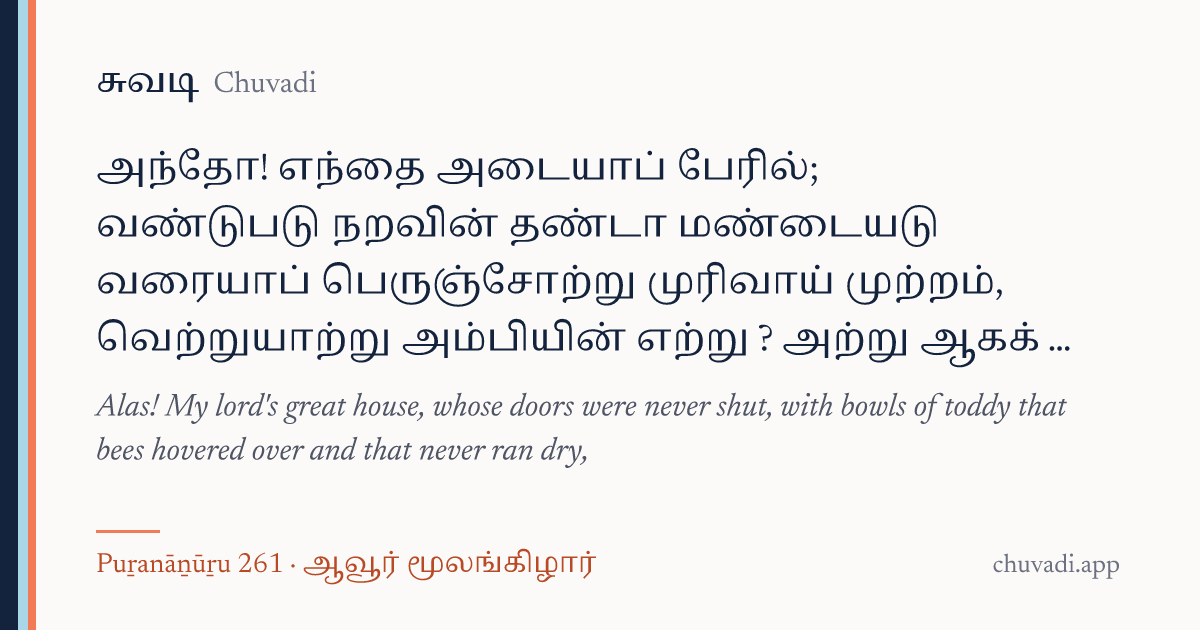
புறநானூறு 261
பாடல் · The poem
Tap a word to see where else it occurs.
பொருள் · Meaning in TamilAI
ஐயோ! என் தலைவனின் அடைக்கப்படாத பெரிய வீடே! வண்டுகள் மொய்க்கும் கள் வற்றாத கிண்ணங்களோடும், அளவில்லாத பெருஞ்சோற்றோடும் விளங்கிய, ஓரங்கள் தேய்ந்த உன் முற்றம் இப்போது எப்படி இருக்கிறது? நீர் வற்றிய ஆற்றில் கிடக்கும் தோணியைப் போல இருக்கக் கண்டேன்; என் கண்கள் கண்ணீர் சொரியட்டும். உலகைக் காக்கும் வேந்தர்களின் வளமான அழகிய மாளிகைகளைப் போல, மதம் கொண்ட யானை பெருமூச்சு விடுவதைப் போல, நெய் கொதிக்கும் உலையில் இட்ட கரிய இறைச்சியின் ஓசை எழ, புதிதாக வந்தவர்களின் ஒளியிழந்த கண்கள் நிறையும்படி முன்பு நீ உணவு அளித்தாய்! இப்போதோ, பல பசுக்களைக் கவர்ந்த கல்லாத, வலிய வில்லுடைய மறவர்களை, மான்குரல் போன்ற குரலுடைய கூகை அழைக்க, அவன் ஓட்டினான்; முதிராத பசுவின் முலையைப் போன்ற மணமுள்ள கரந்தைப் பூவை, முறை அறிந்தவர்கள் மரபுப்படி அவனுக்குச் சூட்டினர்; ஆநிரையை இங்கே மீட்டுக் கொண்டு வந்து நடுகல்லாகிவிட்ட வெற்றி வேலுடைய அந்த இளைஞன் இல்லாததால் தனிமையுற்று, தலையை மழித்துக் கைம்மையால் கலங்கி அணிகலன்களைக் களைந்த பெண்ணைப் போல, உன் பல அழகுகளையும் இழந்து நீ பொலிவற்றுக் காணப்படுகிறாய்.
இது கரந்தைத் திணை, கையறுநிலைத் துறை; ஆநிரை மீட்டு உயிர்விட்ட வீரனின் வீடு பொலிவிழந்ததைச் சொல்வது. ஆவூர் மூலங்கிழார் பாடியது; வீரனின் பெயர் இல்லை. ஆறாம் அடியை வேந்தர்களின் மாளிகையோடு ஒப்பிடுவதாகக் கொண்டோம்; அதன் அமைப்பு உறுதியானதன்று.
ஆங்கிலம் · English translationAI
Translation
- Alas! My lord's great house, whose doors were never shut,
- with bowls of toddy that bees hovered over and that never ran dry,
- its forecourt worn at the edges, with great meals given without limit —
- what is it like? Like a boat on a river run dry; so
- I have seen it, surely; let my eyes pour tears;
- like the rich, splendid houses of the kings who guard the world,
- with a sound like the sighing of a rutting elephant,
- the noise of dark meat dropped into ghee-boiling pots,
- so that the newcomers' dim eyes were filled,
- you gave, truly, before! But now,
- the unschooled, strong-bowed men who had seized many cows,
- he routed, while the owl with the deer-like cry called;
- the fragrant flowered karantai, shaped like a heifer's teat,
- skilled men set on him in the traditional way;
- he brought the herd back here and has become a memorial stone,
- that youth of victorious spear; lonely for want of him,
- like a woman shaken by widowhood, with her head shaven,
- who has put away her ornaments,
- you look desolate, having lost your many adornments.
What the poem says
Āvūr Mūlaṅkiḻār addresses the empty house of a dead hero. The tiṇai is karantai, the recovery of seized cattle, and the turai kaiyaṟunilai, the grief of those left behind. The hero is not named; the speaker calls him 'my lord' (entai).
The house was once famous: its doors never shut, its toddy bowls never empty, its forecourt worn from crowds, its meals unlimited. The sound of meat sizzling in ghee was like the sigh of an elephant, and it fed strangers until their tired eyes brightened, like the mansion of a great king. Now it looks like a boat left standing in a dry riverbed.
The hero died recovering cattle. He drove off the raiders, was crowned with karantai flowers by men who knew the custom, brought the herd home, and 'became a naṭukal', a memorial stone. The house, deprived of him, is compared to a widow who has shaved her head and put off her jewels.
Line 6 is read as a comparison with the houses of great kings; it could also be an address to the house itself as a royal mansion. The 'owl with a deer's voice' in line 12 is taken as an ill-omened bird calling over the fight.