



புறநானூறு 264
பாடல் · The poem
Tap a word to see where else it occurs.
பொருள் · Meaning in TamilAI
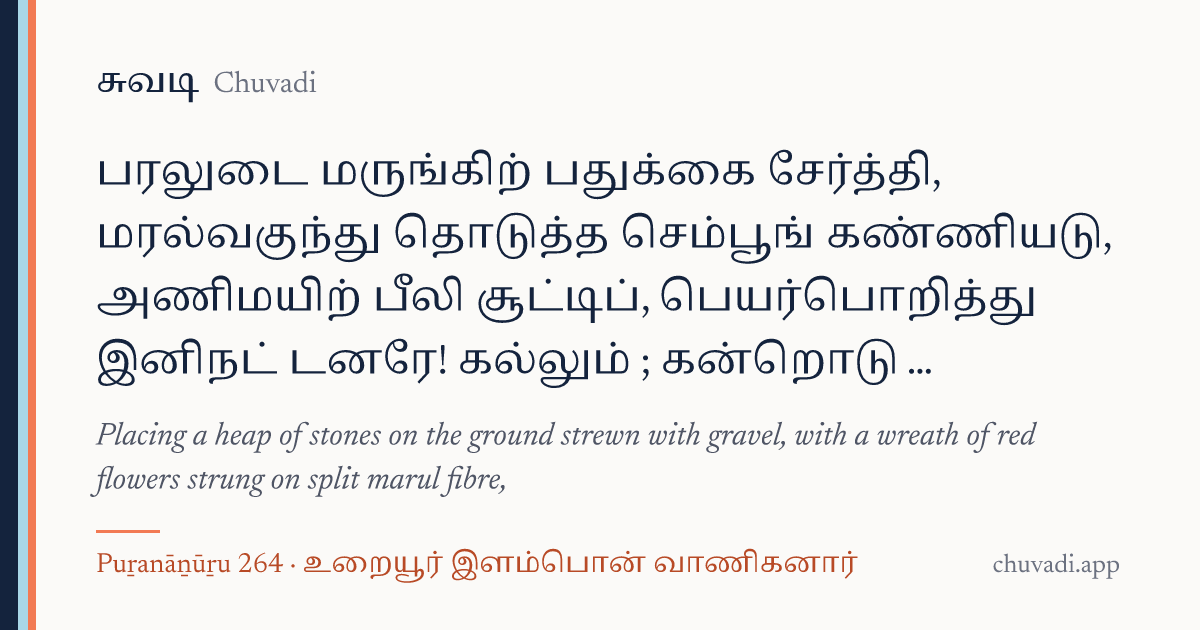
பருக்கைக் கற்கள் நிறைந்த நிலத்தில் கற்குவியலை அமைத்து, மரல் நாரைப் பிளந்து தொடுத்த சிவந்த பூக்களாலான கண்ணியோடு, அழகிய மயில் தோகையைச் சூட்டி, அவன் பெயரைப் பொறித்து, இப்போது கல்லையும் நட்டுவிட்டனர்! கன்றுகளோடு கூடிய கறவைப் பசுக்களை மீட்டுக் கொண்டு வந்து பகைவரை ஓட்டிய அந்தப் பெருந்தகை இறந்துவிட்டதை அறியாமல், பாணர்களின் சுற்றம் இன்றும் வருமோ?
இது கரந்தைத் திணை, கையறுநிலைத் துறை; ஆநிரை மீட்டு இறந்த வீரனுக்கு நடுகல் நட்டதைச் சொல்வது. உறையூர் இளம்பொன் வாணிகனார் பாடியது. வள்ளல் இறந்ததை அறியாமல் பரிசில் தேடி வரும் பாணர்களை நினைத்துப் புலவர் வருந்துகிறார்.
ஆங்கிலம் · English translationAI
Translation
- Placing a heap of stones on the ground strewn with gravel,
- with a wreath of red flowers strung on split marul fibre,
- decking it with lovely peacock feathers, carving his name,
- now they have set it up — a stone! He who brought back
- the milk-cows with their calves and drove the enemies off,
- that noble man is gone, and not knowing it,
- will the bards' household come even today?
What the poem says
Uṟaiyūr Iḷampoṉ Vāṇikaṉār describes the setting up of a hero-stone. The tiṇai is karantai, the recovery of stolen cattle, and the turai kaiyaṟunilai, grief for the dead.
The making of the memorial is told step by step: a cairn of stones on gravelly ground, a wreath of red flowers tied with split marul fibre, peacock feathers, the hero's name inscribed, and finally the stone itself planted upright. The man it honours brought back milk-cows and calves and chased off the raiders.
The last two lines turn to the bards. Unaware that their patron has died, will his circle of bards still come today, expecting gifts? The question gives the poem its sting: the stone stands where the giver used to be.