



புறநானூறு 265
பாடல் · The poem
Tap a word to see where else it occurs.
பொருள் · Meaning in TamilAI
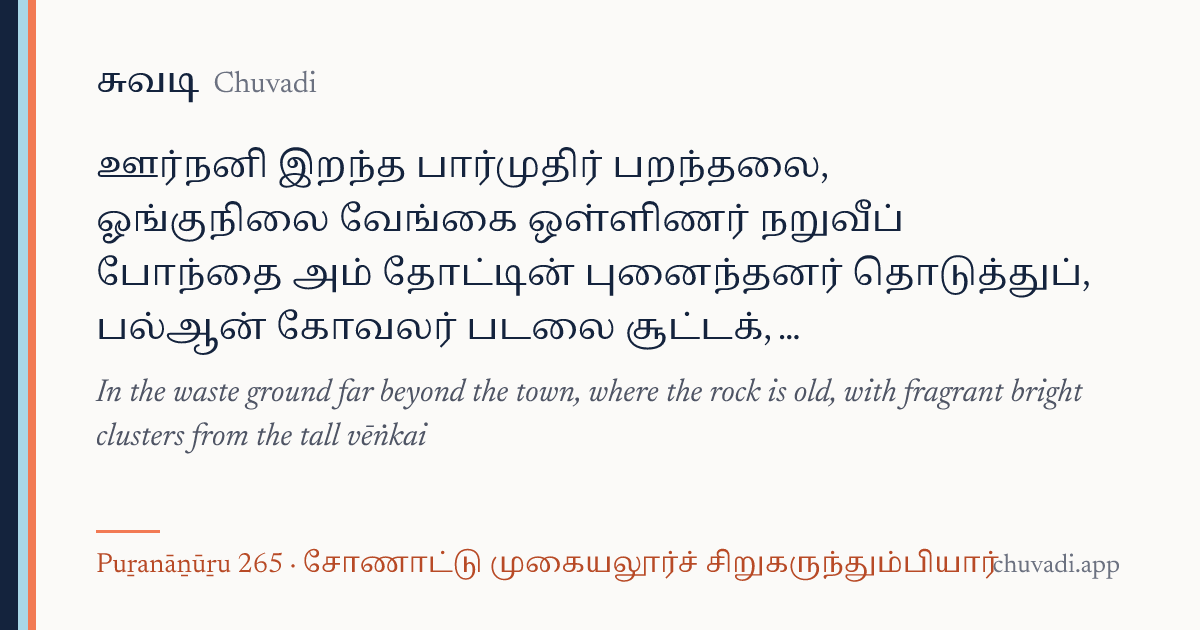
ஊரை நெடுந்தொலைவு கடந்த, பாறை முதிர்ந்த பாழ்நிலத்தில், உயர்ந்து நிற்கும் வேங்கை மரத்தின் ஒளிவீசும் மணமுள்ள பூங்கொத்துகளைப் பனையின் அழகிய ஓலைகளால் தொடுத்து, பல பசுக்களையுடைய ஆயர்கள் மாலை சூட்ட, நீ கல்லாகிவிட்டாய், விரைந்து செல்லும் குதிரையையுடைய தலைவனே! வானத்து இடியைப் போன்றவனே, உன் அடிநிழலில் வாழ்ந்த பரிசிலர்களின் செல்வம் மட்டுமன்றி, விரிந்த மாலையும் கடிய யானைகளும் உடைய வேந்தர்கள் ஒடுங்கும்படி நீ பெற்ற வெற்றியும் உன்னோடு போய்விட்டன.
இது கரந்தைத் திணை, கையறுநிலைத் துறை; ஆநிரை மீட்டு இறந்து நடுகல்லான வீரனுக்காக வருந்துவது. சோணாட்டு முகையலூர்ச் சிறுகருந்தும்பியார் பாடியது. 'வான்ஏறு புரையும்' என்பது வீரனைக் குறிக்கிறதா, அவன் அடிநிழலைக் குறிக்கிறதா என்பது உறுதியாகத் தெரியவில்லை.
ஆங்கிலம் · English translationAI
Translation
- In the waste ground far beyond the town, where the rock is old,
- with fragrant bright clusters from the tall vēṅkai
- bound together with lovely strips of palmyra leaf,
- as the herdsmen of many cattle lay their wreaths on you,
- you have become a stone — O lord of swift horses!
- Living in the shade of your feet, you who were like the thunder of the sky,
- the suppliants' wealth has gone, and not that alone: the victory
- that made kings with spreading garlands and fierce war-elephants
- cower — that too has gone with you.
What the poem says
The poet is named Cōṇāṭṭu Mukaiyalūrc Ciṟukaruntumpiyār, of Mukaiyalūr in the Cōḻa country. The poem is in karantai tiṇai with the turai kaiyaṟunilai, the grief that follows a hero's death in recovering cattle.
The scene is the rocky waste outside the village, where the hero is now a memorial stone. Herdsmen, the people whose cattle he saved, decorate it with garlands of vēṅkai flowers tied with palmyra-leaf strips. The poet speaks directly to the stone as to the man: 'you have become a stone, lord of swift horses'.
What has gone with him is twofold: the livelihood of the suppliants who lived under his protection, and the victories that made great kings shrink. The comparison in line 6, vāṉ ēṟu, 'the thunder of the sky', is applied here to the hero himself; it might instead describe the protection his feet gave.