



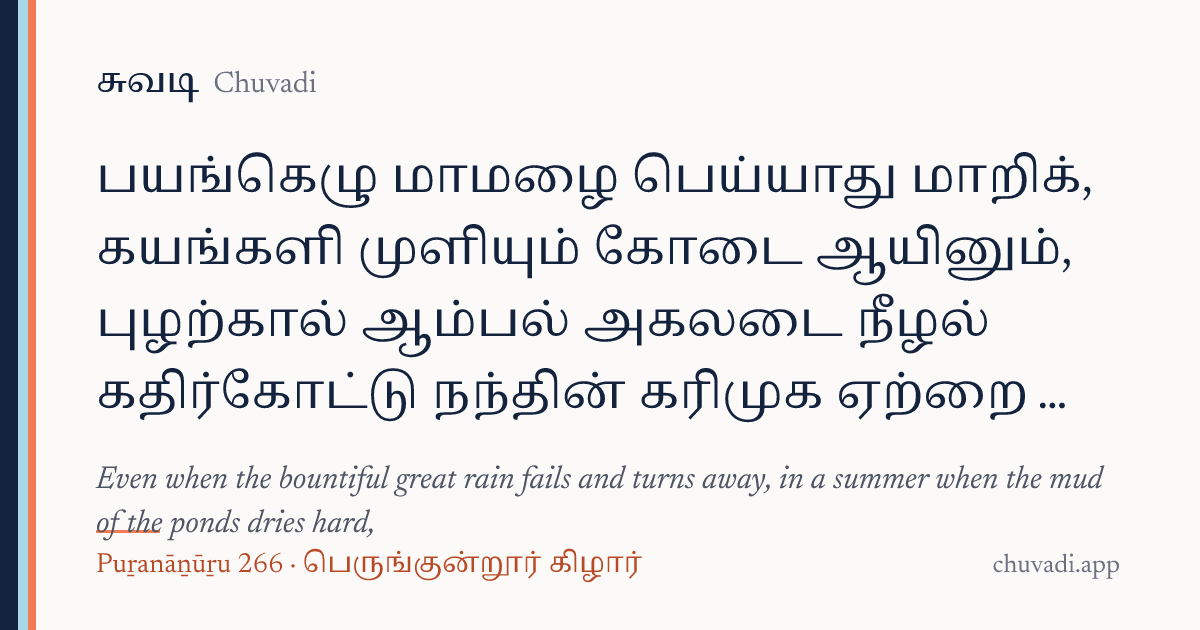
புறநானூறு 266
பாடல் · The poem
Tap a word to see where else it occurs.
பொருள் · Meaning in TamilAI
பயன் தரும் பெருமழை பெய்யாமல் பொய்த்து, குளங்களின் சேறும் காய்ந்துபோகும் கோடைக்காலத்திலும், உட்துளையுடைய தண்டுகளையுடைய ஆம்பலின் அகன்ற இலைகளின் நிழலில், வரிகளுடைய ஓட்டையும் கரிய முகத்தையும் உடைய ஆண் நத்தை இளம் பெண் நத்தையோடு பகலிலேயே கூடும், நீர் விளங்கும் வயல்கள் நிறைந்த நாட்டையுடைய பெருவீரனே! வானைத் தொடும் நீண்ட குடையையும் வலிய குதிரைகளையும் உடைய சென்னியே! சான்றோர் கூடியிருக்கும் அவைக்கு வந்த துன்புற்றவன் "எனக்குப் புகலிடமாக இருங்கள்" என்று எழுப்பும் கூக்குரலுக்கு அவர்கள் உடனே உதவுவதைப் போல, விரைவாக நீக்குவாயாக: நான் விரும்பிய விருந்தினரைக் கண்டதும் ஒளிந்துகொள்ளச் செய்யும், சீர்ப்படாத வாழ்க்கையில், புலன்களோடு கூடிய என் உடலில் தோன்றி என் அறிவைக் கெடுத்து நிற்கும் என் வறுமையை!
இது பாடாண் திணை, பரிசில் கடாநிலைத் துறை; புலவர் புரவலனிடம் பரிசிலை விரைந்து தருமாறு வேண்டுவது. சோழன் உருவப்பஃறேர் இளஞ்சேட்சென்னியைப் பெருங்குன்றூர் கிழார் பாடியது. வறட்சியிலும் நீர் வற்றாத நாட்டைப் புகழ்ந்து, தன் வறுமையை நீக்கும்படி புலவர் வேண்டுகிறார்.
ஆங்கிலம் · English translationAI
Translation
- Even when the bountiful great rain fails and turns away,
- in a summer when the mud of the ponds dries hard,
- in the shade of the broad leaves of the hollow-stemmed water-lily,
- the dark-faced male snail with its ridged shell
- goes in to mate by day with a young female —
- O great victor of a land whose fields gleam with water!
- Ceṉṉi of strong horses, with a tall parasol touching the sky!
- Like the cry 'Be my refuge!' of a man in trouble
- who has come before an assembly of the wise,
- quickly, I beg you, drive it away — the thing that makes me
- hide when I see the guests I longed for, in my unmended life,
- that has risen in this body yoked to the senses and
- stands there ruining my mind — my poverty!
What the poem says
Peruṅkuṉṟūr Kiḻār addresses the Cōḻa king Uruvappaḥṟēr Iḷañcēṭceṉṉi. The tiṇai is pāṭāṇ, praise of a patron, and the turai paricil kaṭānilai, the poet's pressing of his claim for a gift.
The praise is of the king's country: even in a year of drought, when the ponds harden, his fields still have water, and in the shade of the water-lily leaves a snail can go courting in the daytime. A fertile, untroubled land is a sign of good rule. Then come the king's titles: master of strong horses, with a parasol that reaches the sky.
The request is direct and urgent. The poet asks the king to remove his poverty as quickly as an assembly of wise men answers the cry of someone who comes to them for help. Poverty is described almost as a disease that has appeared in his body and clouds his mind; its worst effect is that when guests he would like to welcome arrive, he must hide from them, having nothing to give. The phrase porippuṇar uṭampu, 'the body joined to the senses', is taken in that plain sense.