



புறநானூறு 269
பாடல் · The poem
Tap a word to see where else it occurs.
பொருள் · Meaning in TamilAI
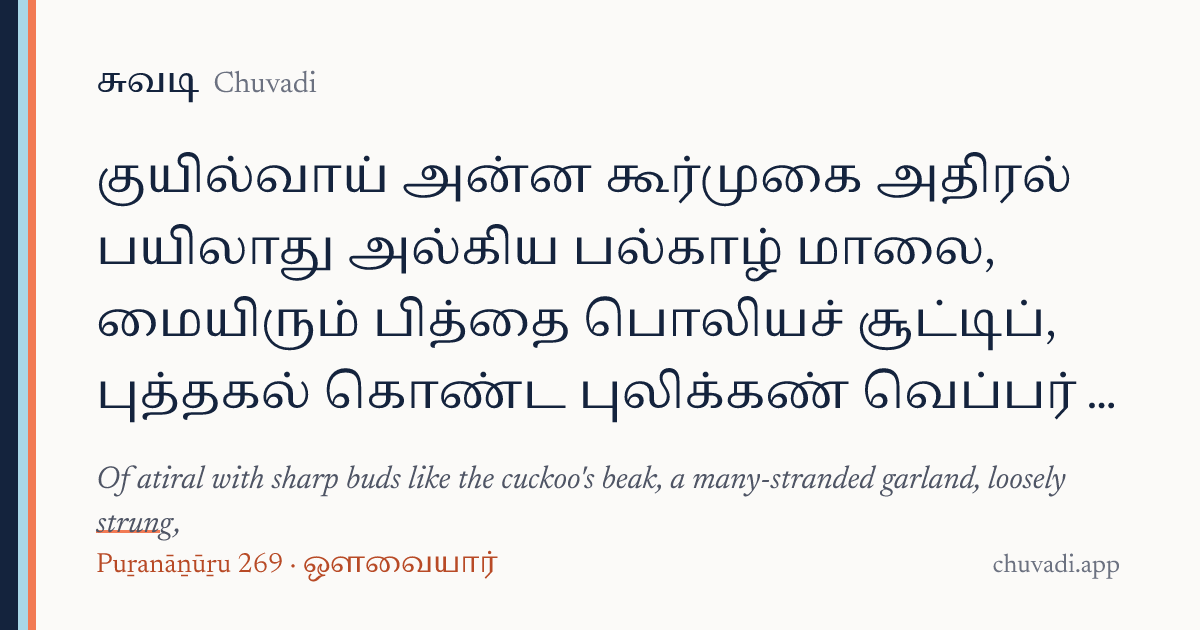
குயிலின் அலகைப் போன்ற கூர்மையான மொட்டுகளையுடைய அதிரல் பூக்களால், நெருக்கமில்லாமல் தொடுத்த பல சரங்களுடைய மாலையை, கரிய அடர்ந்த தலைமயிர் பொலியும்படி சூடி, புதிய கிண்ணத்தில் கொண்ட புலிக்கண் நிறமுடைய கடுங்கள்ளை ஓரிரு முறை அமர்ந்து உண்ட பிறகு, காட்டுத் தழையாலான கண்ணியணிந்த துடிகொட்டுபவன் வந்து, பிழிந்த கள்ளோடு உணவு கேட்க, "இதை ஏற்றுக்கொள்ள மாட்டாயா?" என்று கள்ளால் வாழ்த்திச் சொல்கின்றனர். கரந்தை மறவர்கள் நெடுநேரம் எதிர்த்து நின்று பின்வாங்கிய போரில், பல பசுக்களின் நிரையைத் திரும்பக் கைப்பற்றிய வில்வீரர்களை, வளைந்த சிறகுடைய செம்பருந்து ஆரவாரிக்க, வெட்டி வீழ்த்தித் திருப்பி ஓட்டியது இந்தக் கரிய கைப்பிடியுடைய வாள்.
இது வெட்சித் திணை, உண்டாட்டுத் துறை; ஆநிரை கவர்ந்த வீரர்களின் களியாட்டத்தைச் சொல்வது. ஔவையார் பாடியது. 'இதை ஏற்றுக்கொள்' என்று சொல்பவர் யார், 'இது' என்பது வாளைக் குறிக்கிறதா என்பவை உறுதியாகத் தெரியவில்லை; ஒன்பதாம் அடியின் பொருளும் தெளிவாக இல்லை.
ஆங்கிலம் · English translationAI
Translation
- Of atiral with sharp buds like the cuckoo's beak,
- a many-stranded garland, loosely strung,
- he wore so that his thick dark hair shone;
- from a new bowl the strong liquor, tawny as a tiger's eye,
- after he had sat and drunk it once or twice,
- when the drummer with a wreath of wild leaves came
- asking for food and pressed liquor, 'Will you not take this instead?'
- they say, and praise him with toddy;
- in the battle where the karantai men held out long and then fell back,
- the bowmen who had gathered the herd of many cows,
- while the crook-winged ruddy kite screamed,
- this dark-handled sword cut them down and turned them back.
What the poem says
Auvaiyār's poem is in veṭci tiṇai, the class of cattle raiding, with the turai uṇṭāṭṭu, the drinking feast of the raiders. It shows a scene at the feast and then praises a sword.
The hero is described at ease: a loose garland of atiral flowers, whose pointed buds are likened to a cuckoo's beak, in his dark hair; a new bowl of strong liquor, perhaps called 'tiger-eyed' for its colour, from which he has drunk once or twice. Then the drummer, wearing a wreath of wild leaves, comes asking for his share of food and drink. The reply, 'will you not take this instead?', is followed by praise of 'this dark-handled sword': it cut down the bowmen of the other side who had tried to recover the herd, while kites screamed over the field. The poem seems to mean that the hero offers the drummer, or shows him, the sword itself as the true prize of the feast, but who says the words and what 'this' is are not certain.
Line 9 is difficult. Karantai here names the side that tries to win back the cattle; the phrase aṟintu māṟu, rendered 'fell back', is uncertain in sense.