



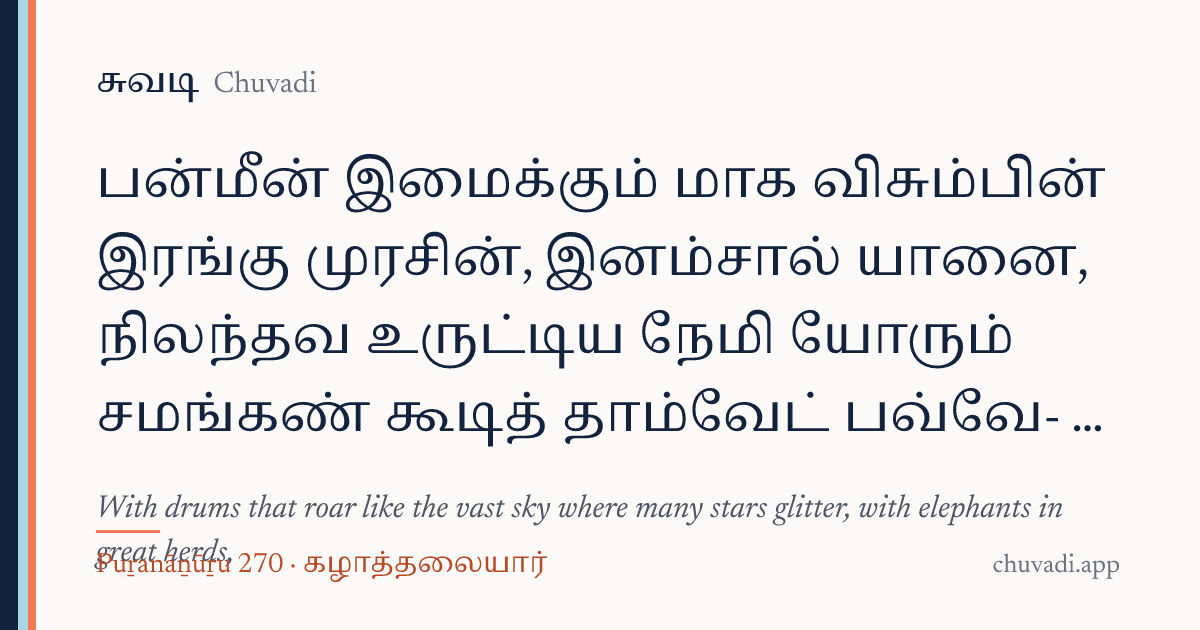
புறநானூறு 270
பாடல் · The poem
Tap a word to see where else it occurs.
பொருள் · Meaning in TamilAI
பல விண்மீன்கள் மின்னும் பெரிய வானத்தைப் போல முழங்கும் முரசுகளும், கூட்டமான யானைகளும் உடையவர்களாய், நிலம் தாழும்படி தம் ஆணைச் சக்கரத்தை உருட்டிய பேரரசர்களும் போர்க்களத்தில் கூடும்போது விரும்புவது இதுவே. நறுமணப் பொருள்களைத் துறந்து மணமற்ற நரைத்த தலையுடைய, மக்களைப் பெற்ற தாயே! பெரிய இல்லத்தின் தலைவியே! நான் வருந்துவேனோ? நீயே பார்: வீரப்படையின் வருகையை அறிவிக்கும் கரகரக்கும் குரலுடைய தண்ணுமையின் இனிய ஓசையைக் கேட்ட, நெருங்குவதற்கு அரிய மறவர்கள், வெற்றியை விரும்பி, களத்தைக் கைப்பற்றும்பொருட்டுப் பெரும்போர் புரிந்த அஞ்சத்தக்க போர்க்களத்தில், பெரிய கோடரி பாய்ந்த மரத்தைப் போல, வாள்களின் மேல் கிடக்கும் அந்த ஆண்மையுடையவனின் நிலையைப் பார்!
இது கரந்தைத் திணை, கையறுநிலைத் துறை; போரில் இறந்த மகனின் தாயிடம் பேசுவது. கழாத்தலையார் பாடியது. பேரரசர்களும் விரும்பும் போர்ச்சாவை அவன் பெற்றதால் வருந்தத் தேவையில்லை என்ற கருத்து உள்ளது; தொடக்க அடிகளின் அமைப்பு செறிவானது.
ஆங்கிலம் · English translationAI
Translation
- With drums that roar like the vast sky where many stars glitter,
- with elephants in great herds,
- even the wheel-bearing kings who rolled their wheel until the earth sank
- long for this when they meet in battle —
- O mother of sons, whose grey head has given up perfumes and has no scent!
- O lady of the great house!
- Shall I grieve? Look for yourself:
- hearing the sweet sound of the rasping taṇṇumai drum that proclaims the fierce army,
- the warriors, hard to approach,
- eager to bring victory and to win the field,
- struggled in great battle on that fearful ground;
- like a tree that a great axe has struck,
- he lies upon the swords — behold the state of that manly one.
What the poem says
Kaḻāttalaiyār's poem is in karantai tiṇai with the turai kaiyaṟunilai. It is spoken to an old mother, 'the lady of the great house', whose son has died in battle.
The speaker begins with a large claim: the death her son has met is one that even the greatest emperors, 'the wheel-bearers' with roaring drums and herds of elephants, would wish for when they go to war. Then he turns to the mother, grey-haired and long past using perfumes, and asks, 'Shall I grieve?' The question implies that grief is not the right response to such a death.
The final lines show her what has happened. The warriors, roused by the war drum, fought for victory on a terrible field, and her son lies there on the swords like a tree felled by an axe. The poem leaves the mother's response unstated. The order of the opening lines is compressed, and the reading of 'they long for this' in line 4 as the death in battle depends on the whole poem.