



புறநானூறு 277
பாடல் · The poem
Tap a word to see where else it occurs.
பொருள் · Meaning in TamilAI
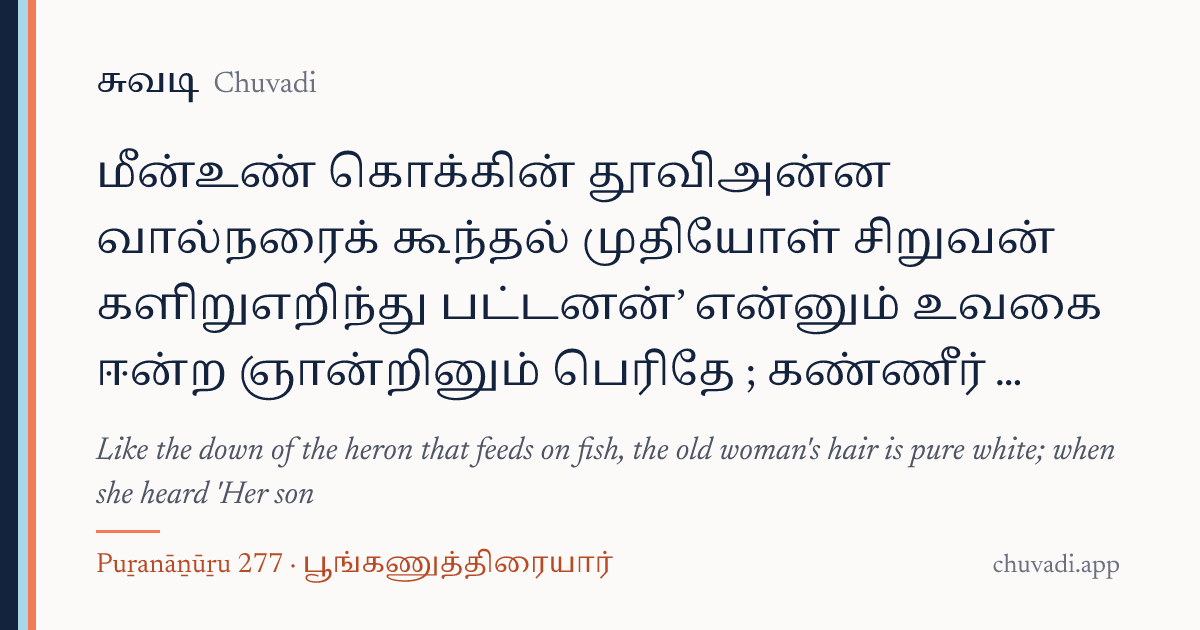
மீனை உண்ணும் கொக்கின் தூவியைப் போல வெண்மையாக நரைத்த கூந்தலையுடைய முதியவள், "அவள் மகன் யானையைக் கொன்று தானும் போரில் விழுந்தான்" என்று கேட்டபோது அடைந்த மகிழ்ச்சி, அவனைப் பெற்ற நாளில் அடைந்த மகிழ்ச்சியைவிடப் பெரியது. அவள் சிந்திய கண்ணீரோ, வலிய மூங்கில்கள் அசையும் மூங்கில் காட்டில் மழை பெய்த பின் தொங்கும் நீர்த்துளிகளைவிடப் பலவாகும்.
இது தும்பைத் திணை, உவகைக் கலுழ்ச்சித் துறை; போரில் சிறப்பாக உயிர்விட்ட மகனை எண்ணித் தாய் மகிழ்ச்சியோடு அழுவதைச் சொல்வது. பூங்கணுத்திரையார் பாடியது. மகிழ்ச்சியும் கண்ணீரும் ஒருங்கே சொல்லப்படுகின்றன.
ஆங்கிலம் · English translationAI
Translation
- Like the down of the heron that feeds on fish,
- the old woman's hair is pure white; when she heard 'Her son
- fell after striking down an elephant', her joy
- was greater than on the day she bore him; and her tears
- were more than the drops left hanging in the bamboo grove where the strong stems sway
- after the sky has rained.
What the poem says
Pūṅkaṇ Uttiraiyār's short poem is in tumpai tiṇai, battle, with the turai uvakaik kaluḻcci, 'weeping for joy', the mother's mixed tears at a son's glorious death.
The old mother's hair is white as a heron's feathers. News comes that her son has fallen after killing an elephant, and her joy is greater than at his birth. Yet she weeps, and her tears are more than the raindrops that cling to a swaying bamboo grove after a shower.
The poem does not resolve the two feelings. The joy is the joy of the heroic code, which honours a death facing the enemy; the tears, compared to countless drops, are no less real.