



புறநானூறு 278
பாடல் · The poem
Tap a word to see where else it occurs.
பொருள் · Meaning in TamilAI
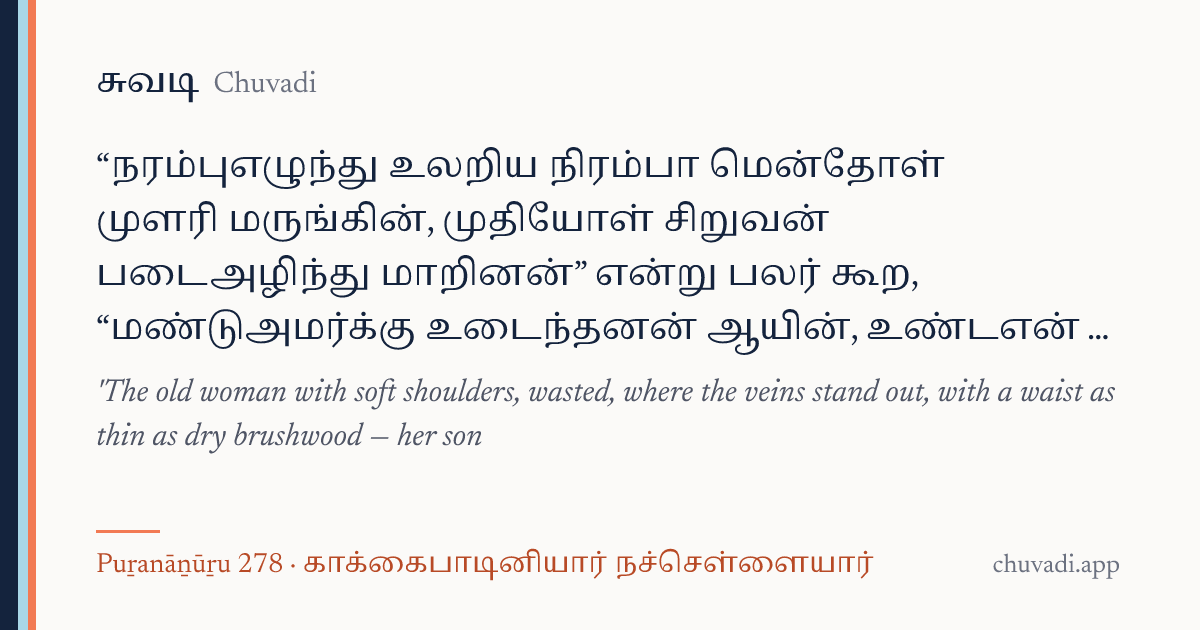
"நரம்புகள் புடைத்து வற்றிய, சதைப்பற்றில்லாத மெல்லிய தோள்களையும், காய்ந்த சுள்ளி போன்ற இடையையும் உடைய முதியவளின் மகன், படை உடைந்தபோது புறமுதுகிட்டு ஓடினான்" என்று பலர் சொன்னார்கள். "நெருங்கிய போரில் அவன் தோற்றோடியிருந்தால், அவன் உண்ட என் முலைகளை அறுத்துவிடுவேன்" என்று அவள் சினந்து சொல்லி, கையில் வாளை எடுத்துக்கொண்டு, விழுந்து கிடக்கும் பிணங்களைப் புரட்டிப் பார்த்துச் சிவந்த போர்க்களம் எங்கும் தேடினாள். சிதைந்து துண்டுகளாகக் கிடந்த தன் மகனின் உடலைக் கண்டதும், அவனைப் பெற்ற நாளைவிட மிகுதியாக மகிழ்ந்தாள்!
இது தும்பைத் திணை, உவகைக் கலுழ்ச்சித் துறை; போரில் புறங்கொடாமல் உயிர்விட்ட மகனைக் கண்டு தாய் மகிழ்வதைச் சொல்வது. காக்கைபாடினியார் நச்செள்ளையார் பாடியது. 'முளரி' என்ற சொல் தாமரையையோ காய்ந்த சுள்ளியையோ குறிக்கலாம்; இங்கே சுள்ளி என்று கொள்ளப்பட்டது.
ஆங்கிலம் · English translationAI
Translation
- 'The old woman with soft shoulders, wasted, where the veins stand out,
- with a waist as thin as dry brushwood — her son
- broke before the army and turned back' — so many said;
- 'If he broke in the thick of battle, these breasts
- that he sucked I will cut off!' So she cried in anger,
- and, sword in hand, turning over the fallen bodies,
- searching the red field, she found, mangled and in pieces,
- her fallen son lying there,
- and rejoiced more than on the day she bore him!
What the poem says
The poet is named Kākkaipāṭiṉiyār Nacceḷḷaiyār, 'Nacceḷḷaiyār who sang of the crow'. The poem is in tumpai tiṇai, battle, with the turai uvakaik kaluḻcci, the mother's tears of joy.
The poem tells a story. People report that an old woman's son ran from the battle. She is frail, her shoulders thin and veined, her waist like dry sticks, but she is furious: if her son fled, she says, she will cut off the breasts that fed him. Taking a sword, she goes to the battlefield and turns over the corpses one by one. At last she finds her son, cut to pieces, lying where he fell, and she rejoices more than on the day he was born.
The rumour was false; he did not flee. The mother's joy belongs to the warrior code, in which a death in battle facing the enemy is an honour and flight is a disgrace. The word muḷari in line 2 may mean lotus or dry brushwood; the latter fits the description of her body better.