



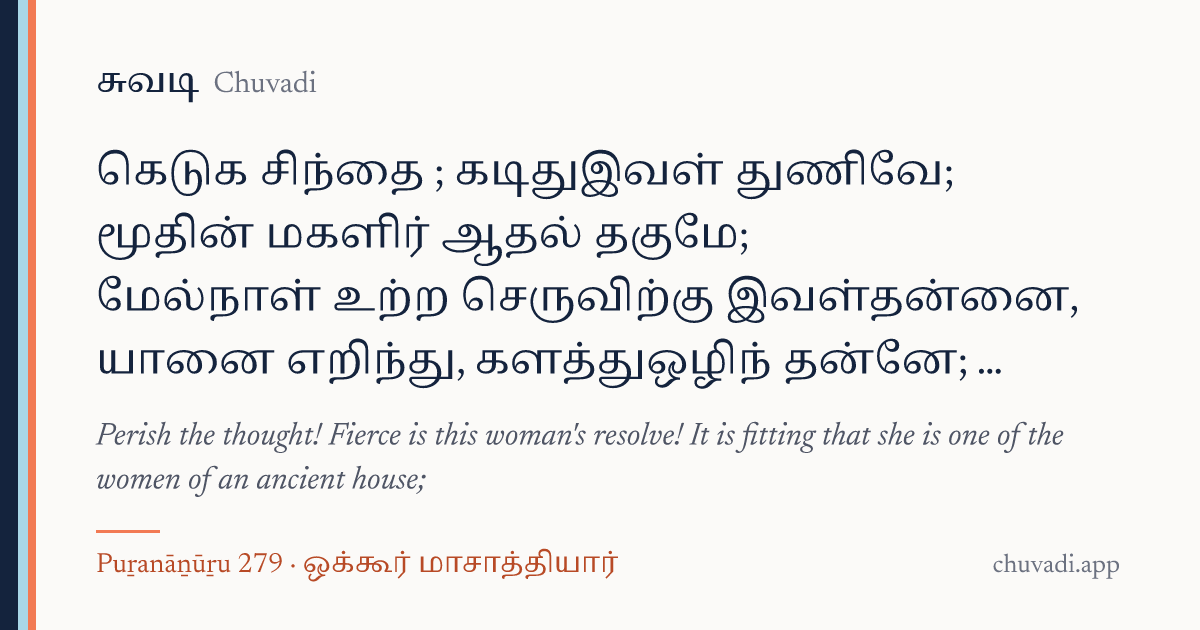
புறநானூறு 279
பாடல் · The poem
Tap a word to see where else it occurs.
பொருள் · Meaning in TamilAI
என் சிந்தனை கெடட்டும்! இவளுடைய துணிவு கடுமையானது! பழைய மறக்குடியின் மகளிருள் ஒருத்தியாக இருப்பதற்கு இவள் தகுதியுடையவளே. முந்தைய நாளில் நடந்த போரில் இவள் தந்தை யானையைக் கொன்று போர்க்களத்திலேயே மாண்டான். நேற்று நடந்த போரில் இவள் கணவன் பெரிய ஆநிரையைப் பகைவர் கவராமல் தடுத்து அங்கேயே விழுந்தான். இன்றும் போர்ப்பறையின் ஒலியைக் கேட்டு, ஆர்வம் மிகுந்து, மயங்கி, ஒரே மகனைத் தவிர வேறு யாரும் இல்லாத இவள், அவன் கையில் வேலைக் கொடுத்து, வெண்மையான ஆடையை விரித்து உடுத்தி, பரட்டையான குடுமிக்கு எண்ணெய் தடவி, "போர்முனையை நோக்கிச் செல்" என்று அனுப்புகிறாள்!
இது வாகைத் திணை, மூதின் முல்லைத் துறை; பழைய மறக்குடியைச் சேர்ந்த பெண்ணின் மனவுறுதியைச் சொல்வது. ஒக்கூர் மாசாத்தியார் பாடியது. 'தன்னை' என்ற சொல்லைத் தந்தை என்று கொண்டோம்; அது தமையனையும் குறிக்கலாம். 'கெடுக சிந்தை' என்பது வியப்பையும் அச்சத்தையும் ஒருங்கே காட்டும் சொல்லாகத் தெரிகிறது.
ஆங்கிலம் · English translationAI
Translation
- Perish the thought! Fierce is this woman's resolve!
- It is fitting that she is one of the women of an ancient house;
- in the battle the day before, this woman's father
- struck down an elephant and fell on the field;
- in the battle yesterday, her husband
- held back the great herd and fell there;
- and today, hearing the war drum, carried away with longing,
- she put a spear in his hand, dressed him in white cloth spread out,
- smoothed oil into the dry, scattered hair of his tuft,
- she who has no one but this one son,
- 'Go, and face the battle-front!' — and she sends him off!
What the poem says
Okkūr Mācāttiyār, one of the women poets of the anthology, composed this celebrated poem. The tiṇai is vākai, triumph or excellence, and the turai mūtiṉ mullai, the steadfastness of the women of an old warrior family.
The speaker begins with an exclamation, keṭuka cintai, literally 'may the mind perish', an expression of astonishment, perhaps of horror, at what she has seen. Then she explains. The day before yesterday this woman's father killed an elephant and died in battle; yesterday her husband died holding back a raid on the cattle. Today, hearing the drum again, she arms her only son, dresses him in a white cloth, oils his unkempt boyish tuft, and sends him out to face the enemy.
The poem sets out the facts without comment beyond the first two lines, and the restraint makes it powerful. The word taṉṉai in line 3 is taken as 'her father'; it can also mean an elder brother. The speaker's tone hovers between admiration and dismay, and the poem leaves both open.