



புறநானூறு 281
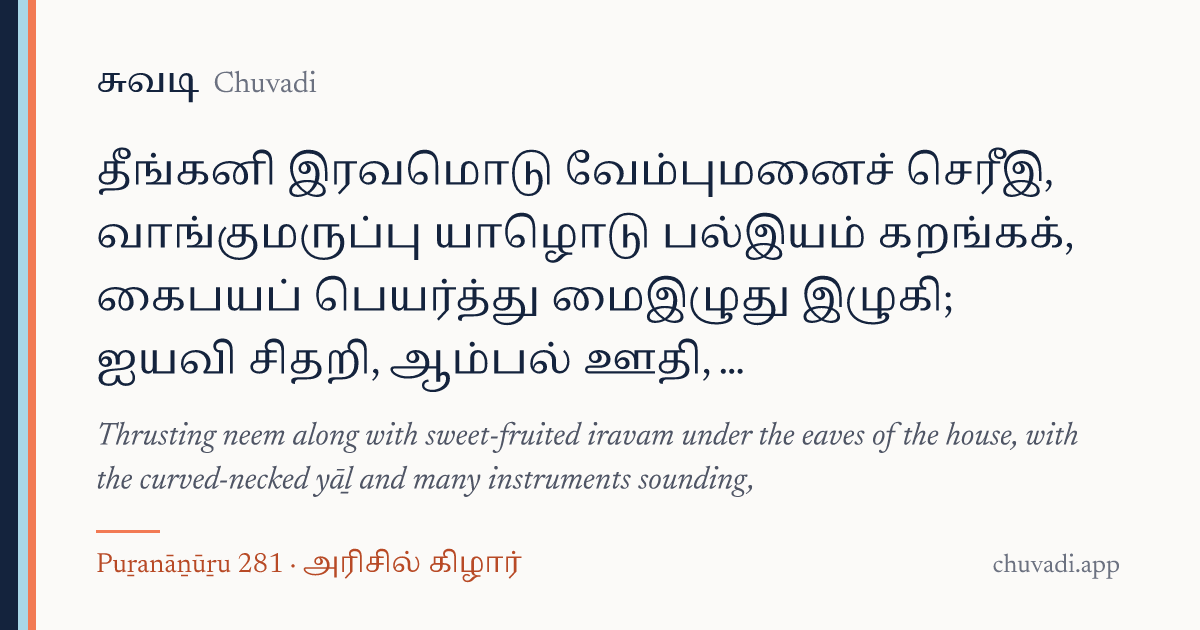
பாடல் · The poem
Tap a word to see where else it occurs.
பொருள் · Meaning in TamilAI
இனிய பழங்களையுடைய இரவம் இலையோடு வேப்பிலையையும் வீட்டின் இறப்பில் செருகி, வளைந்த தண்டுடைய யாழோடு பல இசைக்கருவிகளும் ஒலிக்க, கையை மெல்ல அசைத்து மை போன்ற மருந்தைப் பூசி, வெண்கடுகைத் தூவி, ஆம்பல் பண்ணைக் குழலில் ஊதி, ஓசையுடைய மணியை அடித்து, காஞ்சிப் பண்ணைப் பாடி, நீண்ட மாளிகை எங்கும் மணமுள்ள நறும்புகையை எழுப்பி, அன்புத் தோழியே, வா! வேந்தனுக்கு வந்த பெருந்துன்பத்தைத் தான் தாங்கிக்கொண்ட, பூ வேலைப்பாடுடைய கழல் அணிந்த பெருந்தகையின் புண்ணைக் காப்போம்!
இது காஞ்சித் திணை, பேய்க் காஞ்சித் துறை; போரில் புண்பட்ட வீரனைப் பேய்கள் அணுகாமல் காக்கும் சடங்குகளைச் சொல்வது. அரிசில் கிழார் பாடியது. வீரனின் மனைவி தன் தோழியிடம் பேசுவதாகக் கொள்ளலாம். 'ஆம்பல் ஊதி' என்பது ஆம்பல் என்னும் பண்ணைக் குழலில் இசைப்பதைக் குறிப்பதாகக் கொண்டோம்.
ஆங்கிலம் · English translationAI
Translation
- Thrusting neem along with sweet-fruited iravam under the eaves of the house,
- with the curved-necked yāḻ and many instruments sounding,
- moving our hands gently, smearing on the dark ointment,
- scattering white mustard, playing the āmpal tune on the pipe,
- ringing the sounding bell, singing the kāñci,
- burning fragrant incense through the long house,
- come, let us keep watch, my dear friend,
- over him who took upon himself the calamity that came to the king,
- the wound of the tall noble one with flower-wrought anklets!
What the poem says
Aricil Kiḻār's poem is in kāñci tiṇai with the turai pēyk kāñci, the guarding of a wounded warrior against the demons (pēy) believed to come for the dying. A woman, probably the warrior's wife, speaks to her friend.
The poem is almost a list of protective rites, and is valuable for that: branches of neem and iravam hung in the house, the yāḻ and other instruments played, a dark ointment applied with gentle hands, white mustard seed scattered, a pipe playing the āmpal melody, a bell rung, the kāñci song sung, fragrant smoke spread through the house. All of this is to 'guard the wound'.
The last two lines name the man only by his deed: he took upon himself the danger that threatened the king. 'Āmpal' in line 4 is read as the name of a melody played on a pipe, as the verb ūti, 'blowing', suggests.