



புறநானூறு 282
பாடல் · The poem
Tap a word to see where else it occurs.
பொருள் · Meaning in TamilAI
வேல் நெஞ்சை ஊடுருவிச் செல்ல, அகன்ற நிலத்தின் ஓரிடத்தில் தன் அரிய கடமையைச் செய்து முடித்த பெருஞ்செயலாளன் இப்போது "எங்கே இருக்கிறான்?" என்று கேட்பாயானால், கேள்: வந்த பகைப்படையைத் தடுத்து நின்ற அவனுடைய ஒளிவீசும் மாலையணிந்த அகன்ற மார்பில், தம் அரிய கடமையைச் செய்து முடிக்கும்பொருட்டு வீரர்கள் வேலை எறிய, உடலும் காணப்படாதபடி அவன் உயிர் போய்விட்டது. பொருதவர்கள் பின்வாங்கி, எதிரணியினர் அழிந்துபோக, அளவில்லாமல் அடிபட்டுச் சிதைந்து பிளவுபட்ட அவனுடைய கேடயம் ஒன்றே போர்க்களத்தில் எஞ்சியது. நெடுந்தொலைவு விளங்கும் நல்ல புகழை நிலைநிறுத்தி, நாவன்மையுடைய புலவர்களின் வாயில் அவன் வாழ்கிறான்.
இப்பாடலுக்குத் திணை, துறை, பாடியவர், பாடப்பட்டவர் எவையும் இப்பதிப்பில் குறிக்கப்படவில்லை. போரில் உயிர்விட்ட வீரனின் புகழ் புலவர் பாடலில் நிலைத்திருப்பதைச் சொல்கிறது. எட்டாம் அடியில் உள்ள 'அலகை' என்ற சொல்லின் பொருள் உறுதியாகத் தெரியவில்லை.
ஆங்கிலம் · English translationAI
Translation
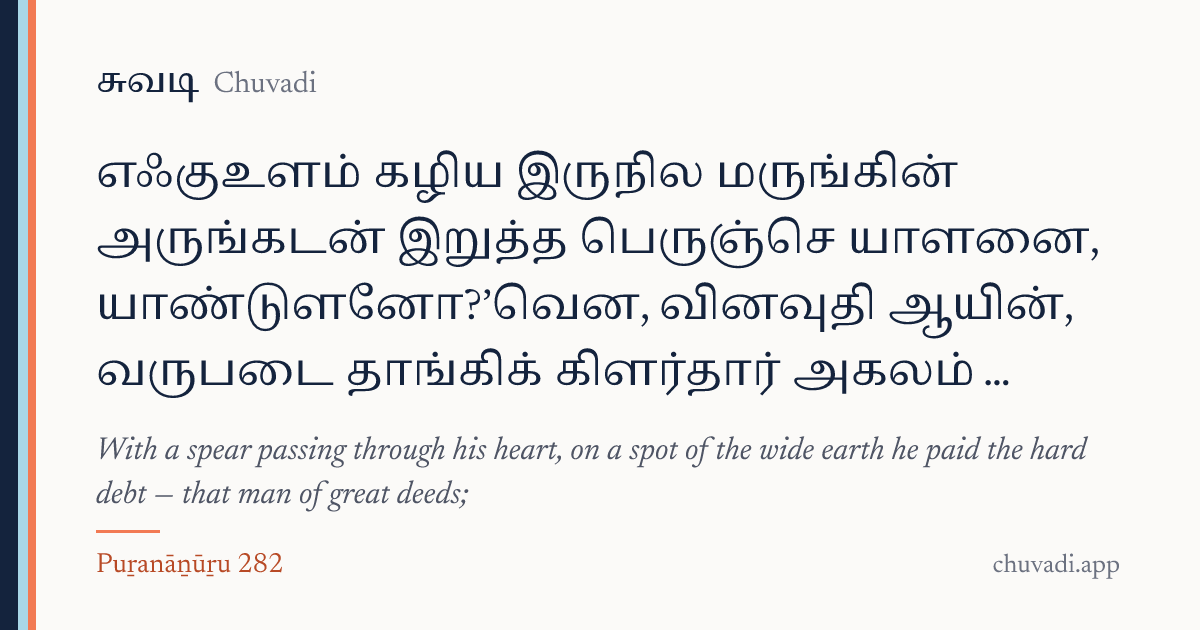
- With a spear passing through his heart, on a spot of the wide earth
- he paid the hard debt — that man of great deeds;
- if you ask, 'Where is he now?',
- he held back the oncoming army, and on his broad chest with its bright garland
- the strong warriors, to pay their own hard debt, struck,
- so that not even his body can be seen; his life is gone;
- as the fighters fell back and the other side passed away,
- battered beyond counting, broken and split apart,
- only his shield, and nothing else, was left on the field;
- having raised a fair fame that shines far off,
- he lives in the mouths of poets skilled in speech.
What the poem says
No tiṇai, turai, poet or subject is recorded for this poem in the edition, but its theme is clear: a hero who died in battle and lives on in poets' words.
The 'hard debt' (aruṅkaṭaṉ) in lines 2 and 5 is the warrior's duty to give his life for his king, and the poem uses the phrase for both sides: he paid his, and the enemy warriors who struck him were paying theirs. Where is he now? His body cannot even be found; only his shield remains on the field, smashed and split. But his fame stands, and he lives on in the mouths of poets.
Line 8 is uncertain: alakai pōki, describing the shattered shield, is taken loosely as 'battered beyond counting'; the precise sense of alakai here is not clear.