



புறநானூறு 283
பாடல் · The poem
Tap a word to see where else it occurs.
பொருள் · Meaning in TamilAI
ஒளிவீசும் சிவந்த குரலிப் பூக்களையுடைய குளிர்ந்த குளம் கலங்க, வாளை மீனை நாள்தோறும் இரையாகப் பெறும் நீர்நாய், அதைப் பெறாமல், பாம்பைப் போலக் கிடக்கும் வரால் மீன்களால் மயங்கி, பகையான முதலையோடு மாறிமாறித் திரும்பும் நாட்டையுடைய அழும்பிலின் தலைவன் அடங்காதவன்; அவன் பெருமையும் என்றும் உள்ளது. வலம்புரிச் சங்கையுடைய கோசர்களின் அவைக்களத்திலும், மன்றம் என்பதே கெடும்படி ... தன் தோழனுக்காக, சூழப்பட்ட மலைமுகடு போல நின்ற அவனுடைய மார்பில் வேல் தைத்து நிற்க, உயிர் பிரிவதற்கு முன்பே கடுமையாக, திண்ணையில் இறுகிய மணலால் பாவை செய்து விளையாடும் மெல்லிய தோள்களையுடைய மகளிர் அவனை நன்றாகக் காக்க, ... பசிய இலைகளோடு கூடிய மணமுள்ள தும்பைப் பூவை நெற்றியில் கட்டியவன் அவன்.
இது தும்பைத் திணை, பாண்பாட்டுத் துறை. அடை நெடுங் கல்வியார் பாடியது. இப்பாடலின் ஏழாம் அடியிலும் பன்னிரண்டாம் அடியிலும் பல சொற்கள் விடுபட்டுள்ளன; ஆகவே பாடலின் முழுப் பொருளையும், அழும்பிலின் தலைவனுக்கும் புண்பட்ட வீரனுக்கும் உள்ள தொடர்பையும் உறுதியாகச் சொல்ல முடியவில்லை.
ஆங்கிலம் · English translationAI
Translation
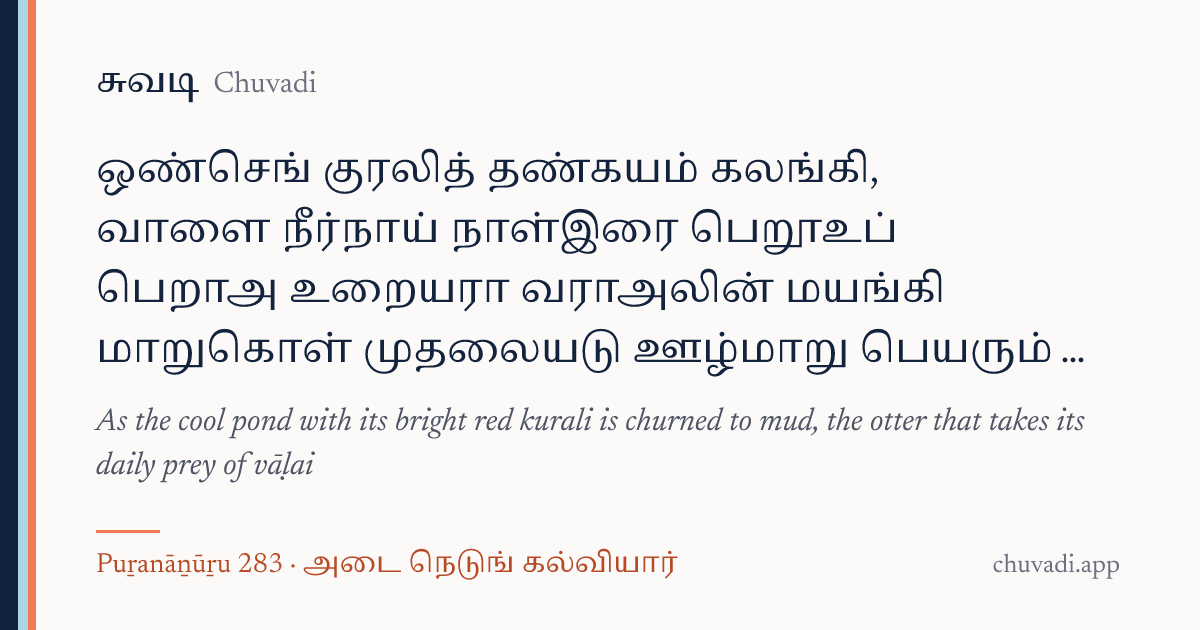
- As the cool pond with its bright red kurali is churned to mud,
- the otter that takes its daily prey of vāḷai
- fails to get it, and, confused by the vrāl that lie like snakes,
- turns about in turn with the crocodile, its rival —
- of such is the lord of Aḻumpil, who does not submit; and his greatness, ever,
- even in the assembly hall of the Kōcar with their right-whorled conch,
- so that what is called the common ground is ruined … for his comrade,
- like a hill ringed about, the spear lodged in his breast,
- and before his life went out, fiercely,
- the soft-shouldered women who play with dolls of packed sand on the platforms
- keeping him well,
- … with green leaves,
- he who tied the fragrant tumpai flower on his brow.
What the poem says
Aṭai Neṭuṅkalviyār's poem is in tumpai tiṇai, battle, with the turai pāṇpāṭṭu, a song connected with the bard. The text is badly damaged: line 7 has a gap in the middle, and line 12 has lost most of its words. What remains can only be partly construed, and the translation follows the surviving words without claiming a continuous sense.
The opening describes a pond in a fertile country, where an otter, its usual meal of vāḷai fish lost in the churned water, is confused by snake-like vrāl and wheels about with a crocodile. This seems to be the description of the land of 'the lord of Aḻumpil', who 'does not submit'. The Kōcar, a group with a right-whorled conch (valampuri), and their assembly hall are mentioned, but the connection is lost in the gap.
The latter part speaks of a warrior with a spear lodged in his chest, of women playing with sand dolls who look after him, and ends with 'the one who tied the fragrant tumpai flower on his forehead', the tumpai being the flower worn in battle. Who this warrior is, and how he relates to the lord of Aḻumpil, cannot be determined from the damaged text.