



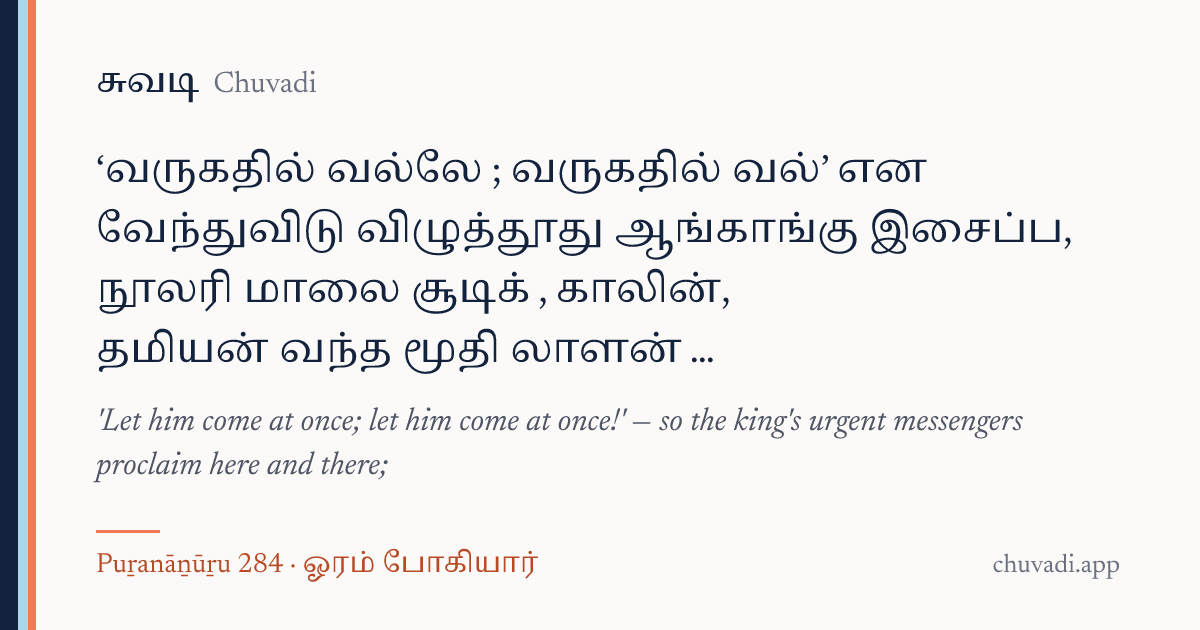
புறநானூறு 284
பாடல் · The poem
Tap a word to see where else it occurs.
பொருள் · Meaning in TamilAI
"விரைந்து வரட்டும், விரைந்து வரட்டும்" என்று வேந்தன் அனுப்பிய சிறந்த தூதர்கள் ஆங்காங்கே அறிவிக்க, நூலில் தொடுத்த பூமாலையைச் சூடிக்கொண்டு, காலால் நடந்து, தனியாகவே வந்தான் பழைய மறக்குடியைச் சேர்ந்தவன். அரிய போரைத் தாங்கி, முன்னணியில் நின்று, ஒருகையுடைய பெரிய யானையைக் கொன்று வீழ்த்தினான். அந்தப் பிணத்தின் கொம்பைத் தாங்கு கட்டையாகக் கொண்டு, வளைந்துபோன தன் வாய்மையுடைய வாளை நிமிர்த்திக்கொண்டே, தனக்கு அஞ்சி ஓடியவனின் முதுகைப் பார்த்துச் சிரிக்கிறான்.
இது தும்பைத் திணை; துறை 'பண்பாட்டு' என்று அச்சாகியுள்ளது, அது 'பாண்பாட்டு' ஆக இருக்கலாம். ஓரம் போகியார் பாடியது. ஒருகை என்பது துதிக்கையுடைய யானையைக் குறிக்கிறது.
ஆங்கிலம் · English translationAI
Translation
- 'Let him come at once; let him come at once!' — so
- the king's urgent messengers proclaim here and there;
- wearing a garland strung on thread, on foot,
- alone came the man of the ancient house;
- he bore the hard fight, and, standing in front, he struck down
- a huge one-handed corpse; using its tusk as a press,
- he straightens his true sword, which had bent,
- and laughs at the back of the man who fled from him.
What the poem says
Ōrampōkiyār's poem is in tumpai tiṇai, battle. Its turai is printed paṇpāṭṭu; this is very probably a misprint for pāṇpāṭṭu, the turai of the previous poem.
The king's messengers go round calling men to come quickly. One warrior of an old fighting family comes at once, alone and on foot, with a simple garland of flowers strung on thread. He takes the brunt of the fighting at the front and kills an elephant, called here 'the one with one hand', since its trunk is its hand.
The final picture is the poem's point. His sword has bent in the fighting, and he straightens it by pressing it against the dead elephant's tusk, laughing all the while at the retreating back of the enemy who fled from him. The calm of the gesture, in the middle of the battle, shows his contempt for the coward.