



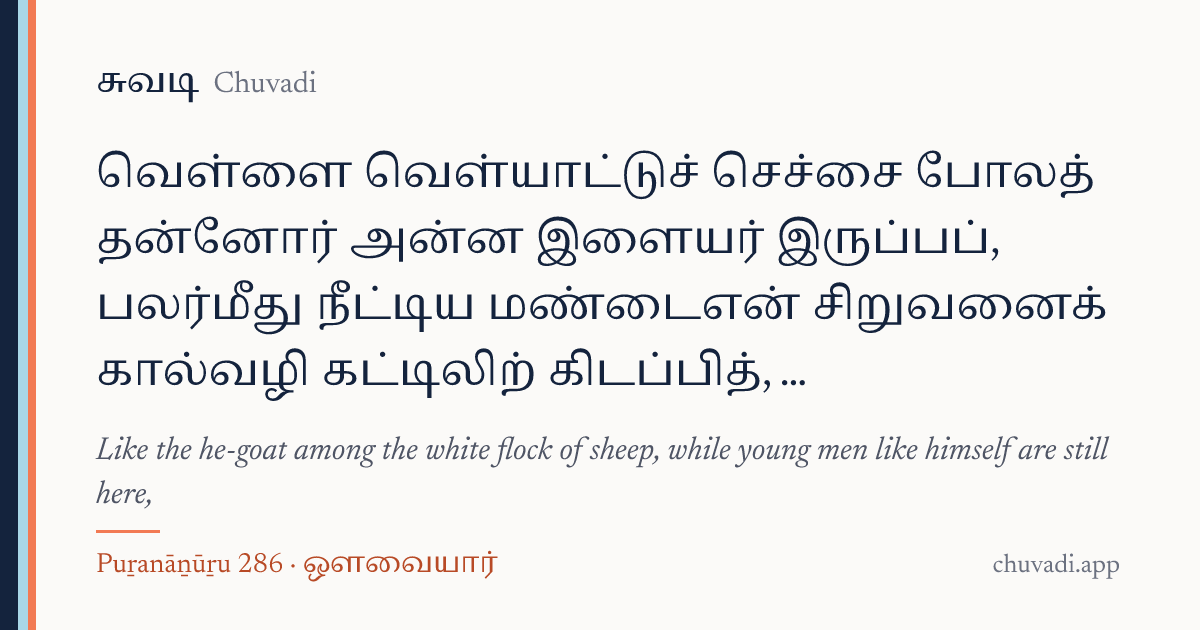
புறநானூறு 286
பாடல் · The poem
Tap a word to see where else it occurs.
பொருள் · Meaning in TamilAI
வெள்ளை வெள்ளாட்டு மந்தையில் தனித்து விளங்கும் கடாவைப் போல, தன்னைப் போன்ற இளைஞர்கள் பலர் இருக்கவும், பலருக்கும் மேலாக முதலில் கள்கிண்ணம் நீட்டப்பெற்ற என் சிறுமகனை, கால்வழியாகத் தூக்கிச் செல்லும் கட்டிலில் கிடத்தி, தூய வெள்ளை ஆடையால் போர்த்திவிட்டது; அவன் இல்லை!
இது கரந்தைத் திணை, வேத்தியல் துறை; ஆனால் பாடல் தாய் தன் மகனைக் குறித்துப் பேசுவதாக உள்ளது, துறைப் பெயர் இதற்குச் சரியாகப் பொருந்தவில்லை. ஔவையார் பாடியது. இறுதிச் சொல்லைப் 'போர்த்திவிட்டது, அவன் இல்லை' என்றும், 'போர்த்தவில்லை' என்றும் இருவகையாகக் கொள்ளலாம்; இரண்டாம் பொருளில், மகன் இன்னும் போரில் உயிர்விடவில்லையே என்று தாய் வருந்துவதாகும். இங்கே முதற்பொருள் கொள்ளப்பட்டது.
ஆங்கிலம் · English translationAI
Translation
- Like the he-goat among the white flock of sheep,
- while young men like himself are still here,
- my little son, to whom the bowl was held out above many others,
- it has laid on a cot carried feet first
- and covered with pure white cloth, and he is no more!
What the poem says
Auvaiyār's poem is in karantai tiṇai, the recovery of seized cattle, with the turai vēttiyal, a label usually tied to kingship; the poem itself is a mother's words about her son, and the turai fits it only loosely.
She describes him as standing out among his companions like a he-goat in a white flock, and as the one to whom the drinking bowl was offered first, ahead of many, a mark of honour that also meant he was expected to lead in danger. While other young men like him remain, he has been laid on a bier and covered with a white cloth.
The last word, pōrppittilatē, can be divided in two ways. Read as 'covered him, and he is gone', it is a lament. Read as 'has not covered him', it would be the mother's complaint that her son, though honoured above others, has not yet won a death in battle. The first reading is followed here; the second cannot be ruled out.