



புறநானூறு 287
பாடல் · The poem
Tap a word to see where else it occurs.
பொருள் · Meaning in TamilAI
துடிப்பறை கொட்டும் புலையனே! அடிக்கும் கோலைக் கையில் கொண்ட இழிசினனே! பருவகால மழையைப் போல அம்புகள் தைத்தாலும், வயலில் துள்ளும் கெண்டை மீனைப் போல வேல்கள் மின்னிப் பாய்ந்தாலும், பொன்னால் செய்த முகபடாம் அணிந்த பெருமைமிக்க யானை ஒளிரும் வாள் போன்ற தன் கொம்புகளின் முனையை மார்பில் அழுத்தி ஊன்றினாலும், புறமுதுகிட்டு ஓடாத பெருமையுடைய வீரர்களுக்கு, ஆழமான பொய்கையில் துள்ளிய வாளை மீன் நெல் நிறைந்த நீண்ட மனைகளின் குதிர்களின் அடியில் புரளும் குளிர்ந்த வளமான நிலத்தைப் பெறுவது என்ன பெரிது? அவர்கள் போரில் விழுந்தால், குற்றமற்ற மகளிரோடு கூடும் நல்ல மணவாழ்வை உயர்ந்த மேலுலகத்தில் நுகர்வார்கள். ஆகவே, புதிதாகத் தோன்றிய அந்த வேந்தனின் படை வருவதை இங்கிருந்தபடியே நீங்கள் காண்பீர்கள்!
இது கரந்தைத் திணை, நீண்மொழித் துறை; வீரன் தன் உறுதியை வஞ்சினமாகச் சொல்வது. சாத்தந்தையார் பாடியது. 'வம்ப வேந்தன்' என்பது புதிதாக வந்த, பெருமையற்ற பகை வேந்தனைக் குறிக்கிறது.
ஆங்கிலம் · English translationAI
Translation
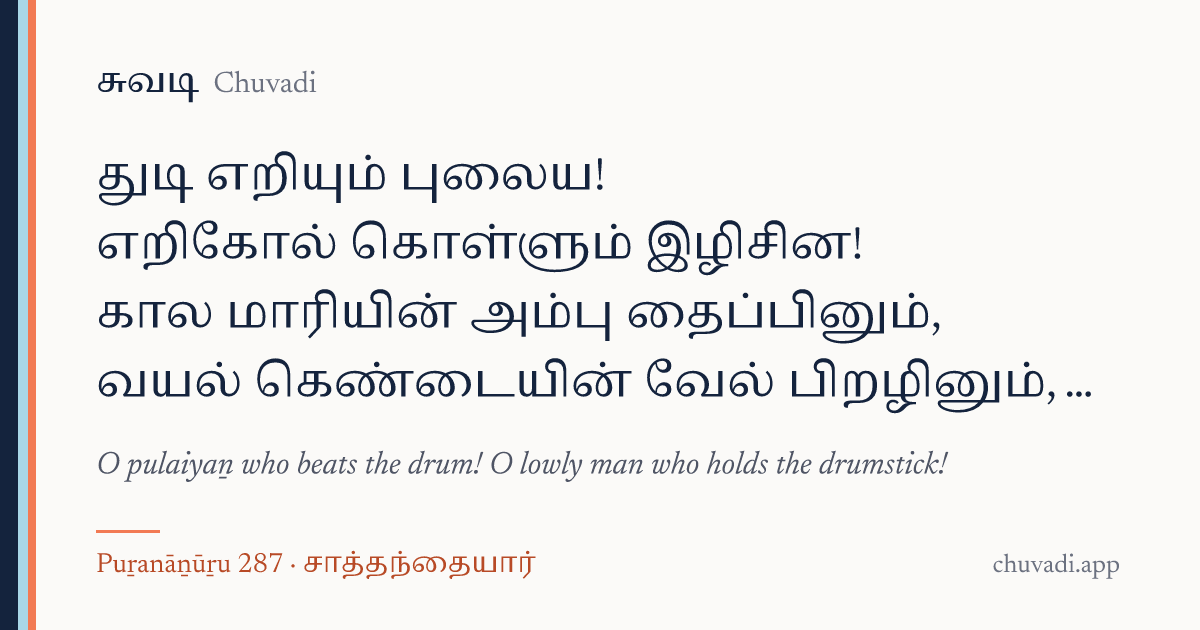
- O pulaiyaṉ who beats the drum!
- O lowly man who holds the drumstick!
- Even if arrows pierce like the rain in its season,
- even if spears flash like keṇṭai fish in the fields,
- even if the noble elephant with the gold-wrought face-plate
- drives in and plants the points of its shining sword-like tusks,
- for men of glory who do not run,
- where the vāḷai that leapt in the deep pond
- rolls at the foot of the granaries in long houses full of paddy,
- what is it to win such cool, fertile land? If they fall,
- the good marriage of spotless women
- they will enjoy in the world on high; and so,
- the army of this upstart king,
- you will see it coming, even from here!
What the poem says
Cāttantaiyār's poem is in karantai tiṇai with the turai nīṇmoḻi, a warrior's vow or bold declaration. It is addressed to the drummer, a pulaiyaṉ, one of the low-ranked men who beat the war drum, called in line 2 iḻiciṉaṉ, 'lowly one'.
The speaker describes his warriors: men who will not run though arrows fall like monsoon rain, spears flash like fish darting in the paddy, and armoured elephants drive their tusks into them. For such men, he asks, what is the reward of rich farmland, a land so wet that fish from the ponds roll up to the granaries? It means little to them, because if they die they will enjoy marriage with pure women in the upper world.
The last lines are a challenge: the army of the 'upstart king' (vampa vēntaṉ), a newcomer or an enemy without standing, will be seen coming from right here, that is, his men will stand their ground. Line 10's yāvatu, 'what is it?', is read as a dismissive question.