



புறநானூறு 29
பாடல் · The poem
Tap a word to see where else it occurs.
பொருள் · Meaning in TamilAI
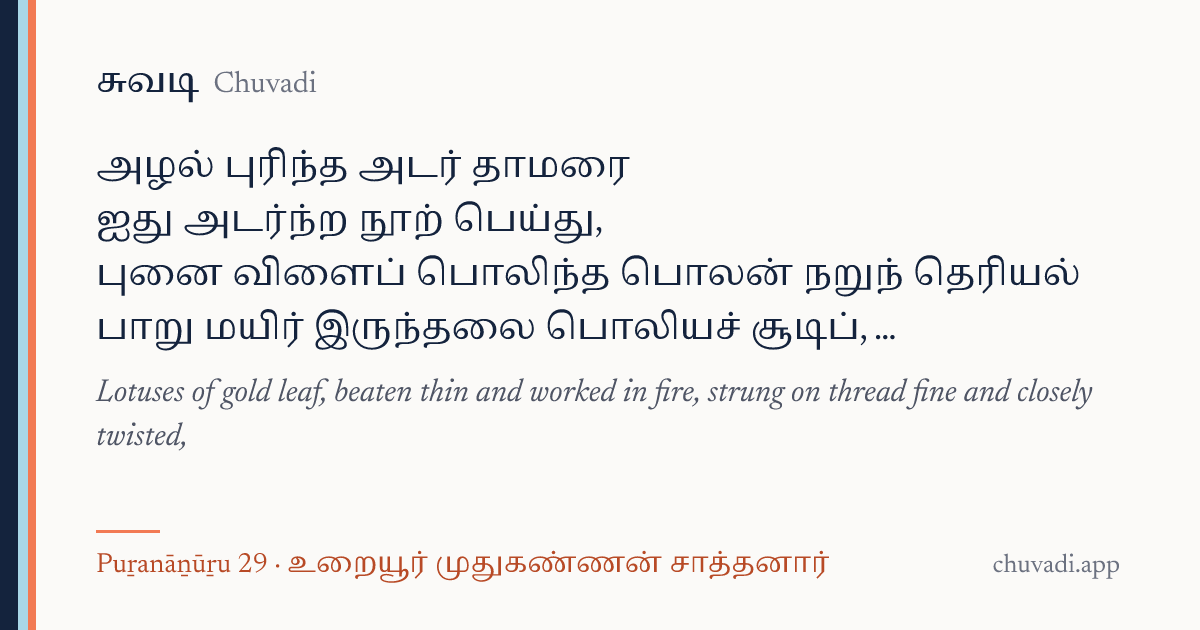
நெருப்பில் இட்டு அடித்துச் செய்த மெல்லிய பொற்றாமரைப் பூக்களை, நுண்ணிய நெருக்கமான நூலில் கோத்து, வேலைப்பாட்டால் அழகு பெற்ற மணமுள்ள பொன்மாலையைப் பாணர்களின் பரட்டைத் தலைகள் பொலியும்படி சூட்டுகிறாய். உன் காலை மகிழ்ச்சி மன்றத்தைப் பாணர்கள் சூழ்ந்து நிறையட்டும்! அவர்கள் சென்ற பின், சந்தனம் உலர்ந்த உன் அகன்ற மார்பை மகளிரின் தோள்கள் தழுவட்டும்! வெறுப்பில்லாத உன் முற்றத்தில் முரசு இனிதாக ஒலிக்க, கொடியவரை அடக்கியும் நல்லவரைக் காத்தும், முறை தவறாமல் சோர்வின்றி ஆட்சி செய். 'நல்லதால் நன்மையும் தீயதால் தீமையும் வருவதில்லை' என்று சொல்வோருக்கு நீ ஒருபோதும் உறவாகாதே! நெல் விளையும் வயலில் பறவைகளை ஓட்டுவோர், உதிர்ந்த பனைமடலை விறகாக்கி மீன் சுட்டுத் தின்று, கடுங்கள்ளைக் குடித்தும் நிறைவடையாமல் தென்னையின் இளநீரை உதிர்க்கும் வளமான நல்ல நாட்டைப் பெற்று உன் படைவீரர் மகிழ்கின்றனர். அவர்கள் மேல் அன்பை முதலில் காட்டு. கூவை இலை வேய்ந்த நாற்கால் பந்தலையுடைய சிறு குடில் வாழ்க்கையை விட்டு நீங்கி, வருவோர்க்கு உதவும் நட்பின் பண்புடன் உன் செயல்கள் முறையாக அமையட்டும். விழாவில் கூத்தர் ஒருவர் பின் ஒருவராக ஆடிச் செல்வது போல, இவ்வுலகில் மக்களும் முறைமுறையாக வந்து மறைகின்றனர். ஆகவே உன்னைச் சூழ்ந்த சுற்றத்தார் மகிழ்ச்சியில் வாழட்டும்! நீ காத்த செல்வம் புகழைக் காப்பதற்குப் பயன்படட்டும்!
இது பொதுவியல் திணை, முதுமொழிக் காஞ்சித் துறை: வாழ்க்கை நிலையில்லாதது என்னும் பழைய அறிவுரையைச் சொல்வது. பாடியவர் உறையூர் முதுகண்ணன் சாத்தனார்; பாடப்பட்டோன் சோழன் நலங்கிள்ளி. 'சிறுமனை வாழ்க்கை' என்பது கஞ்சத்தனமான குறுகிய வாழ்வையா, உதவி வேண்டி வரும் எளியோரின் வீடுகளையா குறிக்கிறது என்பது உறுதியாகத் தெரியவில்லை; 'பற்றா மாக்கள்' என்னும் வரியின் பொருளும் ஐயத்துக்குரியது. இரண்டாம் வரியில் 'அடர்ந்ற' என்பதை 'அடர்ந்த' எனவும், மூன்றாம் வரியில் 'விளை' என்பதை 'வினை' எனவும் கொண்டோம்.
ஆங்கிலம் · English translationAI
Translation
- Lotuses of gold leaf, beaten thin and worked in fire,
- strung on thread fine and closely twisted,
- a fragrant golden garland, splendid with crafted work,
- set shining on great heads of rough, straggling hair:
- may bards crowd your hall of morning cheer!
- And after the crowding of the bards is over, may women's
- shoulders crowd your broad chest where the sandal paste dries! So,
- in your courtyard free of rancour, as the drum sounds sweetly,
- crushing the cruel and sheltering the upright,
- never slackening in a justice that does not break,
- 'there is no good that comes of good, no evil of evil' —
- to those who say this, may you never be a kinsman!
- Those who drive off the birds that settle on the paddy fields
- roast fish on firewood of fallen palm fronds,
- and, not content even when they have drained the strong toddy,
- knock down tender coconuts from the palms: such a rich, good land
- your soldiers have been given, and they rejoice;
- put kindness first for them, before those who are not your own;
- from the four-post shed thatched with kūvai leaves,
- from the life of the small hut, turn away; to those who come
- may your deeds, with the grace of friendship that gives help,
- keep to their fitting order! As at a festival
- the dancers come in their turns, so, turn by turn,
- those who play their part pass on in this world; may your gathered
- kin be held in joy around you!
- May the wealth you have guarded go to the keeping of fame!
What the poem says
Uṟaiyūr Mutukaṇṇaṉ Cāttaṉār addresses the Cōḻa king Nalaṅkiḷḷi with a string of wishes and counsels. The colophon files it under potuviyal, the 'general' theme, with the turai mutumoḻik kāñci: wisdom drawn from old sayings about the passing nature of life. The poem moves from blessing to advice and ends with that sober thought.
It opens with the king's generosity: he places golden lotuses on the unkempt heads of bards. The poet wishes that bards may throng his morning hall and, afterwards, women his chest. Then comes the moral core: may he punish the wicked and protect the good with unbroken justice, and never side with those who deny that good and evil deeds bear their fruit.
Lines 13–17 picture the land his soldiers have received, so rich that bird-scarers in the fields roast fish, drink toddy and still pull down coconuts. The king is asked to care for these men first. Lines 19–22 are harder: the 'small hut' with its kūvai-thatched shed may be a picture of narrow, stingy living that the king should leave behind, or the humble homes of those who come to him for help; the text supports either. The close compares life to a festival where dancers take their turns and leave, and asks that his kin live in joy and his wealth serve his fame.
In line 2 the edition prints அடர்ந்ற, read here as அடர்ந்த 'closely made'; in line 3 விளை is read as வினை 'workmanship'. Line 18, with பற்றா மாக்கள், is uncertain.