



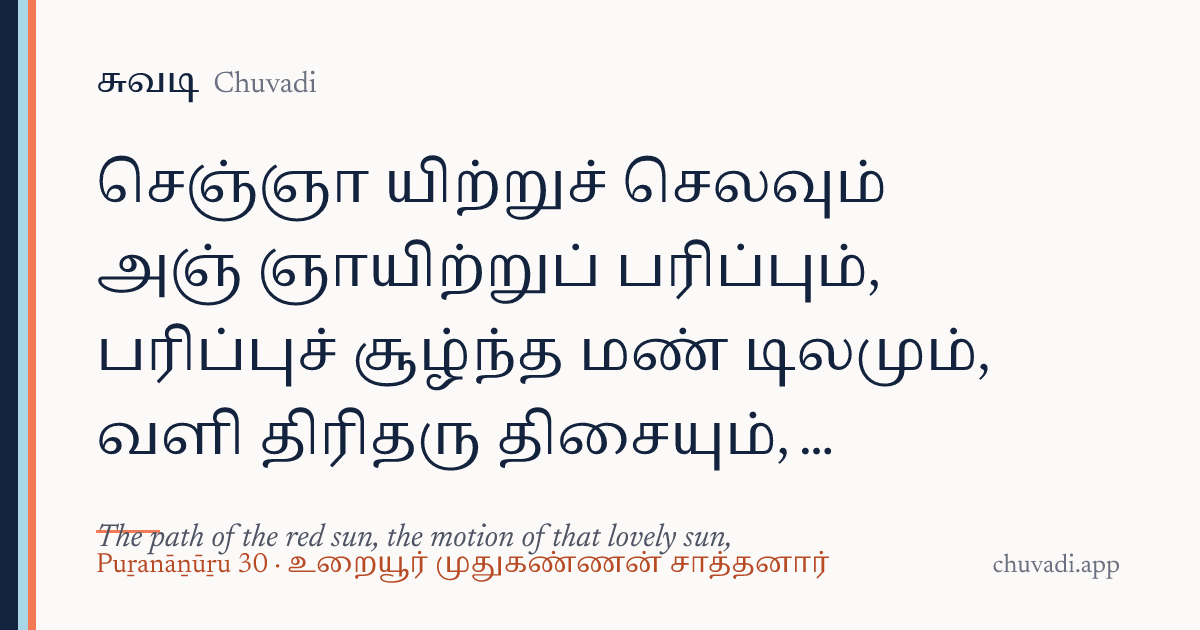
புறநானூறு 30
பாடல் · The poem
Tap a word to see where else it occurs.
பொருள் · Meaning in TamilAI
செஞ்ஞாயிற்றின் செலவையும், அந்த ஞாயிற்றின் இயக்கத்தையும், அந்த இயக்கம் சுற்றிவரும் வான வட்டத்தையும், காற்று உலவும் திசைகளையும், எந்தப் பற்றுக்கோடும் இல்லாமல் நிற்கும் வானத்தையும், நேரில் சென்று அளந்து அறிந்தவர்கள் போல 'இவை இவ்வளவு' என்று எப்போதும் சொல்லும் அறிஞர்களும் உண்டு. ஆனால் நீ அவை எல்லாவற்றையும் கடந்த அறிவுடையவனாக இருந்தும் உன்னை அடக்கிக் கொள்கிறாய். யானை எறிவதற்காகத் தன் கன்னத்தில் அடக்கி வைத்திருக்கும் கல்லைப் போல, உன் வலிமையை மறைத்து வைத்திருக்கிறாய். அப்படியிருக்க, புலவர்கள் உன்னை வெளிப்படையாக எப்படிப் பாடுவார்கள்? பாய்மரத்தையும் மேற்பாயையும் இறக்காமல், மேலே உள்ள சுமையைக் குறைக்காமல், புகாரில் தடையின்றி நுழைந்த பெருங்கப்பல்கள், வயல்களுக்கு இடையிலான பெருவழிகளில் கடலின் பலவகைப் பண்டங்களைக் கொட்டும் நாட்டிற்கு உரியவனே!
இது பாடாண் திணை, இயன்மொழித் துறை: பாடப்படுவோரின் இயல்பான பெருமையைப் புகழ்வது. பாடியவர் உறையூர் முதுகண்ணன் சாத்தனார்; பாடப்பட்டோன் சோழன் நலங்கிள்ளி. 'தகாஅர்' என்னும் சொல்லைத் 'தடையின்றி' என்று கொண்டோம்; அதன் சரியான பொருள் உறுதியாகத் தெரியவில்லை.
ஆங்கிலம் · English translationAI
Translation
- The path of the red sun,
- the motion of that lovely sun,
- the circle of sky that motion goes around,
- the quarters where the wind wanders,
- the sky that stands with nothing to hold it — of all these
- there are some who, as though they had gone and measured them, will always
- say 'they are this much'; yet you, with all
- your knowledge knowing more than that, keep yourself close,
- and like the stone an elephant holds in its cheek to hurl,
- you keep your strength hidden; so, in the open,
- how can poets sing of you? With the mast
- and topsail not lowered, the load on deck not lightened,
- the great ships that have sailed into Pukār, unchecked,
- spill out on the broad roads between the fields
- the many goods of the sea: lord of such a land!
What the poem says
This is a praise poem (pāṭāṇ) by Uṟaiyūr Mutukaṇṇaṉ Cāttaṉār for Cōḻaṉ Nalaṅkiḷḷi, with the turai iyaṉmoḻi, praise of a patron's inborn nature. Its argument is a compliment by way of a complaint: the poet cannot properly sing of a king who hides his greatness.
It opens with learned men who claim to know the sun's course, the circle of the heavens, the winds' paths and the unsupported sky, as if they had walked out and measured them. The king's mind goes beyond such knowledge, yet he keeps his own counsel. The poet likens him to an elephant that hides a stone in its cheek, ready to throw: the strength is there but concealed, so how is a poet to describe it?
The closing lines turn to the king's land. Great ships enter Pukār, the Cōḻa port, still under full sail and carrying their loads, and the sea's many goods are poured out along the roads. The word தகாஅர் in line 13 is difficult; it is taken here as 'without being held back', but its exact sense is uncertain, as is the precise picture of ships that neither strike sail nor unload.