



புறநானூறு 304
பாடல் · The poem
Tap a word to see where else it occurs.
பொருள் · Meaning in TamilAI
வளைந்த குழையணிந்த பெண்களுக்கு மாலை சூட்டி, நடுக்கும் குளிரைப் போக்க வடிகட்டிய கள்ளைக் குடித்து, காற்றின் வேகத்தையும் வெல்லும் நல்ல நடையுடைய குதிரைக்குச் சேணம் பூட்ட விரைகிறாய் நீ. 'நேற்று என் அண்ணனைக் கொன்றவனுடைய தம்பியோடு நாளை ஒன்றாகப் போர் செய்வேன்' என்று சொல்லி, தன் ஒட்டிய வயிற்றுக்கு உணவு கொடுக்கவும் நில்லாமல், வலிய குதிரையை வேகமாகச் செலுத்துகிறான் என்று சொல்கிறார்கள். அதைக் கேட்டு, வெற்றி முரசுடைய, போரில் வெல்லும் பகை அரசனின் ஒளிவீசும் பெரிய பாசறையே நடுங்கியது; 'அவன் சொன்ன சொல் இரண்டுபட்டுப் போகாது' என்று அஞ்சியது.
இது தும்பைத் திணையில், குதிரை மறம் என்னும் துறையில் அமைந்த பாடல்; பாடியவர் அரிசில் கிழார். ஒரு வீரன் போருக்கு முந்திய இரவில் காட்டும் ஆர்வமும் அவன் சொல்லின் உறுதியும் பாடப்படுகின்றன. 'எம்முன் தப்பியோன்' என்பதற்கு 'என் அண்ணனைக் கொன்றவன்' என்று பொருள் கொள்ளப்பட்டுள்ளது; 'என்னிடமிருந்து தப்பியவன்' என்றும் கொள்ளலாம்.
ஆங்கிலம் · English translationAI
Translation
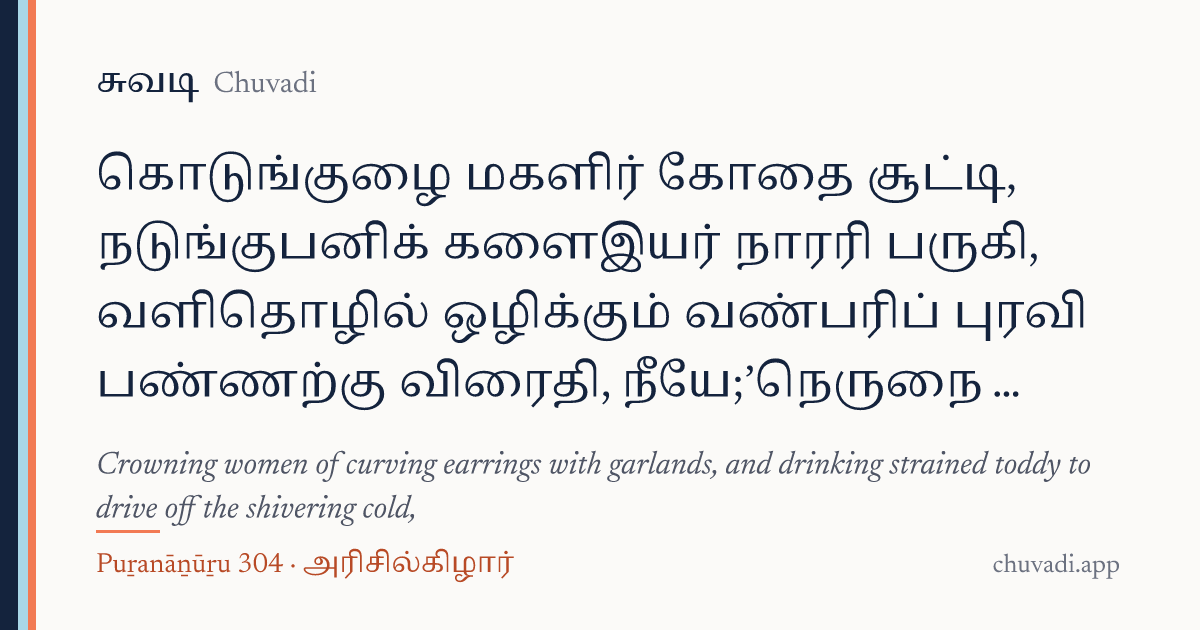
- Crowning women of curving earrings with garlands,
- and drinking strained toddy to drive off the shivering cold,
- your fine-paced horse that puts an end to the wind's labour
- you hurry to saddle, you; and 'Yesterday
- the man who slew my elder brother — with his younger brother, together,
- tomorrow I shall give battle,' he says, and
- without even feeding his own lean belly, his strong horse
- he drives on hard, they say; hearing that,
- the victorious king of the drum that brings victory —
- his great shining war-camp trembled,
- saying, 'What he has said will not turn out two ways.'
What the poem says
Aricil Kiḻār shows a warrior in the night before battle. Having garlanded the women and drunk strained toddy against the cold, he is already hurrying to saddle his swift horse. He has sworn that tomorrow he will fight the younger brother of the man who killed his own elder brother, and he rides out without stopping to eat. The news reaches the enemy king, and his whole camp shakes: this man's word, they say, never comes out two ways.
The tiṇai is tumpai, open battle, and the turai kutirai maṟam, the valour of the horse; the horse is called 'one that puts an end to the wind's work', that is, one that outruns the wind.
The poem moves from second person (lines 1–4, 'you hurry') to reports in the third person ('he says', 'they say'). 'Em muṉ tappiyōṉ' in line 5 is read as 'the one who wronged, that is, killed, my elder brother'; another reading takes 'tappiyōṉ' as 'the one who escaped from me'. The Tamil places 'neṟunai', 'yesterday', at the end of line 4, which the English keeps.