



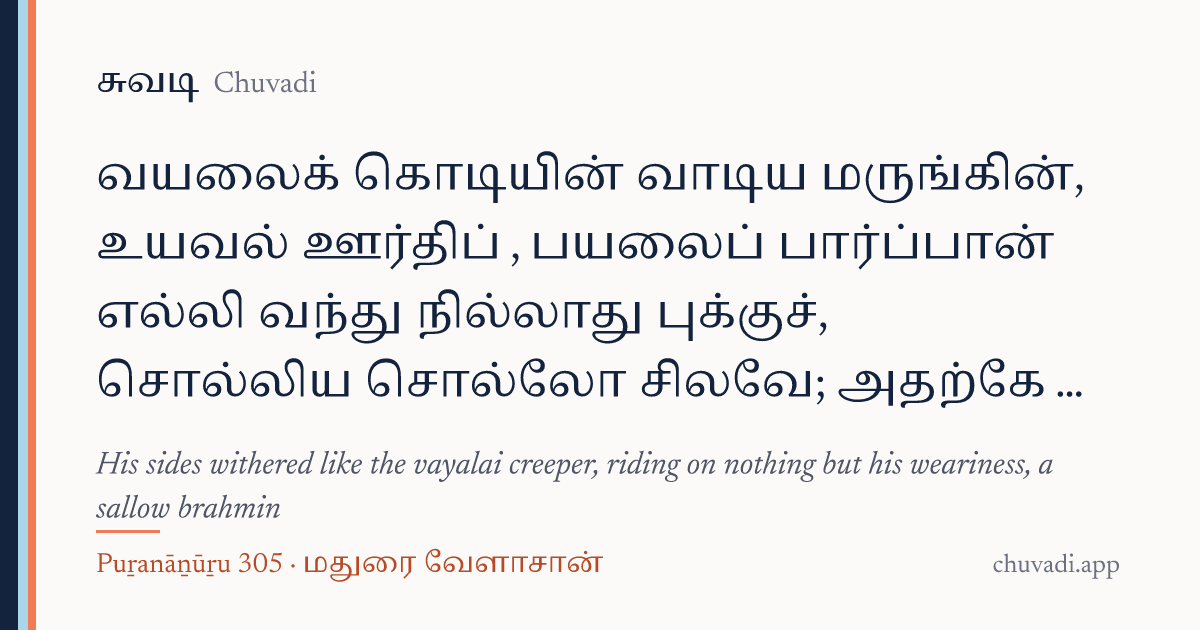
புறநானூறு 305
பாடல் · The poem
Tap a word to see where else it occurs.
பொருள் · Meaning in TamilAI
வயலைக் கொடியைப் போல வாடி மெலிந்த உடலுடன், களைப்பையே ஊர்தியாகக் கொண்டு வந்த வெளிறிய நிறமுடைய ஒரு பார்ப்பான், இரவில் வந்து, எங்கும் நில்லாமல் நேரே உள்ளே புகுந்தான். அவன் சொன்ன சொற்கள் சிலவே. அவற்றுக்காகவே, மதிலில் ஏறுவதற்கான ஏணிகளும் கதவுகளின் தாழ்களும் அகற்றப்பட்டன; சிறப்பாகப் பயிற்றப்பட்ட போர்யானைகளின் மணிகளும் கழற்றப்பட்டன.
இது வாகைத் திணையில், பார்ப்பன வாகை என்னும் துறையில் அமைந்த பாடல்; வாகை வெற்றியைக் குறிக்கும், இங்கே அவ்வெற்றி போரால் அன்றித் தூதுவனின் சொல்லால் வந்த அமைதி. பாடியவர் மதுரை வேளாசான். அவன் யாருடைய தூதன், என்ன சொன்னான் என்பது பாடலில் இல்லை. 'சீப்பு' என்ற சொல்லின் பொருள் இங்கு உறுதியாகத் தெரியவில்லை; கதவுத் தாழ் என்று கொள்ளப்பட்டுள்ளது.
ஆங்கிலம் · English translationAI
Translation
- His sides withered like the vayalai creeper,
- riding on nothing but his weariness, a sallow brahmin
- came at nightfall and, without halting, went straight in;
- the words he spoke were few; for those alone
- the scaling ladders and the gate-bars were taken away,
- and the bells were stripped from the finely trained elephants.
What the poem says
A very short poem about the power of a few words. A thin, pale brahmin, worn out from his journey and arriving with no proper mount, comes in at nightfall and goes straight to the king. He says only a little. Yet because of it the siege is called off: the ladders for scaling the walls and the bars of the gates are put away, and the war elephants have their bells taken off, as they are no longer going into battle.
The tiṇai is vākai, victory, and the turai pārppaṉa vākai, 'the victory of a brahmin'; the victory here is a peace won by an envoy's speech rather than by arms. The poet is Maturai Vēḷācāṉ.
The poem does not say whose envoy he is or what he said; it shows only the effect. 'Uyaval ūrti', literally 'one whose vehicle is distress', is understood as saying that he came on foot, carried only by his fatigue. 'Cīppu' in line 5 is taken as the bars or bolts of a fort gate, set aside along with the siege ladders; its exact sense in this context is not certain.