



புறநானூறு 310
பாடல் · The poem
Tap a word to see where else it occurs.
பொருள் · Meaning in TamilAI
பால் கொண்டுவந்து ஊட்டினாலும் குடிக்கமாட்டான்; அதனால் சினமில்லாமல் நான் ஓங்கிய சிறிய கோலுக்கு அஞ்சி, அழுது வருந்துவான் ஒருகாலத்தில். இப்போதோ, புள்ளிகள் நிறைந்த முகமுடைய யானைகளைக் கொன்றும் அமையாதவனாக, முன்பு போரில் வீழ்ந்த வலிமையுடையவனின் மகன், தன் புண்ணில் தைத்த அம்பையும் பொருட்படுத்தவில்லை என்று சொல்கிறார்கள். குதிரையின் பிடரிமயிர் போன்ற குடுமியுடன், அரும்பும் மென்மையான தாடியுடன், அவன் கேடயத்தின் மேல் கிடக்கிறான்.
இது தும்பைத் திணையில், நூழிலாட்டு என்னும் துறையில் அமைந்த பாடல்; பகைவர் பலரைக் கொல்லும் வீரனைப் பாடுகிறது. பாடியவர் பொன்முடியார். ஒரு தாய் தன் மகனின் குழந்தைப் பருவத்தையும் இன்றைய வீரத்தையும் ஒப்பிட்டுப் பேசுகிறாள். அவன் கேடயத்தின் மேல் புண்பட்டுக் கிடக்கிறானா, இறந்து கிடக்கிறானா என்பது பாடலில் தெளிவாகச் சொல்லப்படவில்லை.
ஆங்கிலம் · English translationAI
Translation
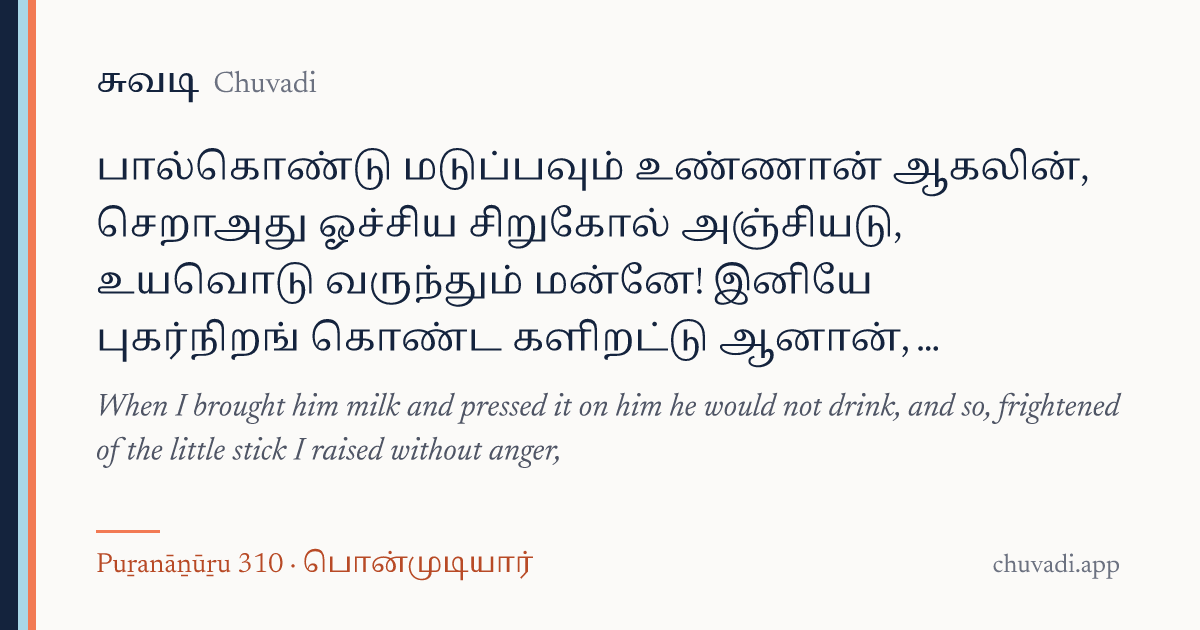
- When I brought him milk and pressed it on him he would not drink, and so,
- frightened of the little stick I raised without anger,
- he would fret and cry, once; but now,
- this one who never tires of killing spotted-faced elephants,
- son of the strong man who fell in former days,
- pays it no heed, they say — the arrow lodged in his wound;
- with his tuft of hair like a horse's mane,
- he lies upon a shield, the one with the first soft down on his chin.
What the poem says
Poṉmuṭiyār gives the words of a mother. She remembers her son as a small child who would not drink his milk and cried when she raised a little stick at him, though never in anger. Now the same boy, son of a brave father who fell in an earlier battle, has become a killer of war elephants; people tell her he does not even notice the arrow in his wound. In the last lines he lies on a shield, his hair tufted like a horse's mane, his chin showing only the first soft growth of a beard.
The tiṇai is tumpai, battle, and the turai nūḻilāṭṭu, praise of a warrior who cuts down many foes. The contrast between the timid child and the fearless young fighter is the heart of the poem, and the closing picture of his youth gives it its pain.
Whether the young man is alive or dead is not said. Lying on a shield could mean that he is resting wounded or that he has been laid out on it after death. Lines 5–6 are compressed: 'uṉṉilaṉ eṉṉum', 'he does not think of it, they say', is read with the arrow in the wound as its object.