



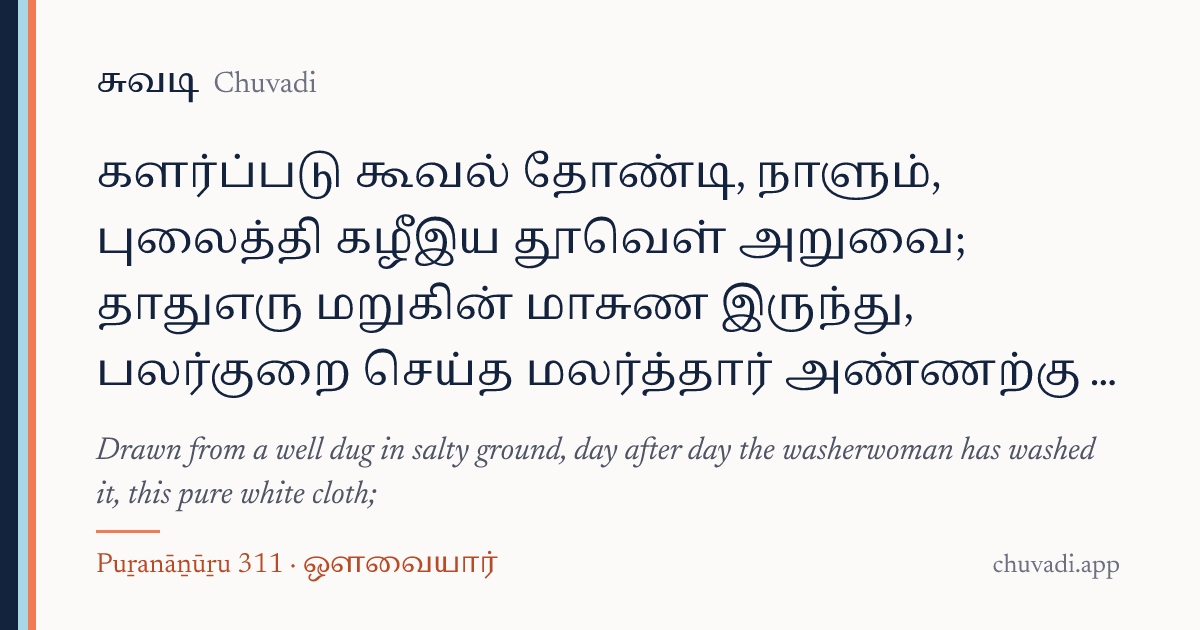
புறநானூறு 311
பாடல் · The poem
Tap a word to see where else it occurs.
பொருள் · Meaning in TamilAI
உவர் நிலத்தில் தோண்டிய கிணற்றின் நீரால் நாள்தோறும் வண்ணாத்தி துவைத்த தூய வெண்மையான ஆடை அது. ஆயினும் புழுதியும் சாணமும் நிறைந்த தெருவில் அது அழுக்காகும்படி அமர்ந்து, பலருடைய குறைகளைத் தீர்த்த, மலர்ந்த மாலையணிந்த தலைவனுக்கு, போர்க்களத்தில் துணையாக ஒருவரும் இல்லை, ஐயோ! சிறப்புடைய அவன் சிவந்த கண்கள் சினத்தால் புகைய, ஒரே ஒரு கேடயத்தைக் கொண்டு தன்னை மறைத்துக்கொண்டு நிற்கிறான், அந்தப் பெருந்தன்மையுடையவன்.
இது தும்பைத் திணையில், பாண் பாட்டு என்னும் துறையில் அமைந்த பாடல்; பாணன் ஒருவன் வீரனைப் பற்றிப் பாடுவதாக அமைவது இத்துறை. பாடியவர் ஔவையார். ஐந்தாம் அடியை 'அவனுக்கு ஈடானவர் ஒருவரும் இல்லை' என்றும் பொருள் கொள்ளலாம்; இங்கே 'துணையாக ஒருவரும் இல்லை' என்று கொள்ளப்பட்டுள்ளது.
ஆங்கிலம் · English translationAI
Translation
- Drawn from a well dug in salty ground, day after day
- the washerwoman has washed it, this pure white cloth;
- yet sitting in the street of dust and dung until it was soiled,
- for the lord with the blossoming garland, who met the wants of many,
- there is no one at all, alas, in the battle;
- his fine red eyes smouldering, with a single
- shield he covers himself, this man of worth.
What the poem says
Auvaiyār draws a lord in two moments. In peace, he wears a spotless white cloth washed daily by the washerwoman with water from a brackish well, and yet he sits down in the dusty, dung-strewn street among the people, letting it get dirty, and attends to the needs of many. In battle, there is no one left to stand with him; his eyes red with anger, he faces the enemy alone behind his single shield.
The tiṇai is tumpai, battle, and the turai pāṇ pāṭṭu, 'the song of the bard', a poem in which a bard speaks of a warrior. The contrast is between the many he once helped and the loneliness in which he now fights.
Line 5 is read as 'there is no one with him in the fight'; it could also be taken as 'there is no one equal to him', which would turn the lines into pure praise. 'Pukaiya' in line 6, literally 'smoking', is understood as eyes burning with rage. The poem does not name the lord or say how the fight ended.