



புறநானூறு 313
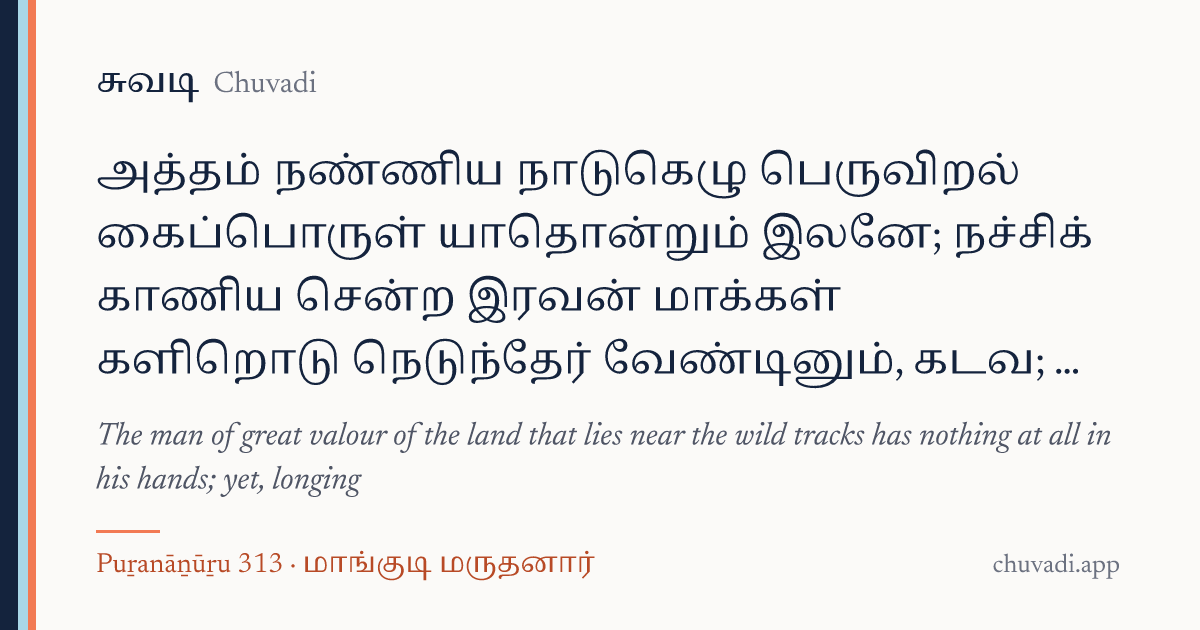
பாடல் · The poem
Tap a word to see where else it occurs.
பொருள் · Meaning in TamilAI
காட்டுவழிகளை அடுத்துள்ள நாட்டைச் சேர்ந்த பெருவீரன் கையில் எந்தப் பொருளும் இல்லாதவன். ஆயினும் அவனைக் காண விரும்பிச் செல்லும் இரவலர்கள் யானைகளையும் நீண்ட தேர்களையும் கேட்டாலும் பெறுவார்கள். உப்பு ஏற்றிய வண்டிகளை ஓட்டும் உமணர்களின் வண்டிகள் அச்சு முறிந்து கிடக்கும் காட்டுக் குன்றைப் போல, அவன் மனத்தில் கொண்டிருக்கும் செல்வம் இகழத்தக்கது அன்று.
இது வாகைத் திணையில், வல்லான் முல்லை (வல்லாண் முல்லை) என்னும் துறையில் அமைந்த பாடல்; தன் சிறிய ஊரைக் காக்கும் வலிமையும் தன் வருவாய்க்கு மேல் கொடுக்கும் வள்ளன்மையும் உடைய தலைவனைப் புகழ்வது இத்துறை. பாடியவர் மாங்குடி மருதனார். அச்சு முறிந்த வண்டிகள் கிடக்கும் குன்று என்ற உவமையின் நோக்கம் உறுதியாகத் தெரியவில்லை; வெளியே தெரியாத வளத்தைக் குறிக்கலாம்.
ஆங்கிலம் · English translationAI
Translation
- The man of great valour of the land that lies near the wild tracks
- has nothing at all in his hands; yet, longing
- to see him, the suppliants who go to him,
- even if they ask for elephants and tall chariots, will have them;
- like the hill in the wild where the carts of salt-traders, loaded with salt,
- lie with broken axles,
- not to be scorned is the wealth he keeps in mind.
What the poem says
Māṅkuṭi Marutaṉār praises a chieftain of the wild borderlands who seems to own nothing, and yet gives elephants and chariots to any suppliant who asks. The tiṇai is vākai, victory, and the turai vallāṉ mullai, which praises the strength and steadiness of a chieftain, often the lord of a small, poor place, who is generous beyond his means.
The closing simile is hard. It compares his hidden resources to a hill in the wilderness where the salt-traders' carts have broken their axles. One way to understand it is that such a place, which looks like a heap of wreckage, in fact holds goods and spare timber that travellers can draw on; so his wealth, invisible in his hands, is real and should not be underestimated. Another possibility is that the hill is a landmark on the salt road, steep and hard, standing for the difficulty and certainty of his gifts. The phrase 'eḷ amaivu iṉṟu', 'without any room for scorn', is read as the poem's final judgment.