



புறநானூறு 314
பாடல் · The poem
Tap a word to see where else it occurs.
பொருள் · Meaning in TamilAI
வீட்டுக்கு விளக்காக விளங்கும் ஒளிவீசும் நெற்றியுடையவளின் கணவன் அவன்; போர்முனைக்கு எல்லைச்சுவராக நிற்கும், வெற்றி வேலையுடைய பெருந்தகை அவன். நடுகற்கள் உயர்ந்து நிற்கும், சருகுகள் பரவிய பாழ்நிலத்தையும், சிறிய கொட்டையுடைய நெல்லிமரங்களையும் கொண்ட வன்னிலத்துச் சிறிய ஊருக்கு அவனே குடிமக்களும் அவனே தலைவனும் ஆவான். தன் அரசன் துன்பத்தில் வீழ்ந்தால், கொடிகளை உயர்த்திக்கொண்டு நிலைகுலைந்து எழும் படைக்கு அவன் ஒருவனே அணையாக நின்று தடுப்பான்.
இது வாகைத் திணையில், வல்லான் முல்லை (வல்லாண் முல்லை) என்னும் துறையில் அமைந்த பாடல்; சிற்றூர்த் தலைவனின் வலிமையைப் புகழ்கிறது. பாடியவர் ஐயூர் முடவனார். 'குடியும் மன்னும் தானே' என்பதற்கு 'அவனால்தான் குடிமக்கள் நிலைத்திருக்கின்றனர்' என்றும் பொருள் கொள்ளலாம். ஆறாம் அடியில் சொல்லப்படும் படை அரசனின் சிதைந்த படையா, பகைவர் படையா என்பது உறுதியில்லை.
ஆங்கிலம் · English translationAI
Translation
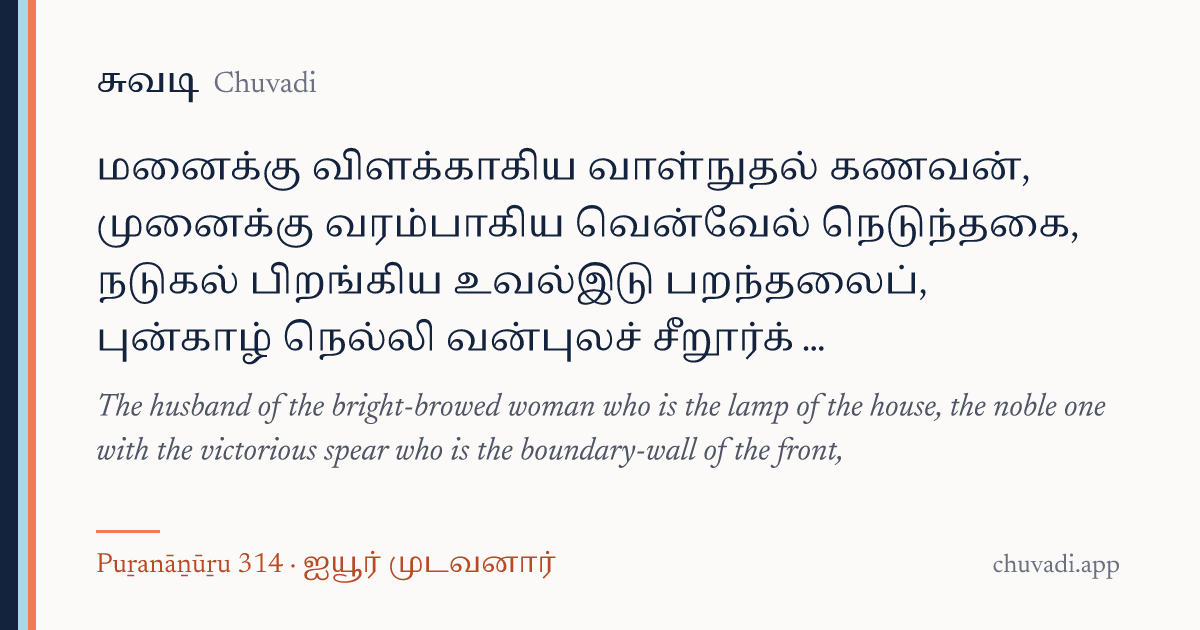
- The husband of the bright-browed woman who is the lamp of the house,
- the noble one with the victorious spear who is the boundary-wall of the front,
- in the waste ground strewn with dry leaves where hero-stones stand tall,
- of the small village on hard land where the thin-stoned nelli grows,
- he is both its people and its lord; and when, raising their banners,
- an army rises up with its order broken,
- he alone is its dam — should his own king meet with disaster.
What the poem says
Aiyūr Muṭavaṉār describes a village chieftain by what he is to others. To his wife, the 'lamp of the house', he is husband; to the battle-front he is the wall that marks its limit; to his poor village on hard ground, among hero-stones and nelli trees, he is both its people and its ruler, everything it has. And if his overlord, the king, should be overwhelmed, he alone holds back the broken army like a dam holding water.
The tiṇai is vākai, victory, and the turai vallāṉ mullai, praise of the strength of a chieftain of a small place.
'Kuṭiyum maṉṉum tāṉē' in line 5 is taken as 'he himself is its people and its lord'; it might also mean 'the people endure because of him'. The army in line 6 is most naturally the king's own troops, routed and rising in disorder, which the chieftain stops and steadies; it could also be an enemy force that he holds off. Hero-stones (naṭukal) commemorate warriors who died, and their presence marks this as a frontier place used to war.