



புறநானூறு 315
பாடல் · The poem
Tap a word to see where else it occurs.
பொருள் · Meaning in TamilAI
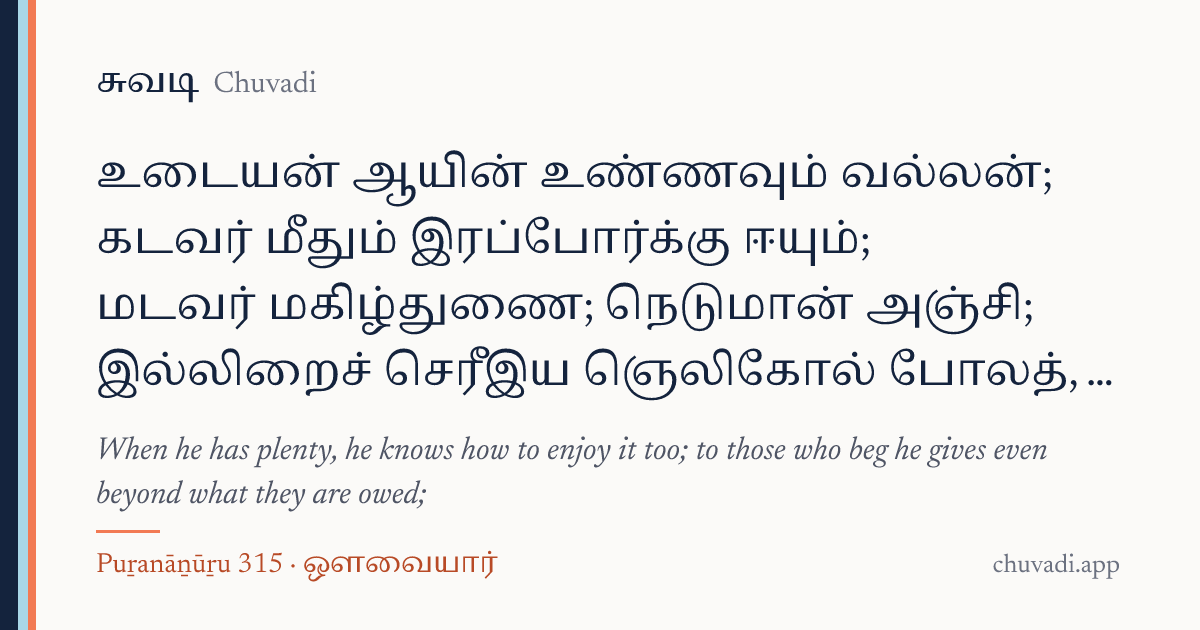
பொருள் இருக்கும்போது அதை உண்டு மகிழவும் அவனுக்குத் தெரியும்; இரப்பவர்களுக்கு அவர்கள் பெறவேண்டியதற்கு மேலும் கொடுப்பான்; எளிய மக்களுக்கு மகிழ்ச்சி தரும் துணைவன்; அவன் நெடுமான் அஞ்சி. வீட்டின் இறப்பில் செருகி வைத்த தீக்கடைகோல் போல வெளியே தெரியாமல் அடங்கியிருக்கவும் அவனால் முடியும்; அந்தக் கோலிலிருந்து கிளர்ந்து எழும் பெருநெருப்பைப் போலத் தான் வெளிப்பட வேண்டிய காலத்தில் ஒளிவிட்டு எழவும் அவனால் முடியும்.
இது வாகைத் திணையில், வல்லான் முல்லை (வல்லாண் முல்லை) என்னும் துறையில் அமைந்த பாடல்; தலைவனின் வலிமையைப் புகழ்கிறது. பாடியவர் ஔவையார்; பாடப்பட்டோன் அதியமான் நெடுமான் அஞ்சி. 'கடவர் மீதும்' என்ற தொடரின் பொருள் முழுதும் தெளிவாக இல்லை; 'உரிமையுடையவர்களுக்குக் கொடுப்பதைவிட மிகுதியாக' என்றும் கொள்ளலாம்.
ஆங்கிலம் · English translationAI
Translation
- When he has plenty, he knows how to enjoy it too;
- to those who beg he gives even beyond what they are owed;
- he is a glad companion to simple folk — Neṭumāṉ Añci;
- like the fire-drill stick tucked into the eaves of a house,
- he can stay unseen; and like the roaring fire
- that bursts out from that same stick,
- he can blaze forth too — when he chooses to appear.
What the poem says
Auvaiyār's short portrait of Atiyamāṉ Neṭumāṉ Añci, the chieftain she sings of in many poems, turns on a single homely image. A fire-drill stick, kept tucked away in the thatch of a house, looks like nothing at all; yet the same stick, when worked, produces a blazing fire. So Añci can stay quiet and unnoticed, and he can flare up into terrible strength when the moment calls for it.
The first lines give his peacetime qualities: he enjoys what he has, gives to suppliants more than they could claim, and is good company to plain, unlearned people. The tiṇai is vākai, victory, and the turai vallāṉ mullai, praise of a chieftain's strength.
'Kaṭavar mītum' in line 2 is not fully clear; it is taken here as 'beyond what is due to them', and might also mean 'even more than to those who have a claim on him'. 'Maṭavar' in line 3 can mean simple or ignorant people; Añci is pleasant to them, not proud.