



புறநானூறு 318
பாடல் · The poem
Tap a word to see where else it occurs.
பொருள் · Meaning in TamilAI
பறித்த கீரை வாடிக்கொண்டிருக்கிறது; கொண்டுவந்த விறகு காய்ந்துகொண்டிருக்கிறது; மயில் போன்ற மென்மையுடைய கருநிற மனைவியோடு சேர்ந்து, அந்தப் பெருந்தகையின் ஊர் இப்போது பசியால் வாடுகிறது. ஆனால் அரசன் துன்பத்தில் வீழ்ந்தால், வீட்டில் வாழும் கரும்புள்ளிக் கழுத்துடைய ஆண் குருவி, பாணர்களின் யாழ் நரம்புகளின் இழைகளாலும் வலிய குதிரைகளின் ஒலிக்கும் பீலிகளாலும் கூடு கட்டி, பெரிய வயல்களில் விளைந்த நெல்லின் அரிசியை உண்டு, மங்கிய முதுகுடைய தன் பெண் குருவியோடு தங்கி வாழும் அளவுக்கு அவ்வூர் வளம் பெறும்.
இது வாகைத் திணையில், வல்லாண் முல்லை என்னும் துறையில் அமைந்த பாடல்; வறிய ஊரின் தலைவன் போரில் பெறும் வெற்றியால் ஊர் வளம் பெறுவதைப் பாடுகிறது. பாடியவர் பெருங்குன்றூர் கிழார். 'வயமான் குரல்செய் பீலி' என்ற தொடரின் பொருள் உறுதியாகத் தெரியவில்லை; வயமான் என்பது குதிரையையோ சிங்கத்தையோ குறிக்கலாம்.
ஆங்கிலம் · English translationAI
Translation
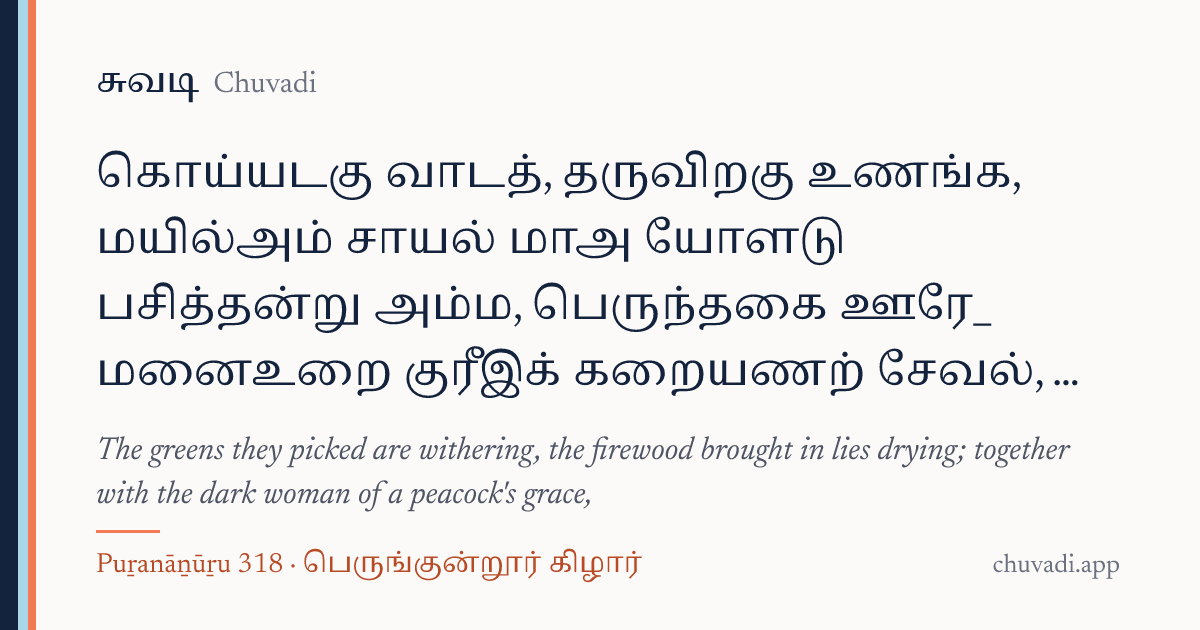
- The greens they picked are withering, the firewood brought in lies drying;
- together with the dark woman of a peacock's grace,
- hungry indeed is the town of this noble man;
- yet the sparrow that lives in the house, the cock with dark-flecked throat,
- with the fibres of the bards' lute-strings, and the strong horses'
- rustling plumes, will weave its nest,
- and feed on rice from the paddy of the great fields, and with its
- dull-backed mate will dwell there;
- so rich will the town become — once the king meets with disaster.
What the poem says
Peruṅkuṉṟūr Kiḻār pictures a chieftain's village between wars. At present it is going hungry: the greens gathered for cooking wilt and the firewood dries unused, because there is nothing to cook, and the lord's dark, graceful wife shares the hunger. But the poet foresees a different scene. When the overlord king falls into trouble and calls the chieftain to fight, the spoils will make the village rich, so rich that the house sparrow will build its nest from strands of lute-string and the plumes of war-horses, eat rice from the great paddy fields, and settle down with its mate.
The tiṇai is vākai, victory, and the turai vallāṇ mullai, praise of a chieftain of a poor place who is strong in war.
The phrase 'vayamāṉ kural cey pīli' in lines 5–6 is not certain; 'vayamāṉ' can mean a strong horse or a lion, and the plumes may be decorations on war-horses that make a sound as they move. The sparrow's details — the dark-flecked throat of the cock and the dull back of the hen — are drawn from close observation.