



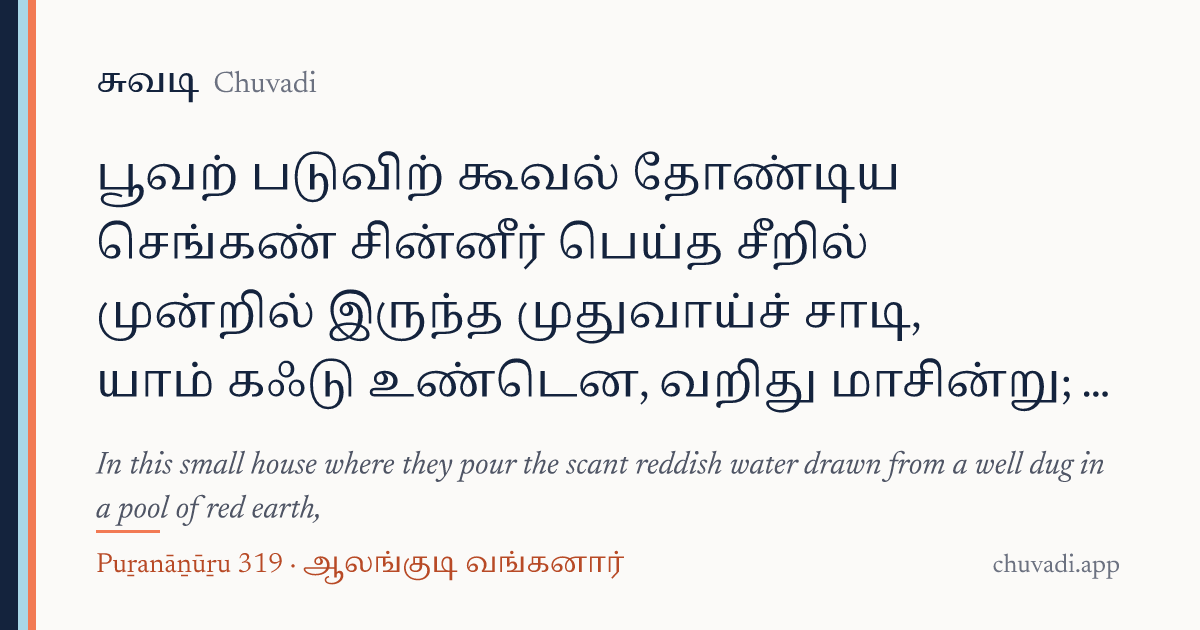
புறநானூறு 319
பாடல் · The poem
Tap a word to see where else it occurs.
பொருள் · Meaning in TamilAI
செம்மண் குழியில் தோண்டிய கிணற்றிலிருந்து எடுத்த சிறிதளவு சிவந்த நீரை ஊற்றி வைக்கும் இந்தச் சிறிய வீட்டின் முற்றத்தில் இருக்கும் வாய் அகன்ற பழைய சாடி, நாங்கள் கள்ளைக் குடித்துவிட்டதால் வண்டல்கூட இல்லாமல் வெறுமையாக உள்ளது. படலை வேலியுடைய முற்றத்தில் காயவைத்த சிறுதினையைப் புறாக்களும் காடைகளும் முழுவதும் தின்றுவிட்டன. சமைப்பதற்குப் பகல்பொழுதும் இல்லை. ஆகவே, சுட்ட முயல் இறைச்சியானாலும் தருவோம்; உள்ளே வந்து இங்கே தங்கியிருப்பாய், அறிவார்ந்த சொல்லுடைய பாணனே! வளைந்த கொம்புடைய காட்டுப் பசுவின், நடுங்கும் தலையுடைய கன்றைத் தங்கள் வீட்டுக் கன்று என்று எண்ணிச் சிறுவர்கள் கட்டிவைக்கும் இச்சிற்றூரின் தலைவன், அன்றொரு நாள் அரசன் இட்ட பணியின் பொருட்டுச் சென்றான். அவன் திரும்பி வந்து, உன் பாடினி மாலை அணியும்படி செய்து, உனக்கு வாடாத பொற்றாமரைப் பூவைச் சூட்டுவான்.
இது வாகைத் திணையில், வல்லாண் முல்லை என்னும் துறையில் அமைந்த பாடல்; பாடியவர் ஆலங்குடி வங்கனார். தலைவனின் மனைவி பாணனை வரவேற்றுப் பேசுவதாக அமைந்துள்ளது. 'வாடாத் தாமரை' என்பது பாணர்க்குப் பரிசாகத் தரப்படும் பொன்னால் ஆன தாமரைப் பூ.
ஆங்கிலம் · English translationAI
Translation
- In this small house where they pour the scant reddish water
- drawn from a well dug in a pool of red earth,
- the old wide-mouthed jar that stands in the yard,
- since we drank the toddy, is empty, without even dregs;
- the little millet drying in the yard with its wicker fence
- the doves and the quails have eaten clean;
- and there is no daylight left to cook; and so
- even if it is only a roasted hare, we will give it; come in,
- stay here with us, bard of wise words!
- The trembling-headed calf of the curved-horned wild cow
- the dull-headed boys tie up, taking it for a calf of their own —
- the lord of that little village, the other day,
- went off on the business the king sent him; when he comes back, so that your
- singing woman may wear a garland,
- he will crown you with an unfading lotus.
What the poem says
The wife of a village chieftain welcomes a wandering bard. She is frank about how little she has: the house gets its water muddy and red from a pit dug in red earth, the toddy jar in the yard has been drunk dry, the millet put out to dry has been eaten by doves and quails, and it is too late in the day to cook. Still, she says, come in and stay; there is at least a roasted hare. Her husband, lord of this small place where the boys tie up a wild calf as if it were a tame one, has gone off on a mission for the king. When he returns he will give a garland to the bard's woman singer and crown the bard himself with the golden lotus that never fades.
The tiṇai is vākai, victory, and the turai vallāṇ mullai. The poet is Ālaṅkuṭi Vaṅkaṉār.
'Vāṭāt tāmarai', 'the lotus that does not wither', is the gold flower given to bards as a mark of honour. The form 'kaḵṭu' in line 4 is the old spelling of 'kaḷ', toddy, before 'tu'. 'Neṟunai ñāṅkar' in line 12 is taken loosely as 'the other day'.