



புறநானூறு 320
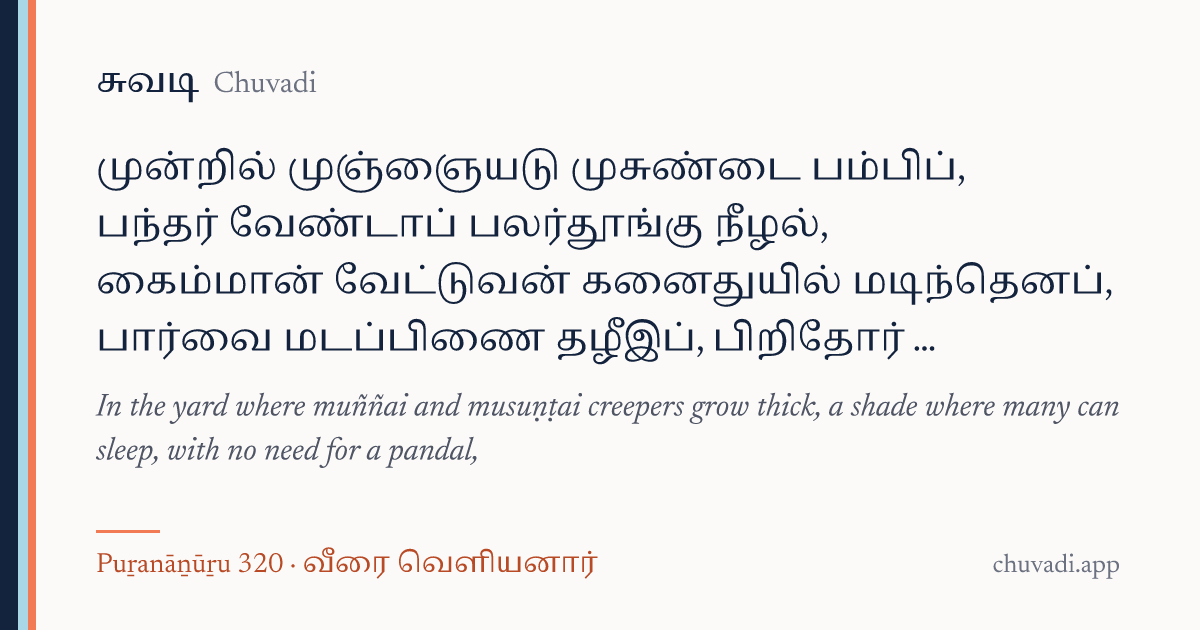
பாடல் · The poem
Tap a word to see where else it occurs.
பொருள் · Meaning in TamilAI
முற்றத்தில் முஞ்ஞைக் கொடியும் முசுண்டைக் கொடியும் அடர்ந்து படர்ந்திருப்பதால், பந்தல் தேவைப்படாத, பலர் உறங்கக்கூடிய நிழல் உள்ளது. யானை வேட்டையாடும் வேட்டுவன் ஆழ்ந்த உறக்கத்தில் ஆழ்ந்திருக்கும்போது, அவன் பார்வை விலங்காக வைத்திருக்கும் இளம் பெண்மானைத் தழுவிக்கொண்டு, தன் கூட்டத்தைப் பிரிந்து வந்த வேறொரு தனி ஆண்மான் மகிழ்ந்து விளையாடுகிறது. அவற்றின் இன்பமான கூடுதலைக் கண்ட மனைவி, கணவன் விழித்துவிடுவானோ என்றும், ஆண்மான் பெண்மானை விட்டு ஓடிவிடுமோ என்றும் அஞ்சி, சிறிதும் அசையாமல் இருந்தாள். அதனால், மான்தோலின் மேல் காயவைத்திருந்த தினை உணவைக் காட்டுக்கோழியும் காடையும் ஆரவாரத்துடன் கவர்ந்து தின்றுவிட்டன. ஆகவே, சந்தன விறகின் நெருப்பில் சுட்ட ஆரல் மீனின் மணம் கமழ, துண்டுகளாக அறுத்த நிறைந்த இறைச்சியை உன் பெரிய சுற்றத்தோடு ஒன்றாக இனிதாக உண்டு, தங்கியிருந்து பிறகு செல்வாயாக, பாணனே! அரசன் தரும் சிறந்த உணவை, பரிசில் வேண்டி வருபவர்களுக்கு என்றும் குறையாமல் வழங்கும் வள்ளன்மையுடைய, புகழ்பெற்ற பெருந்தகை காக்கும் ஊர் இது.
இது வாகைத் திணையில், வல்லாண் முல்லை என்னும் துறையில் அமைந்த பாடல்; பாடியவர் வீரை வெளியனார். 'கைம்மான் வேட்டுவன்' என்பது யானை வேட்டுவனைக் குறிப்பதாகவும், 'ஆர நெருப்பு' என்பது சந்தன விறகின் நெருப்பைக் குறிப்பதாகவும் கொள்ளப்பட்டுள்ளன.
ஆங்கிலம் · English translationAI
Translation
- In the yard where muññai and musuṇṭai creepers grow thick,
- a shade where many can sleep, with no need for a pandal,
- when the hunter who stalks elephants has sunk into deep sleep,
- embracing the young doe kept as a decoy, a stranger,
- a lone stag that has left its herd, frolics and plays;
- the housewife who has seen their happy coupling,
- afraid that her husband may wake, and afraid that the stag
- may leave the doe, does not
- stir at all from where she is; and so, with a clamour,
- the dried millet meal spread out on a deerskin
- the jungle fowl and the quail have snatched and eaten; so, then,
- with the smell of āral fish cooked over a sandalwood fire,
- and plenty of rich meat cut into pieces,
- eat well, with all your great kin together,
- stay a while and then go, bard! Without stint,
- the fine food the king provides, to all who seek gifts, always
- he gives without fail; it is the generosity
- of the famous noble man who guards this town.
What the poem says
Vīrai Veḷiyaṉār's poem is an invitation to a bard, but most of it is a scene of gentle comedy in a hunter's house. The yard is shaded by creepers so thick that no pandal is needed. The hunter is fast asleep. His tame doe, kept as a lure, is being courted by a wild stag that has wandered in, and the hunter's wife, who sees them, keeps quite still: she does not want to wake her husband, and she does not want to frighten the stag away from the doe. While she sits motionless, the jungle fowl and quails make off with the millet she had spread to dry on a deerskin. So the bard will not be offered millet; instead he and his large family are to eat fish roasted over a sandalwood fire and plenty of meat.
The last lines name the reason for this hospitality: the town is guarded by a famous chieftain who constantly shares with suppliants the food his king gives him. The tiṇai is vākai and the turai vallāṇ mullai.
'Kaimmāṉ vēṭṭuvaṉ' in line 3 is understood as an elephant hunter ('kaimmāṉ', the animal with a hand, is the elephant); 'pārvai maṭappiṇai' is a doe used as a decoy. 'Āra neruppu' is read as a fire of sandalwood.