



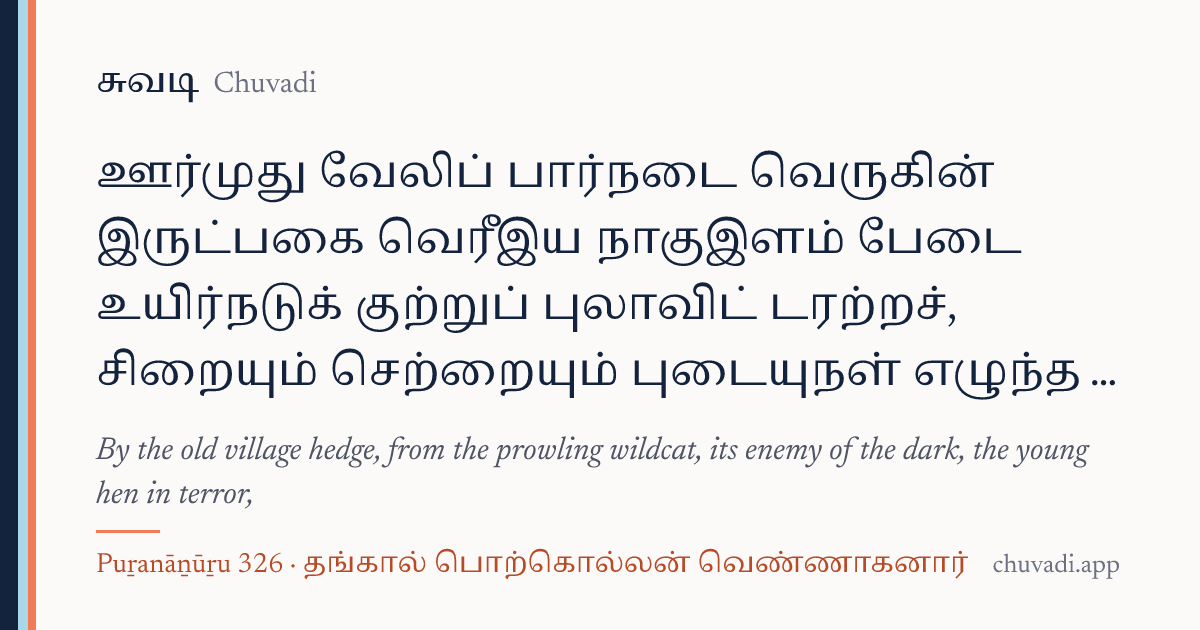
புறநானூறு 326
பாடல் · The poem
Tap a word to see where else it occurs.
பொருள் · Meaning in TamilAI
ஊரின் பழைய வேலியருகே பதுங்கித் திரியும் காட்டுப்பூனை என்னும் இருளில் வரும் பகைவனுக்கு அஞ்சி, இளம் பெட்டைக்கோழி உயிர் நடுங்கி அலறுகிறது. அப்போது எழுந்து வேலியையும் புதரையும் தட்டி ஓட்டும் பருத்தி நூற்கும் பெண்ணின் சிறிய விளக்கின் ஒளியில், கலிர்ப்பூப் போன்ற கொண்டையுடைய சேவலின் அருகே அக்கோழி அச்சம் தணிகிறது. அத்தகைய அடர்ந்த காவற்காடு சூழ்ந்த இருப்பிடம் அது. அங்கே மனைவியும், வேட்டையாடும் சிறுவர்கள் தொலைவிடம் செல்லாமலே பொறியில் பிடித்த குட்டைக்கால் உடும்பின் கொழுப்பைப் பெய்த தயிர்ச்சோற்றுக் கூழ் முதலிய புதிய நல்ல உணவுகளைக் கொண்டு, பாணர்களோடு சேர்த்து வரும் விருந்தினரை உபசரிக்க விரும்புகிறாள். அவள் கணவனும், அரிய போர் சிதையும்படி தாக்கி, பெரும் போர்க்களத்தில் தலைமை யானை அணிந்திருந்த பொன்னால் செய்த நெற்றிப்பட்டத்தையே பெரும் பரிசாகக் கொடுப்பவன்.
இது வாகைத் திணையில், மூதின் முல்லை என்னும் துறையில் அமைந்த பாடல்; பழைய வீரக்குடியின் கணவனும் மனைவியும் விருந்தோம்பலிலும் வீரத்திலும் சிறந்து விளங்குவதைப் பாடுகிறது. பாடியவர் தங்கால் பொற்கொல்லன் வெண்ணாகனார். தொடக்க அடிகளின் தொடர் அமைப்பும் எட்டாம் அடியின் பொருளும் முழுதும் தெளிவாக இல்லை.
ஆங்கிலம் · English translationAI
Translation
- By the old village hedge, from the prowling wildcat,
- its enemy of the dark, the young hen in terror,
- its life trembling, cries out in alarm;
- and the cotton-spinning woman, who rose and beat at the fence and the brushwood,
- by the light of the small lamp of that spinning woman,
- beside the cock with a crest like a kalir flower, the hen grows calm —
- it is a dwelling within a dense guard-forest; and the wife there,
- since the hunting boys need not roam to distant tracts,
- with the short-legged monitor lizard caught in a trap,
- and a curd porridge with its rich fat poured in,
- good fresh food, together with the bards,
- is eager to feast the guests who come; and the master too,
- charging so that the hard battle broke apart, in the great fight
- the golden face-plate that the lordly elephant wore
- is the great gift he gives away.
What the poem says
Taṅkāl Poṟkollaṉ Veṇṇākaṉār begins in the dark at the edge of a village. A young hen, frightened by a wildcat at the old hedge, cries out; the woman who spins cotton gets up and beats at the hedge and brushwood with her small lamp, and the hen settles down again beside the cock. Inside this well-guarded settlement the household is generous: the wife is eager to feed every guest, together with the bards, on monitor lizard and curd porridge enriched with fat, food the hunting boys get near home. Her husband, the old head of the house, gives as a gift even the gold ornament from the forehead of an elephant he took in battle.
The tiṇai is vākai, victory, and the turai mūtiṉ mullai, praise of an old warrior household where both husband and wife live up to its standards of courage and hospitality.
The syntax of lines 1–7 is long and loose: 'puṭaiyunaḷ' (line 4) is read as the spinning woman beating the hedge to drive the cat away, and 'cēvaliṉ taṇiyum' (line 6) as the hen calming down beside the cock. 'Kiḻavaṉ' in line 12 means the master of the house; it does not necessarily mean that he is old. Line 8 is not fully clear.