



புறநானூறு 327
பாடல் · The poem
Tap a word to see where else it occurs.
பொருள் · Meaning in TamilAI
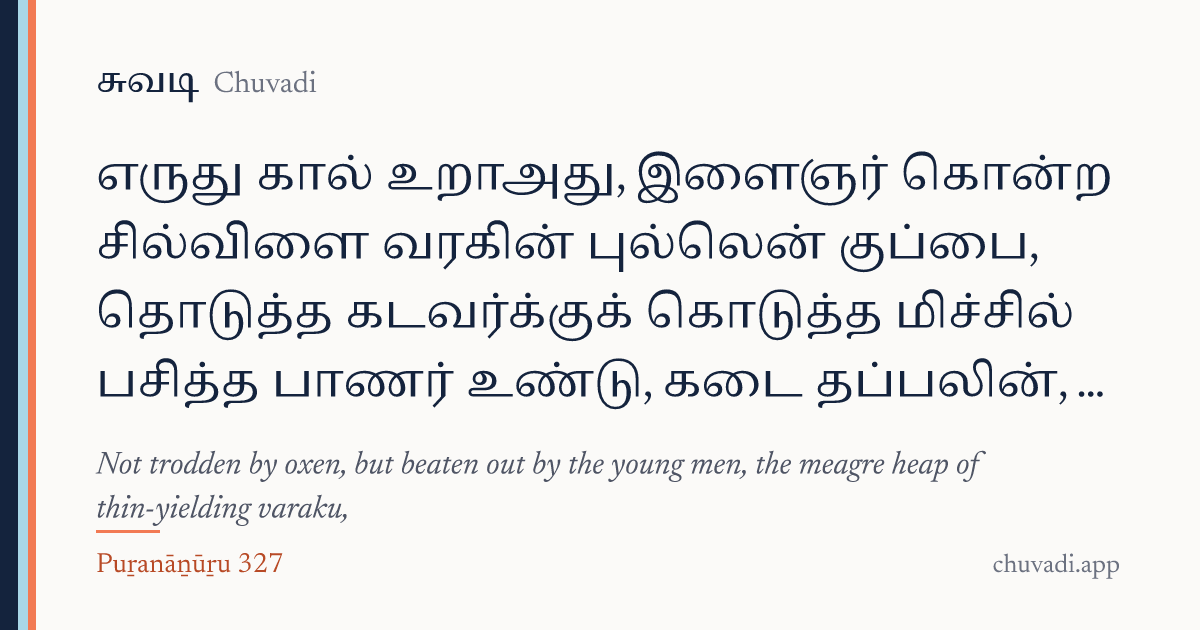
எருதுகளைக் கொண்டு மிதிக்காமல், இளைஞர்கள் அடித்துப் பிரித்த, குறைவான விளைச்சல் தந்த வரகின் சிறிய குவியலில், கடன் கேட்டு நெருக்கியவர்களுக்குக் கொடுத்தது போக மீதியைப் பசித்த பாணர்கள் உண்டுவிட்டனர். அதுவும் தீர்ந்துவிட்டதால், தன் சுற்றத்தாரின் வறுமையைப் போக்குவதற்காக, தன் ஊரில் உள்ள எளிய உழவர்களின் முகத்துக்கு நேரே தன் நிலையைச் சொல்லி வரகை இரந்து பெறுகிறான் அந்தப் பெருந்தகை. ஆயினும், அரசன் படையெடுத்து வந்தால் அவனைத் தடுத்து நிறுத்தும் வலிமையுடையவன் அவனே.
இது வாகைத் திணையில், மூதின் முல்லை என்னும் துறையில் அமைந்த பாடல்; செல்வத்தால் அன்றி வீரத்தாலும் கொடையாலும் சிறக்கும் பழைய வீரக்குடியினனைப் பாடுகிறது. இப்பதிப்பில் பாடியவர் பெயர் இல்லை. 'கடை தப்பலின்', 'சொலிய' ஆகிய சொற்களின் பொருள் இங்குக் கொள்ளப்பட்டபடி உறுதியானது அன்று.
ஆங்கிலம் · English translationAI
Translation
- Not trodden by oxen, but beaten out by the young men,
- the meagre heap of thin-yielding varaku,
- what was left after paying the creditors who pressed him,
- the hungry bards have eaten; and since that, too, ran out,
- to strip away the want of his kin, before the humble farmers
- of his own village he speaks out what he must, face to face,
- and begs for varaku — this noble man,
- who, should a king come against him, is the strong man who holds him back.
What the poem says
A plain, almost bleak portrait of a poor chieftain. His harvest of varaku millet is so small that the young men beat it out by hand instead of using oxen to tread it. After paying the creditors, what remained went to feed hungry bards, and now that it is gone he has to go to the small farmers of his own village and ask them, face to face, for millet to keep his family. Yet this man, reduced to begging from his own people, is the one who stands against a king when one comes to attack.
The tiṇai is vākai, victory, and the turai mūtiṉ mullai, praise of a man of an old warrior house, whose worth lies in courage and giving rather than wealth. The edition gives no poet.
'Kaṭai tappaliṉ' in line 4 is read as 'since even that was used up'; 'colīya' in line 5 is taken in the sense of stripping away or relieving his kin's poverty. The poem does not soften his poverty; the dignity is in the final line.