



புறநானூறு 328
பாடல் · The poem
Tap a word to see where else it occurs.
பொருள் · Meaning in TamilAI
… காட்டை அடுத்துள்ள வறண்ட நிலத்தில் உள்ள சிற்றூரில் நெல் விளைவதில்லை. அங்கே இருந்த வரகும் தினையும் எல்லாம் இரவலர்களுக்குக் கொடுத்துத் தீர்ந்துவிட்டன. … ஆயினும், பாணனே! கிண்ணத்தில் ஊற்றிய பால், அதன் தயிர் … களவுப்புளி போன்ற … காய்ந்த இறைச்சியின் கொழுத்த துண்டுகள், கொய்த கதிர்களின் அரிசியோடு நெய் ஊற்றிச் சமைத்த, அகப்பையோடு ஒட்டும் குழைவான வெண்சோறு ஆகியவற்றை நீ உண்டு இனிதாக இருந்த பின், … அவன் தருவான். தாளிச்செடியின் அடியில் நீண்டு வளர்ந்த சிறிய மணமுள்ள முஞ்ஞைக் கொடியை முயல் வந்து கடிக்கும் முற்றத்தையுடைய, அந்தச் சிற்றூர்த் தலைவனைப் பாடிச் சென்றால் இவையெல்லாம் பெறுவாய்.
இது வாகைத் திணையில், மூதின் முல்லை என்னும் துறையில் அமைந்த பாடல்; வறுமையிலும் கொடையில் சிறந்த பழைய வீரக்குடித் தலைவனைப் பாடுகிறது. இப்பதிப்பில் பாடியவர் பெயர் இல்லை. பல அடிகள் சிதைந்துள்ளதால் பாடலின் முழுப் பொருளும், தலைவன் தரும் பரிசு என்ன என்பதும் தெரியவில்லை.
ஆங்கிலம் · English translationAI
Translation
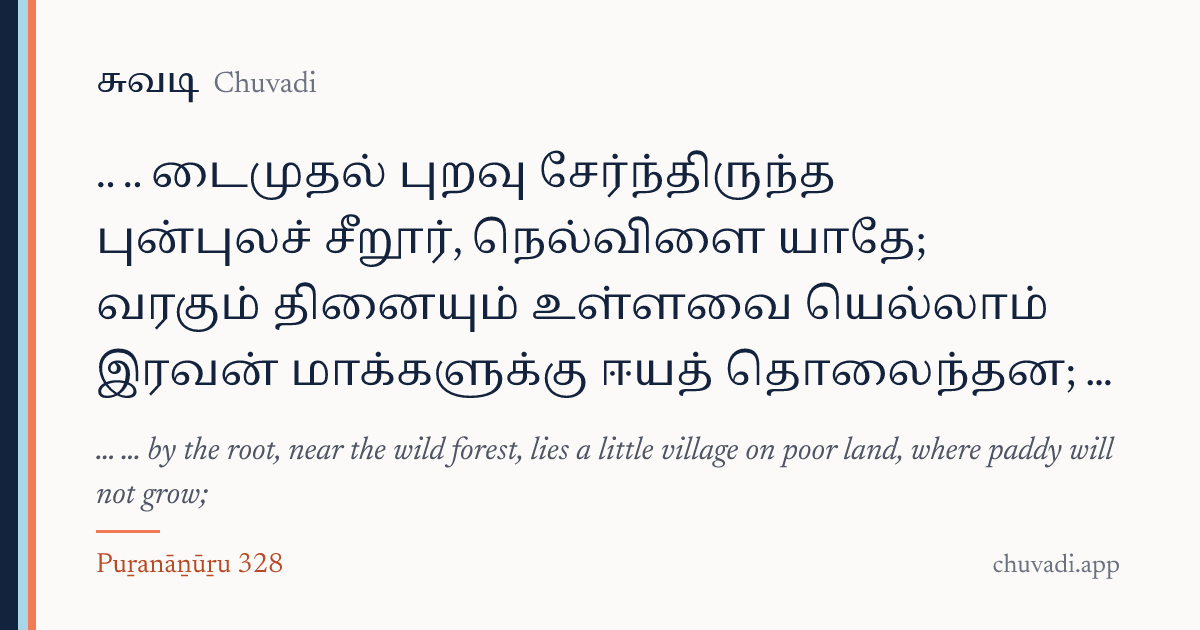
- … … by the root, near the wild forest, lies
- a little village on poor land, where paddy will not grow;
- the varaku and the millet, all that there was,
- has been used up in giving to suppliants;
- … … … he has …
- even so, bard, very
- the milk poured into the bowl, with its curd … …
- like the sour kaḷavu fruit, ripened … … …
- … … rich pieces of dried meat,
- cooked with rice from plucked ears, with ghee poured in,
- thick white rice clinging to the ladle,
- when you have eaten and rested at ease … …
- … … he will surely give —
- in the yard where the small fragrant muññai grows tall at the foot of the tāḷi,
- where hares come to nibble it,
- if you go and sing to the lord of that little village.
What the poem says
A badly damaged poem of advice to a bard; there are gaps in lines 1, 5, 7–9 and 12–13 of this edition, so only its outline is clear. The chieftain's village is on poor land near the forest where paddy does not grow, and all its varaku and millet have already been given away to suppliants. Even so, the speaker says, if the bard goes and sings to this lord he will be fed generously, with milk and curd, dried meat, and rice cooked with ghee so thick it clings to the ladle, and after he has eaten and rested the lord will give him something more, though the gift itself is lost in the gap.
The tiṇai is vākai, victory, and the turai mūtiṉ mullai, praise of a man of an old warrior lineage, generous even in poverty. The edition gives no poet.
The home is pictured at the end: a yard where fragrant muññai grows by a tāḷi plant and hares come to nibble it. 'Kaḷavup puḷi' in line 8 is uncertain; it is taken as the sour fruit of the kaḷavu shrub used in the meal, but the line is broken. Where rice grows in a village that has no paddy is not explained; the 'rice' of line 10 may be from millet ears.