



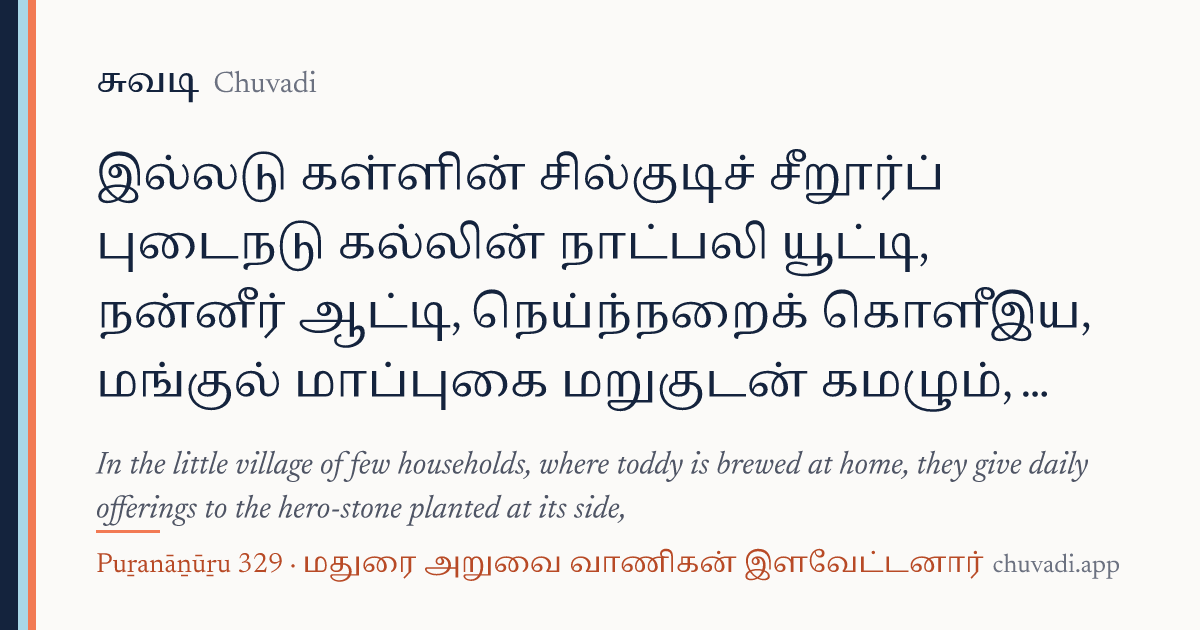
புறநானூறு 329
பாடல் · The poem
Tap a word to see where else it occurs.
பொருள் · Meaning in TamilAI
வீடுகளிலேயே கள் காய்ச்சும், சில குடிகளே உள்ள சிற்றூரின் அருகே நடப்பட்ட நடுகல்லுக்கு நாள்தோறும் பலி கொடுத்து, நல்ல நீரால் நீராட்டி, நெய்யின் மணம் கமழச் செய்வதால், பனிமூட்டம் போன்ற கரிய புகை தெரு முழுவதும் மணக்கிறது. அது அரிய போர்முனையில் உள்ள இருப்பிடமாக இருந்தாலும், வரியுடைய கழுத்துடைய பாம்பு வாழும் புற்றைப் போலப் பகைவர் நெருங்க முடியாதது. கொடுப்பவருக்கு வரும் துன்பத்தைப் பாராமல், இரவலர்களுக்கு நாள்தோறும் குறைவின்றிக் கொடுக்கும் வள்ளன்மையுடைய, புகழ் பெற்ற பெருந்தகை காக்கும் ஊர் அது.
இது வாகைத் திணையில், மூதின் முல்லை என்னும் துறையில் அமைந்த பாடல்; பாடியவர் மதுரை அறுவை வாணிகன் இளவேட்டனார். இறுதி மூன்று அடிகள் புறநானூற்றின் முந்நூற்று இருபதாம் பாடலின் இறுதி அடிகளை ஒத்துள்ளன. 'புரவலர் புன்கண் நோக்காது' என்ற தொடரின் பொருள் முழுதும் உறுதியானது அன்று.
ஆங்கிலம் · English translationAI
Translation
- In the little village of few households, where toddy is brewed at home,
- they give daily offerings to the hero-stone planted at its side,
- bathe it in clean water, and perfume it with ghee,
- and the dark smoke, like mist, spreads its fragrance through the street;
- though it is a dwelling on a harsh frontier, it is like the anthill
- where the snake with the striped neck lives; and every day,
- not counting the hardship that a patron bears, to suppliants
- he gives without fail; it is the generosity
- of the famous noble man who guards this town.
What the poem says
Maturai Aṟuvai Vāṇikaṉ Iḷavēṭṭaṉār describes a frontier village with few families, where toddy is brewed in the houses. Its people worship the memorial stone of a fallen warrior at the edge of the village every day, bathing it, anointing it with ghee and burning incense whose smoke drifts like mist down the street. The place is on a dangerous border, yet for enemies it is like an anthill with a cobra inside: not to be touched. And it is guarded by a famous lord who gives to suppliants every day, whatever it costs him.
The tiṇai is vākai, victory, and the turai mūtiṉ mullai, praise of an old warrior community. The last three lines are almost the same as the end of puram.320.
Line 7, 'puravalar puṉkaṇ nōkkātu', is read as 'not looking at the distress a patron must bear'; it might also mean that he gives without waiting to see whether other patrons suffer. 'neynnaṟaik koḷīiya' in line 3 is taken as anointing the stone so that it carries the fragrance of ghee.