



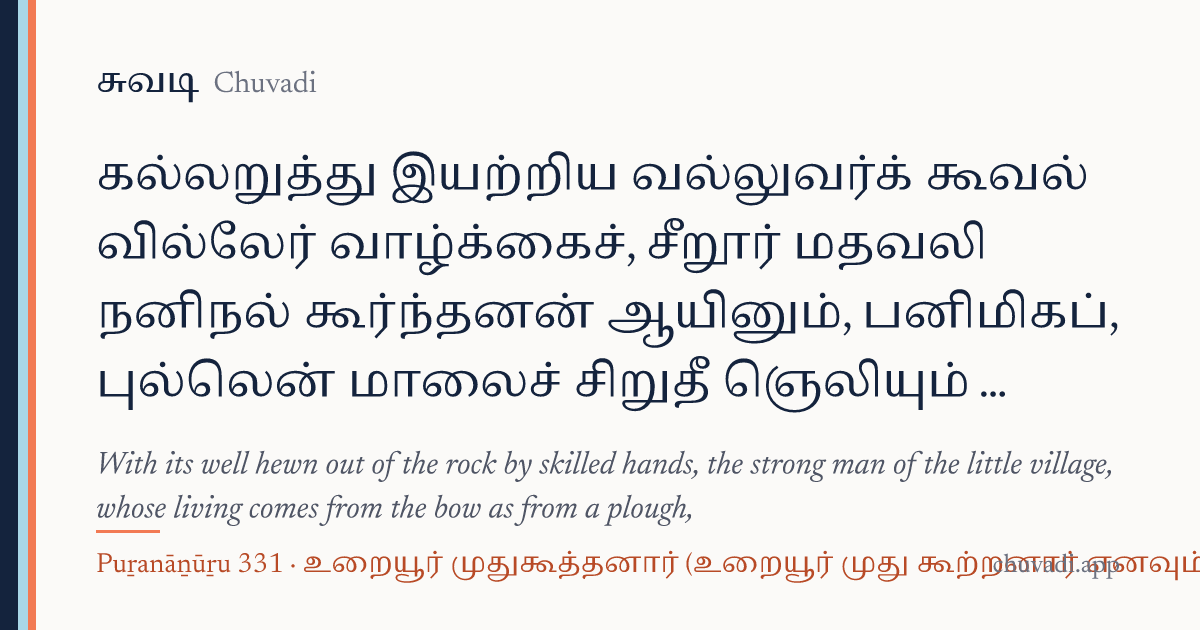
புறநானூறு 331
பாடல் · The poem
Tap a word to see where else it occurs.
பொருள் · Meaning in TamilAI
பாறையை வெட்டி அமைத்த, திறமையாளர்கள் செய்த கிணற்றையும், வில்லையே ஏராகக் கொண்ட வாழ்க்கையையும் உடைய சிற்றூரின் வலிமைமிக்க தலைவன், மிகவும் வறுமைப்பட்டவனானாலும், குளிர் மிகுந்த மங்கிய மாலையில் சிறு தீயை கடைந்து உண்டாக்கும் கல்லாத இடையனைப் போல, தன் அறிவுத்திறனால் இல்லாததையும் உண்டாக்க வல்லவன். இருப்பது மிகச் சிறிதானாலும், 'மிகப் பலர் வந்துள்ளனர்' என்று சொல்லாமல், நீண்ட பெரிய பந்தலில் வரிசையாக உணவளிக்கும் இல்லத்தைச் சிறப்பிக்கும் மனைவியைப் போல, சிறிது சிறிதாகத் தகுதிக்கேற்ப அளந்து கொடுக்கவும் வல்லவன். காவல் புரியும் அரசர்களின் வாயிலில் தூவப்படும் பலிச்சோறான வெண்சோற்றைப் போல, தூவ வேண்டிய காலத்தில் வாரி வழங்கவும் வல்லவன்.
இது வாகைத் திணையில், மூதின் முல்லை என்னும் துறையில் அமைந்த பாடல்; பாடியவர் உறையூர் முதுகூத்தனார்; உறையூர் முதுகூற்றனார் என்ற பாடமும் உண்டு. 'வல்லுவர்' என்பது திறமையாளரைக் குறிக்கிறதா, ஒரு குடியின் பெயரா என்பதும், 'போகுபலி' என்பது எந்தச் சடங்கு என்பதும் உறுதியாகத் தெரியவில்லை.
ஆங்கிலம் · English translationAI
Translation
- With its well hewn out of the rock by skilled hands,
- the strong man of the little village, whose living comes from the bow as from a plough,
- though he has grown very poor, when the cold is sharp,
- in the dim evening, kindling a small fire,
- like the unlettered herdsman, by his wit
- he can make what is not there; and what there is,
- though it is very little, not saying 'They are too many,'
- feeding them in order under the long, long pandal,
- like the lady who is the glory of the house, in small portions
- by rank he can measure it out; and, fittingly,
- like the white rice of the parting offering that is scattered
- at the gates of the guardian kings,
- he can scatter it too, when he scatters.
What the poem says
Uṟaiyūr Mutukūttaṉār (the edition notes the variant Mutukūṟṟaṉār) describes a poor chieftain of a rocky village, where the well has been cut out of stone and the men live by the bow as farmers live by the plough. Three similes show how he gives. Like an untaught herdsman who makes fire out of nothing with his fire-drill on a cold evening, he can conjure what he does not have. Like a good housewife who never says 'there are too many' but feeds everyone in turn under a long pandal, he can share out a little in careful portions. And like the white rice thrown as an offering at the gates of kings, he can scatter it freely when he chooses.
The tiṇai is vākai, victory, and the turai mūtiṉ mullai, praise of a man of an old warrior lineage.
'Vallu-var' in line 1 is read as 'skilled men'; it may also be a community name. 'Pōkupali' in line 11 is taken as an offering made at a departure or a rite at the palace gate; the exact rite is not clear. 'Varicaiyiṉ' (line 10) means according to rank or order.