



புறநானூறு 332
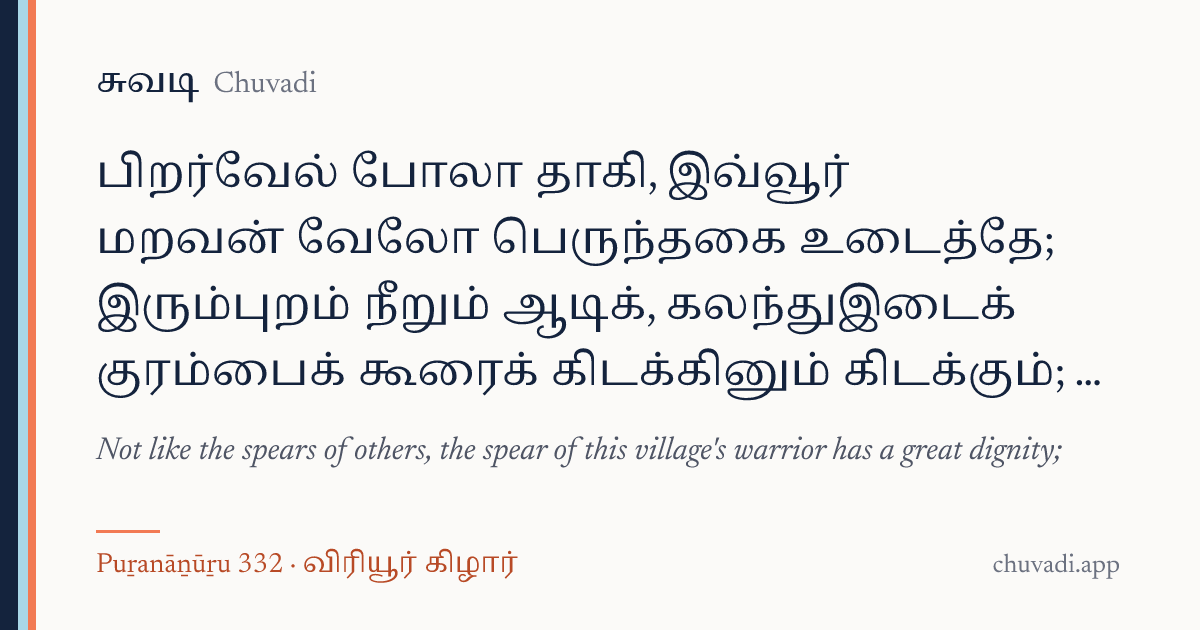
பாடல் · The poem
Tap a word to see where else it occurs.
பொருள் · Meaning in TamilAI
மற்றவர்களின் வேல்களைப் போல அல்லாமல், இவ்வூர் வீரனின் வேல் பெரும் பெருமையுடையது. அதன் அகன்ற பரப்பில் புழுதி படிய, குடிசையின் கூரையில் செருகப்பட்டுக் கிடந்தாலும் கிடக்கும். மங்கல மகளிரோடு சேர்ந்து மாலை சூட்டப்பெற்று, இனிய குரலுடைய இரும்பை என்னும் இசைக்கருவியும் யாழும் சேர்ந்து ஒலிக்க, தெளிந்த நீருள்ள குளங்களிலும் தெருக்களிலும் திரிந்தாலும் திரியும். நாடு முழுவதும் கலங்கும்படி போருக்குச் சென்றாலும் செல்லும். அங்கே, கடல் போன்ற பெரிய படையையுடைய அரசர்களின் பெரிய யானைகளின் முகங்களில் பாய்ந்து செல்வதில் அது ஓய்வதே இல்லை.
இது வாகைத் திணையில், மூதின் முல்லை என்னும் துறையில் அமைந்த பாடல்; பாடியவர் விரியூர் கிழார். வீரனின் வேலைப் புகழ்வதன் மூலம் அவனையே புகழ்கிறது. 'இரும்பை' என்பது ஓர் இசைக்கருவி என்று கொள்ளப்பட்டுள்ளது; அதன் பொருள் உறுதியாகத் தெரியவில்லை.
ஆங்கிலம் · English translationAI
Translation
- Not like the spears of others, the spear of this village's
- warrior has a great dignity;
- its broad blade covered in dust, mixed in among
- the thatch of a hut's roof it may lie, if it lies;
- garlanded together with women of auspicious state,
- with the sweet-voiced irumpai and the lute sounding together,
- through clear-water ponds and through the streets it may wander,
- it may go out, if it goes, so that all the land trembles; and there,
- of kings with armies like the dark sea,
- into the faces of their great elephants its going never ends.
What the poem says
A praise of a warrior through his spear. Viriyūr Kiḻār says it is unlike other men's spears. In peace it is put away, lying dusty and forgotten among the thatch of a hut's roof. On ritual days it is garlanded like the married women, carried with music through the streets and bathed in the clear tank. In war it goes out so that the whole country shakes, and it never stops driving into the faces of the kings' great elephants.
The tiṇai is vākai, victory, and the turai mūtiṉ mullai, praise of an old warrior household and its fighter.
The three conditional phrases 'kiṭakkiṉum kiṭakkum', 'celliṉum cellum', and 'celavu āṉātē' give the poem its rhythm: it may lie, it may go, and in battle it never stops going. 'Maṅkala makaḷir' are women in the auspicious married state, who take part in such rites. 'Irumpai' in line 6 is uncertain; it seems to name a musical instrument played along with the lute.