



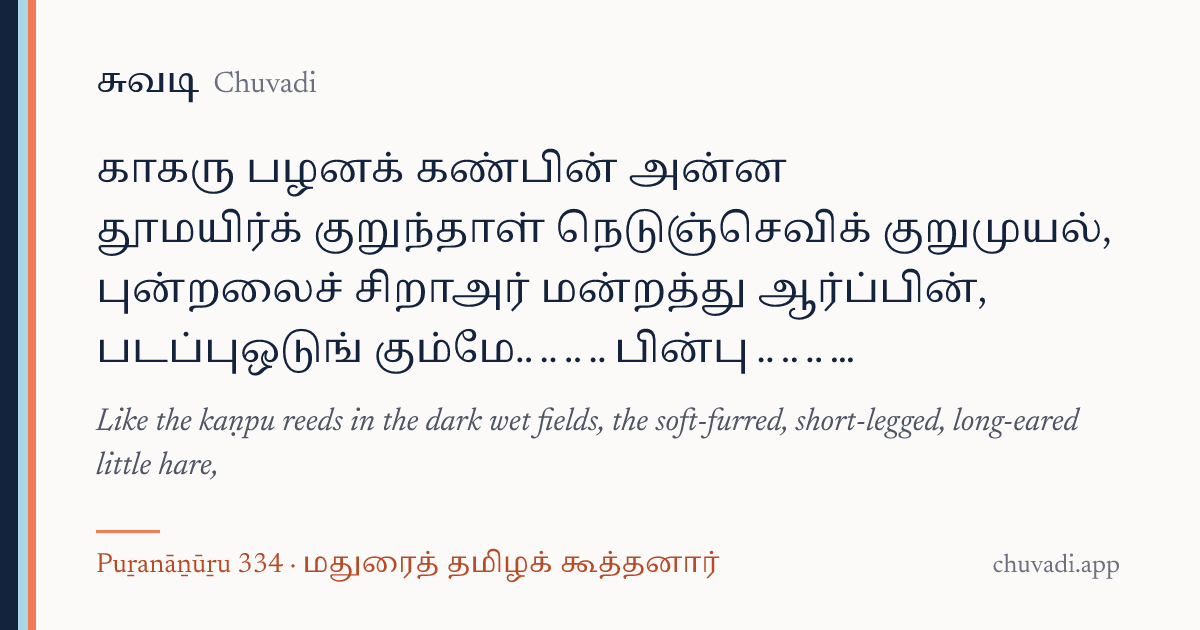
புறநானூறு 334
பாடல் · The poem
Tap a word to see where else it occurs.
பொருள் · Meaning in TamilAI
கரிய வயல்களில் வளரும் கண்புப் புல்லைப் போன்ற மென்மையான மயிரையும், குட்டையான கால்களையும், நீண்ட காதுகளையும் உடைய சிறிய முயல், சிறிய தலையுடைய சிறுவர்கள் ஊர்ப்பொதுவிடத்தில் ஆரவாரம் செய்யும்போது புதருக்குள் ஒளிந்துகொள்ளும் … ஊர் அது. அங்கே மனைவி, பாணர்களை உண்பிக்கவும் பரிசிலர்களைப் பேணவும், உணவு உண்ணும் ஒலியும் ஆரவாரமும் நிறைந்த இடத்தில் ஓய்வின்றிக் கைவேலை செய்கிறாள். உயர்ந்த கொம்புகளையுடைய யானையின் புள்ளிகள் நிறைந்த முகத்தில் அணிந்திருந்த பொன் … பரிசிலர்களுக்குப் பரிசாகக் கொடுப்பதில், வலிய வேலையுடைய காளை போன்ற அவள் கணவனும் கை ஓய்வதில்லை.
இது வாகைத் திணையில், மூதின் முல்லை என்னும் துறையில் அமைந்த பாடல்; பாடியவர் மதுரைத் தமிழக் கூத்தனார். கணவனும் மனைவியும் விருந்தோம்பலில் ஓயாமல் இருப்பதை இரண்டு இணையான தொடர்களில் பாடுகிறது. நான்கு, ஐந்து, ஒன்பதாம் அடிகள் சிதைந்துள்ளன; 'காகரு பழனம்' என்ற தொடரின் பொருளும் உறுதியாகத் தெரியவில்லை.
ஆங்கிலம் · English translationAI
Translation
- Like the kaṇpu reeds in the dark wet fields,
- the soft-furred, short-legged, long-eared little hare,
- when the dull-headed boys shout in the village common,
- hides in the thicket … … … and then … …
- … … … town; the housewife,
- to feed the bards and to look after the gift-seekers,
- amid the noise and bustle of eating, never rests her hands;
- the gold worn on the spotted face of the high-tusked elephant,
- golden … … … … …
- giving as gifts to the gift-seekers,
- the young bull with the strong spear never rests his hands either.
What the poem says
Maturait Tamiḻak Kūttaṉār's poem survives with gaps in lines 4, 5 and 9, but its design is clear. It begins with a village scene, a little hare with fur like bulrush heads that bolts into the thicket when boys shout in the common. Then it pairs husband and wife in two matching sentences, each ending with 'kai tūvāḷ / kai tūvāṉ', 'never rests her hands, never rests his hands'. She is always busy feeding bards and looking after visitors amid the noise of meals; he is always giving away gold, apparently ornaments taken from enemy elephants.
The tiṇai is vākai, victory, and the turai mūtiṉ mullai, praise of an old warrior household.
'Kā karu paḻaṉam' in line 1 is uncertain; it is taken as 'dark wet fields', but it may refer to fields where crows gather. The comparison is of the hare's soft fur to the fluffy heads of kaṇpu reeds. The gap in line 9 hides the exact gift.