



புறநானூறு 335
பாடல் · The poem
Tap a word to see where else it occurs.
பொருள் · Meaning in TamilAI
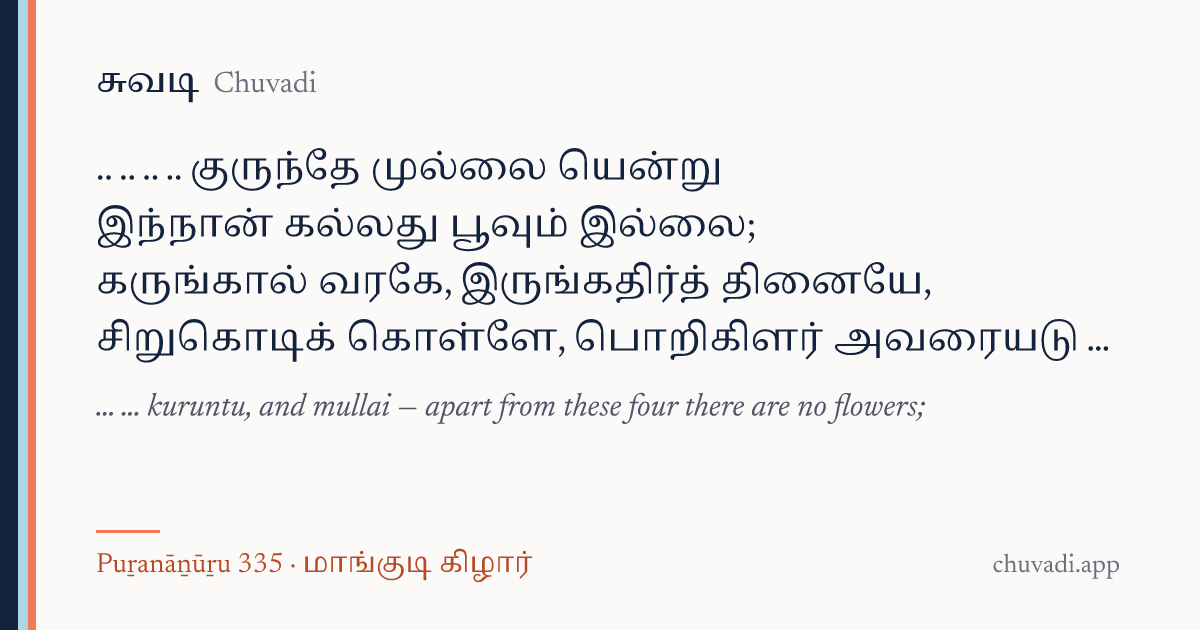
… குருந்தும் முல்லையும் என்னும் இந்த நான்கு பூக்களைத் தவிர வேறு பூக்கள் இல்லை. கரிய தாளுடைய வரகும், பெரிய கதிருடைய தினையும், சிறிய கொடியுடைய கொள்ளும், புள்ளிகள் நிறைந்த அவரையும் என்னும் இந்த நான்கைத் தவிர வேறு உணவு இல்லை. துடியன், பாணன், பறையன், கடம்பன் என்னும் இந்த நான்கு குடிகளைத் தவிர வேறு குடிகள் இல்லை. பகைவர்களின் முன் நின்று அவர்களைத் தடுத்து, ஒளிவீசும் கொம்புடைய களிற்றைக் கொன்று வீழ்ந்தவனுக்கு நட்ட கல்லை வணங்குவதைத் தவிர, நெல்லைத் தூவி வணங்கும் வேறு கடவுளும் இல்லை.
இது வாகைத் திணையில் அமைந்த பாடல்; பாடியவர் மாங்குடி கிழார். துறை 'மூதின் முல்லை அடலருந் துப்பின்' என்று அச்சிடப்பட்டுள்ளது; 'அடலருந் துப்பின்' என்பது துறைப் பெயரோடு தவறாகச் சேர்ந்ததாகத் தோன்றுகிறது, ஆகவே மூதின் முல்லை என்று கொள்ளப்பட்டது. முதல் அடியில் இரண்டு பூக்களின் பெயர்கள் சிதைந்துவிட்டன.
ஆங்கிலம் · English translationAI
Translation
- … … kuruntu, and mullai —
- apart from these four there are no flowers;
- black-stalked varaku, millet with its heavy ears,
- horse-gram on its small vine, and the speckled avarai bean —
- apart from these four there is no food;
- the drummer, the bard, the paṟaiyaṉ and the kaṭampaṉ —
- apart from these four there are no clans;
- for one who stood in front of the hostile foe and barred his way,
- and, striking down an elephant with gleaming tusks, then fell,
- they worship the stone; apart from that
- there is no god for whom they scatter paddy in worship.
What the poem says
Māṅkuṭi Kiḻār describes a harsh, simple country by counting in fours. It has four flowers, of which two names are lost at the start of line 1 in this edition, leaving kuruntu and mullai. It has four foods, all dry-land crops: varaku and millet, horse-gram and the speckled avarai bean. It has four communities: the tuṭi drummer, the bard, the paṟai drummer and the kaṭampaṉ. And it has only one god: the memorial stone of a warrior who blocked the enemy, killed an elephant and fell. Only to such a stone do the people scatter paddy in worship.
The tiṇai is vākai, victory. The turai is printed as 'mūtiṉ mullai aṭalarun tuppiṉ'; the words 'aṭalarun tuppiṉ' ('of invincible strength') look like a stray phrase that does not belong to the turai name, and the turai is taken as mūtiṉ mullai, praise of an old warrior land and its people.
'Kaṭampaṉ' is kept as a community name; its exact meaning is not certain. The poem's force lies in the last line: in this land the dead hero, not any other deity, receives worship.