



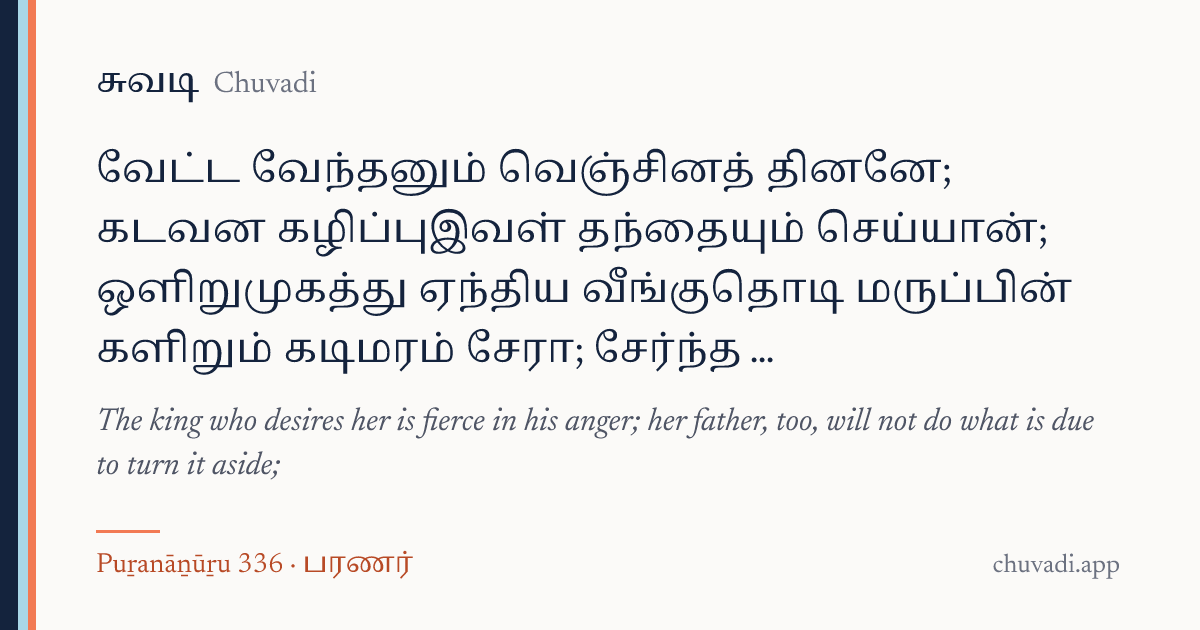
புறநானூறு 336
பாடல் · The poem
Tap a word to see where else it occurs.
பொருள் · Meaning in TamilAI
அவளை மணக்க விரும்பும் அரசன் கடுஞ்சினம் கொண்டிருக்கிறான். அதைத் தவிர்க்கச் செய்ய வேண்டியவற்றை இவள் தந்தையும் செய்யமாட்டான். ஒளிவீசும் முகங்களையும், பூண் அணிந்து உயர்ந்த கொம்புகளையும் உடைய யானைகள் காவல் மரங்களின் அருகே அமைதியாக நிற்பதில்லை. அங்குக் கூடியுள்ள ஒளிவீசும் வேலையுடைய வீரர்களும் வாய் மூடி இருக்கின்றனர். இசைக்கலைஞர்களும் அறியாத பல இசைக்கருவிகள் முழங்க, ஐயோ, கடுங்காவலுடைய இந்தப் பழைய ஊர் பெருங்கலக்கம் அடைந்துள்ளது! வலிய மலையில், வேங்கை மரங்கள் நிறைந்த மலைச்சாரலில் மலர்ந்த கோங்கின் மொட்டுப் போன்ற அழகுடைய, இன்னும் முதிராத இள முலைகளையுடைய மகளின் அழகை வளர்த்தெடுத்த மகிழ்ச்சியோடு, பகையையும் வளர்த்து வைத்திருக்கும் இந்தப் பண்பில்லாத தாய் உண்மையில் அறமற்றவள்.
இது காஞ்சித் திணையில் அமைந்த பாடல்; காஞ்சி என்பது நிலையாமையையும் போரால் வரும் துயரையும் பாடுவது. பாடியவர் பரணர். துறை 'பாற் பாற் காஞ்சி' என்று அச்சிடப்பட்டுள்ளது; இது 'மகட்பாற் காஞ்சி' என்பதன் பிழை எனத் தோன்றுகிறது. மகட்பாற் காஞ்சி என்பது, ஓர் அரசன் பெண் கேட்டு மறுக்கப்பட்டதால் அவள் ஊருக்குப் போர் வருவதைப் பாடுவது. இரண்டாம் அடியில் 'கடவன கழிப்பு' என்பதன் பொருள் உறுதியாகத் தெரியவில்லை.
ஆங்கிலம் · English translationAI
Translation
- The king who desires her is fierce in his anger;
- her father, too, will not do what is due to turn it aside;
- with their gleaming faces and raised tusks bound with swelling rings,
- the elephants do not settle by the guarded trees; and, gathered there,
- the warriors with flashing spears have closed their lips;
- while many instruments that even the players do not know are sounding,
- alas, this old town under strict guard has fallen into great confusion;
- truly she is without justice — on the mighty hill
- of the vēṅkai-covered mountain, the spreading kōṅku's
- buds' beauty borne by the young unripened breasts,
- with the joy of having raised up that loveliness,
- she has raised up war as well, this mother without kindness!
What the poem says
Paraṇar's poem belongs to the theme of a king who asks for a girl in marriage and is refused by her family, so that war threatens her town. The suitor king is furious; the girl's father will not give way; the war elephants are restless, the warriors grimly silent, and strange war music fills the ancient, closely guarded town. The speaker, watching this, blames the girl's mother: by bringing up a daughter as lovely as kōṅku buds on a hillside, she has also brought up a war.
The tiṇai is kāñci, which deals with the transience of things and the sorrow that comes in the wake of war. The turai is printed as 'pāṟ pāṟ kāñci', which appears to be a misprint for makaṭpāṟ kāñci, the 'kāñci of the daughter' (the refused marriage proposal), the name of the turai of the poems that follow.
The blame of the mother is not meant literally: it is a lament dressed as a reproach. 'Kaṭavaṉa kaḻippu' in line 2 is uncertain; it is taken as the steps due to avert the conflict. 'Kaṭimaram cērā' in line 4 is read as the elephants not settling at the guarded trees where they would be tethered; it may also mean that they have not yet attacked the town's guarded tree.