



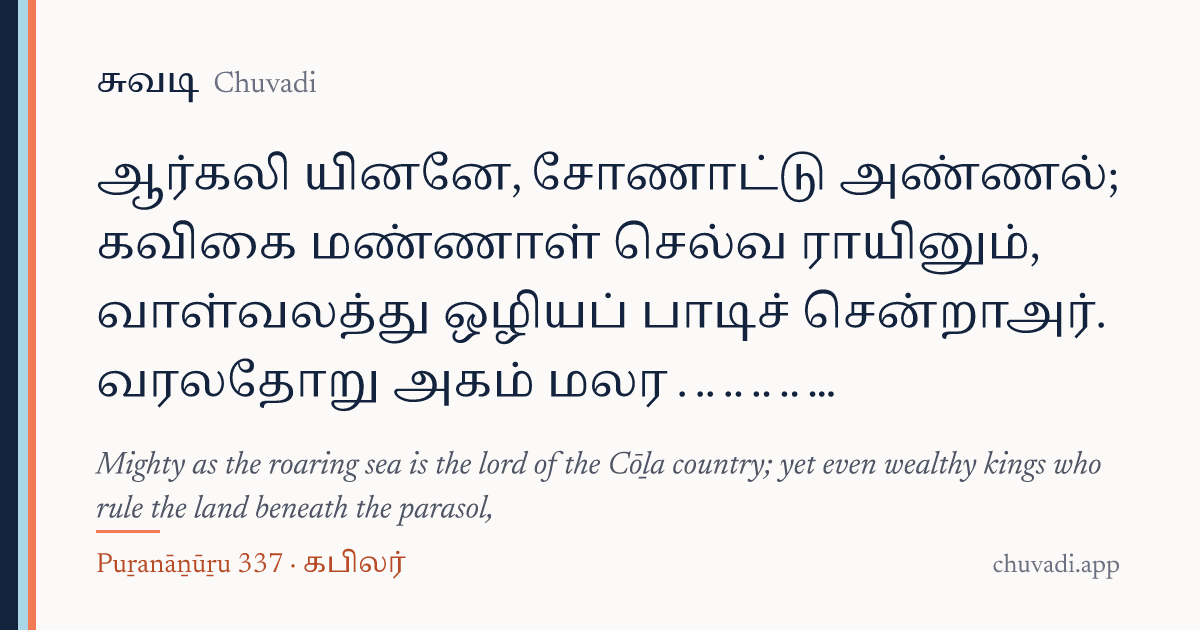
புறநானூறு 337
பாடல் · The poem
Tap a word to see where else it occurs.
பொருள் · Meaning in TamilAI
சோழ நாட்டுத் தலைவன் முழங்கும் கடலைப் போன்ற வலிமையுடையவன். குடைநிழலில் நாட்டை ஆளும் செல்வமிக்க அரசர்களும், தம் வாள்வலிமையை ஒதுக்கிவைத்துப் பாடிவிட்டுச் சென்றனர். அவர்கள் வரும்போதெல்லாம் மனம் மலர … கொடுப்பதில் ஓயாத, ஒளிவீசும் வளையணிந்த பெரிய கையையுடைய பாரியின் பறம்பு மலையில் உள்ள குளிர்ந்த சுனையைப் போல, அவள் இப்போது காண்பதற்கு அரியவள் ஆகிவிட்டாள். சிறந்த பெண்மை நிறைந்த பொலிவுடன், துவைத்து விரித்த ஆடை போல அசைந்து, குளிர்ந்த மணமுள்ள அகில் புகை மெல்லப் பரவி அடங்கிய, மணம் கமழும் உயர்ந்த பொன்னிற மாளிகையில், ஒளிவீசும் நெற்றியுடைய அவள் வீட்டுக்குள்ளே அடைக்கப்பட்டிருக்கிறாள். இப்போது முன்பு போல இல்லாததால், கவனமாகக் காவல் காத்து, முதிர்ந்த நெல் உருண்டைகளை ஊட்டி, சோலைகள்தோறும் தம் கொடிய யானைகளைக் காப்பதோடு அல்லாமல், அரசர்கள் வருவதை நிறுத்துவதில்லை. அவளுடைய அண்ணன்மாரோ, போர்க்களங்களை வென்ற அச்சம் தரும் நீண்ட வேலையும், குருதி படிந்த அஞ்சத்தக்க தலையையும் உடையவர்கள்; அவர்களுடைய வீரம் இத்தகையது. ஆகவே, அழகிய அணிகலன்களையும் பல தேமல்களையும் உடைய, யானைக் கொம்பு போன்ற அவளுடைய இளம் அழகிய முலைகளைத் தழுவுபவர்கள் யாராக இருப்பார்கள்?
இது காஞ்சித் திணையில், மகட்பாற் காஞ்சி என்னும் துறையில் அமைந்த பாடல்; பெண் கேட்டு வரும் அரசர்களையும் அவள் குடும்பத்தின் மறுப்பையும் பாடுகிறது. பாடியவர் கபிலர். தொடக்க மூன்று அடிகளின் பொருள் முழுதும் தெளிவாக இல்லை; நான்காம் அடியில் சில சொற்கள் சிதைந்துள்ளன.
ஆங்கிலம் · English translationAI
Translation
- Mighty as the roaring sea is the lord of the Cōḻa country;
- yet even wealthy kings who rule the land beneath the parasol,
- their prowess of sword set aside, have sung and gone away;
- each time they came, the heart blooming … … …
- of him whose bright-bangled great hand never tires of giving,
- Pāri — like the cool spring on his Paṟampu hill,
- she has become hard to see; with the fine
- radiance of full womanhood, like freshly washed
- cloth spread out, swaying, and with the cool
- thin smoke of fragrant akil drifting and settling,
- with the scent that perfumes the tall tawny mansion,
- she has been kept within the house, the bright-browed one; and now,
- since things are not as they were, they keep careful watch,
- feeding balls of ripe paddy, in every grove
- not only guarding their fierce elephants,
- the kings never cease from coming; and her brothers,
- with tall terrible spears that have won through battles,
- their heads fearful, matted with blood —
- such is their valour; and so, plainly,
- who could they be — those who will press,
- adorned with many golden spots of beauty,
- the young lovely breasts like tusks of the girl with fine jewels?
What the poem says
Kapilar's poem, of the theme of the refused marriage, describes a girl who has come of age and is kept hidden in her family's house. Like the cool spring on Pāri's Paṟampu hill, which is hard to reach, she is now hard to catch a glimpse of; she stays inside a tall mansion scented with akil smoke, radiant and graceful as a length of washed cloth swaying in the air. Kings keep coming to ask for her, camping in the groves with elephants fed on balls of paddy. But her brothers are fierce warriors with blood-matted hair and spears that have won many battles. Who, then, the speaker asks, will ever hold her in his arms?
The tiṇai is kāñci, the poetry of transience and the losses of war, and the turai makaṭpāṟ kāñci, the refused proposal that threatens war. Kapilar names Pāri and his hill Paṟampu only in the simile.
The opening is difficult and line 4 has a gap. Lines 1–3 seem to say that the Cōḻa lord is mighty, and that other wealthy kings who came setting their swords aside have sung and gone away, but who sang and why is not clear. 'Kapila neṭunakar' in line 11 is read as 'the tall tawny-coloured mansion'. The comparison of her breasts to tusks (line 22) is a conventional image of firm young breasts.