



புறநானூறு 338
பாடல் · The poem
Tap a word to see where else it occurs.
பொருள் · Meaning in TamilAI
ஏர்கள் பரந்து உழும் வயல்களையும், நீர் பரந்த நிலங்களையும், நெல் நிறைந்த வீடுகளையும், பொன் நிறைந்த தெருக்களையும், வண்டுகள் ஒலிக்கும் பல மலர்களையுடைய சோலைகளையும் உடைய, நெடுவேள் ஆதனின் போந்தை என்னும் ஊரைப் போன்ற பெருஞ்சிறப்புடையவள், பெறுவதற்கு அரியவள் அவள். கரிய கிளைகளையுடைய வேம்பு, ஆர், பனை என்னும் மூன்றையும் தலையில் சூடிய, வில்லை ஏந்திய, வெற்றியுடைய அரசர்கள் கேட்டு வந்தாலும், தனக்குத் தகுந்தபடி வணங்காதவர்களுக்கு அவன் அவளைக் கொடுக்கமாட்டான். செழித்த இலைகளையுடைய பின்னிய கதிர்களையுடைய வயல்களின் நடுவே, காவலுடன், கடலில் நிற்கும் கப்பலைப் போலத் தோன்றும் ஒரே ஒரு கோட்டையையுடைய மன்னனின் ஒரே இளம் மகள் அவள்!
இது காஞ்சித் திணையில், மகட்பாற் காஞ்சி என்னும் துறையில் அமைந்த பாடல்; பாடியவர் குன்றூர் கிழார் மகனார். வேம்பு, ஆர், பனை ஆகியவை மரபாக மூவேந்தர்களின் அடையாள மாலைகள் என்று கொள்ளப்படுகின்றன. 'உணங்குகலன்' என்ற சொல்லின் பொருள் இங்கு உறுதியாகத் தெரியவில்லை.
ஆங்கிலம் · English translationAI
Translation
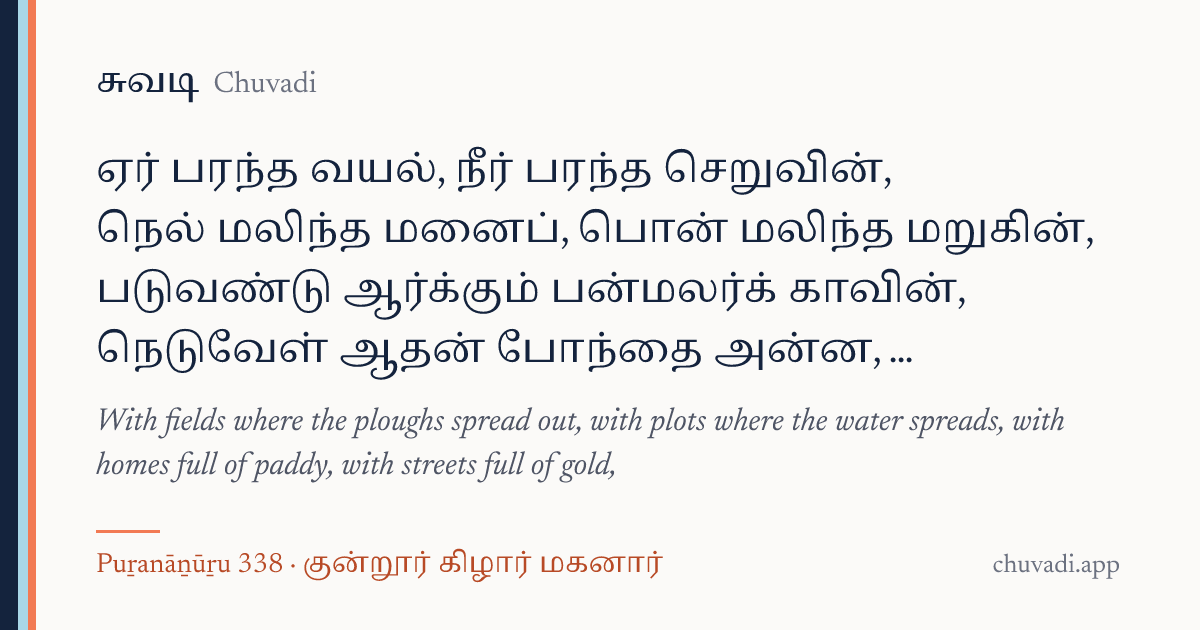
- With fields where the ploughs spread out, with plots where the water spreads,
- with homes full of paddy, with streets full of gold,
- with groves of many flowers where swarming bees hum,
- like Pōntai, the town of Neṭuvēḷ Ātaṉ,
- she is of great worth and hard to win; the dark-branched
- neem, the ār and the palmyra — all three
- they wear on their heads, and bear their bows,
- the victorious kings; yet even if they offer, unless they bow as is fitting,
- he will not give her — in the midst of the
- fields where heavy ears of thick-leaved paddy tangle, secure,
- his town appearing like a ship stranded in the sea,
- the lord of a single fort, and this is his one young daughter!
What the poem says
Kuṉṟūr Kiḻār Makaṉār describes the only daughter of a lord who has just one fortified town. His land is rich, with ploughed fields, flooded plots, paddy-filled houses, gold in the streets and groves loud with bees, so that it is compared to Pōntai, the town of Neṭuvēḷ Ātaṉ. The girl is of high worth and hard to win. Even if the victorious kings who wear the garlands of neem, ār and palmyra come asking, her father will not give her to anyone who does not bow to him as is fitting. His single fort stands in the middle of the paddy fields like a ship in the sea.
The tiṇai is kāñci and the turai makaṭpāṟ kāñci, the refused marriage proposal. The neem, ār and palmyra garlands are traditionally the emblems of the three great crowned houses, so the line implies that even the greatest kings would be refused.
'Uṇaṅku kalaṉ' in line 11 is read as a ship stuck or becalmed in the sea, an image of a lone fort surrounded by green fields; the exact sense of 'uṇaṅku' (literally 'dried') here is uncertain. Neṭuvēḷ Ātaṉ and Pōntai are named only in the simile.