



புறநானூறு 34
பாடல் · The poem
Tap a word to see where else it occurs.
பொருள் · Meaning in TamilAI
'பசுக்களின் மடியை அறுத்த அறமற்றவர்களுக்கும், சிறந்த அணிகலன் அணிந்த பெண்களின் கருவைச் சிதைத்தவர்களுக்கும், பெற்றோரையும் பெரியோரையும் வஞ்சித்த கொடியவர்களுக்கும் அவர்கள் செய்த குற்றத்துக்குக் கழுவாய் உண்டு; ஆனால் நிலமே தன் இடம் பெயர்ந்தாலும், ஒருவர் செய்த நன்றியைக் கொன்றவருக்குத் தப்பும் வழி இல்லை' என்று அறநூல் சொல்கிறது, அழகிய அணிகலன் அணிந்தவளின் கணவனே! 'காலையிலும் மாலையிலும், புறாவின் முட்டை போன்ற புன்செய் வரகைப் பாலில் வேகவைத்துத் தேனுடன் கலந்து, சிறு முயலின் கொழுத்த சூட்டிறைச்சியைக் கிழித்து உண்ணும் சுற்றத்தோடு, இரத்தி மரம் உயர்ந்து நிற்கும் அகன்ற மன்றத்தில், ஒளிவில்லாத நெஞ்சத்துடன் அவர்கள் விரும்பிய இனிய சொற்களைப் பேசி, கொழுத்த சோற்றுக் குவியலை உண்ட பாணர்களுக்கு நீங்காத செல்வம் முழுவதையும் தந்தவன் எம் தலைவன் வளவன்; அவன் வாழ்க!' என்று உன் பெருமைமிக்க வலிய அடிகளை நான் பாடாவிட்டால், பல கதிர்களையுடைய ஞாயிறும் மறையும் முறையை அறியாது போகும். நான் எளியவன், பெருமானே! இவ்வுலகில் சான்றோர் செய்த நன்மை என்று ஏதேனும் இருக்குமானால், இமயத்தில் திரண்டு இனிய முழக்கத்துடன் கீழ்காற்று மேகங்கள் பொழிந்த நுண்ணிய மழைத்துளிகளை விடப் பல ஆண்டுகள் நீ வாழ்வாயாக!
இது பாடாண் திணை, இயன்மொழித் துறை: பாடப்படுவோரின் இயல்பான பெருமையைப் புகழ்வது. பாடியவர் ஆலத்தூர் கிழார்; பாடப்பட்டோன் சோழன் குளமுற்றத்துத் துஞ்சிய கிள்ளிவளவன். முதல் வரியில் உள்ள 'ஆன்மலை' என்பதை 'ஆன்முலை' எனக் கொண்டோம். 'படுபறியலனே' என்னும் சொல்லின் பொருள் உறுதியாகத் தெரியவில்லை.
ஆங்கிலம் · English translationAI
Translation
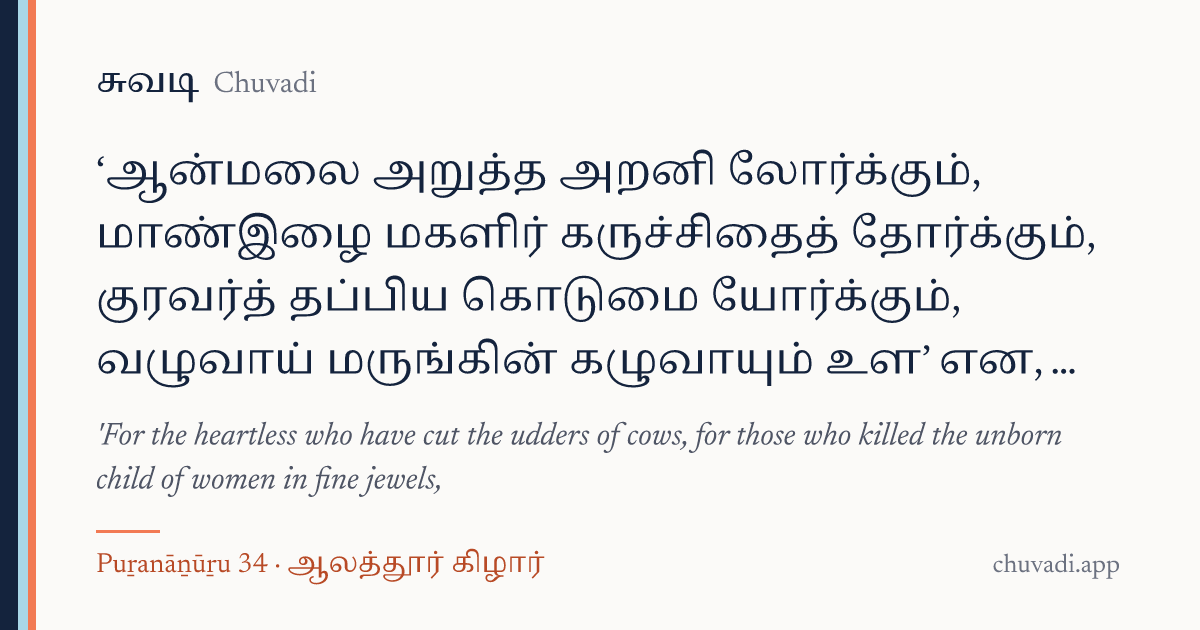
- 'For the heartless who have cut the udders of cows,
- for those who killed the unborn child of women in fine jewels,
- for the cruel who have wronged their elders,
- there is atonement in the path of the wrong,' so it says;
- 'even if the earth should shift from its place, for one who
- kills a kindness done there is no escape,' so
- virtue has declared; husband of the finely jewelled one!
- 'At dawn twilight and at evening twilight,
- millet from the scrubland, like dove's eggs, cooked
- with milk, he mixed with honey, and
- with kin who tear the fat roast of the small hare,
- in the broad common place where the iratti tree grows tall,
- with a heart that hides nothing, speaking the words they longed for,
- to bards who had eaten their fill of heaped, rich rice
- he gave wealth entire, wealth that does not leave them:
- our lord Vaḷavaṉ, long may he live!' — if your
- strong feet, full of greatness, I do not sing in this way,
- the sun of many rays would not know its setting;
- I am a humble man; great one! In this world,
- if there is any good that the worthy have done,
- gathering over the Himalaya, sounding sweetly,
- the great east-wind clouds have poured down —
- more than their many fine drops, may you live!
What the poem says
Ālattūr Kiḻār addresses Cōḻaṉ Kiḷḷivaḷavaṉ, 'who died at Kuḷamuṟṟam', in a praise poem (pāṭāṇ) with the turai iyaṉmoḻi, praise of the patron's nature. The poem turns on gratitude.
It opens with a moral saying. Even terrible sins, maiming cows, killing an unborn child, wronging one's elders, have their atonement; but for the person who 'kills a kindness', there is no escape though the earth itself should move. Having stated this, the poet presents his own song as a debt of gratitude. He quotes the praise he owes: at morning and evening the king fed bards and their families on millet cooked in milk and honey, hare's meat and heaps of rice, in an open common under a tall iratti tree, speaking to them openly and kindly, and gave them lasting wealth.
If he failed to sing this, the poet says, the sun would not know its setting: an image of the world's order breaking, though the exact force of படுபறியலனே in line 18 is not certain. He calls himself humble and ends with a blessing: may the king live more years than the drops of rain the monsoon clouds shed after gathering over the Himalaya, if the good deeds of the worthy count for anything.
The edition's ஆன்மலை in line 1 is read as ஆன்முலை 'cow's udder', which the sense requires. The iratti is an unidentified tree.