



புறநானூறு 35
பாடல் · The poem
Tap a word to see where else it occurs.
பொருள் · Meaning in TamilAI
அடர்ந்த கரிய கடலை எல்லையாகக் கொண்டு, காற்று இயங்காத உயர்ந்த வானத்தை முடியாகச் சூடிய, மண் செறிந்த இந்தப் பரந்த நிலத்தில், குளிர்ந்த தமிழ்நாட்டின் தலைவர்களாகிய, முரசு முழங்கும் படையுடைய மூன்று வேந்தர்களுள்ளும், 'அரசு' என்று சொல்லத் தகுவது உன்னுடையதே, பெருமானே! அசையும் கதிர்களையுடைய ஞாயிறு நான்கு திசைகளிலும் தோன்றினாலும், ஒளிரும் வெள்ளி தெற்கே சென்றாலும், அழகிய குளிர்ந்த காவிரி வந்து பரந்து நீரூட்ட, இலைவடிவ முனையுடைய வேல்களைப் போலக் கணுக்களையுடைய கரும்பின் வெண்பூக்கள் அசையும் நாடு எனப்படுவதும் உன்னுடையதே. ஆகவே நாட்டுச் செல்வம் நிறைந்த பெருமைமிக்க வேந்தே! உன்னைப் பற்றியவற்றைச் சொல்கிறேன், என் சொற்களைக் கேள்! அறத்தைத் தழுவியது போன்ற செங்கோல் ஆட்சியில், நீதி வேண்டும்போது உன்னை எளிதில் அணுக முடிந்தவர்கள், மழை வேண்டும்போது மழை பெற்றவர்களைப் போன்றவர்கள். ஞாயிற்றைச் சுமந்த உயர்ந்த திரண்ட மேகங்கள் வானத்தின் நடுவில் நிற்பது போல, கண் கூசும்படி விளங்கும், வானைத் தொடும் உன் அகன்ற குடை வெயிலை மறைப்பதற்கா? இல்லை; வருந்தும் குடிமக்களைக் காப்பதற்கே, கூர்வேல் வளவா! யானைக் கூட்டங்கள் மோதிய அகன்ற போர்க்களத்தில், வெட்டிய இளம் பனைமரத் துண்டுகள் போலப் பிணங்கள் ஆங்காங்கே கிடக்க, வரும் படையைத் தாங்கித் திரும்பி ஓடுவோர் பின்னே ஆரவாரித்து வெல்லும் வெற்றியும், கலப்பை ஊன்றி உழுத சால்களில் விளைந்ததன் பயனே. மழை பொய்த்தாலும், விளைச்சல் குறைந்தாலும், இயற்கைக்கு மாறானவை மக்களின் செயல்களில் தோன்றினாலும், இந்த அகன்ற உலகம் ஆள்வோரையே பழிக்கும். அதை நன்கு அறிந்தால், நீயும் அயலாரின் பொதுப் பேச்சை ஏற்காமல், உழவுக்காளைகளைப் பேணும் உழவர்களின் சுமையைக் காத்து, குடிமக்களைக் காப்பாயானால், அடங்காதவர்களும் உன் அடிகளைப் போற்றுவர்.
இது பாடாண் திணை, செவியறிவுறூஉத் துறை: அரசனுக்குப் புலவர் நேரடியாக அறிவுரை சொல்வது. பாடியவர் வெள்ளைக்குடி நாகனார்; பாடப்பட்டோன் சோழன் குளமுற்றத்துத் துஞ்சிய கிள்ளிவளவன். ஞாயிறு நான்கு திசையிலும் தோன்றுவதும் வெள்ளி தெற்கே செல்வதும் வறட்சிக்கான தீக்குறிகளாகக் கருதப்பட்டவை. நாட்டின் வலிமைக்கு உழவே அடிப்படை என்ற கருத்தை இப்பாடல் தெளிவாகச் சொல்கிறது.
ஆங்கிலம் · English translationAI
Translation
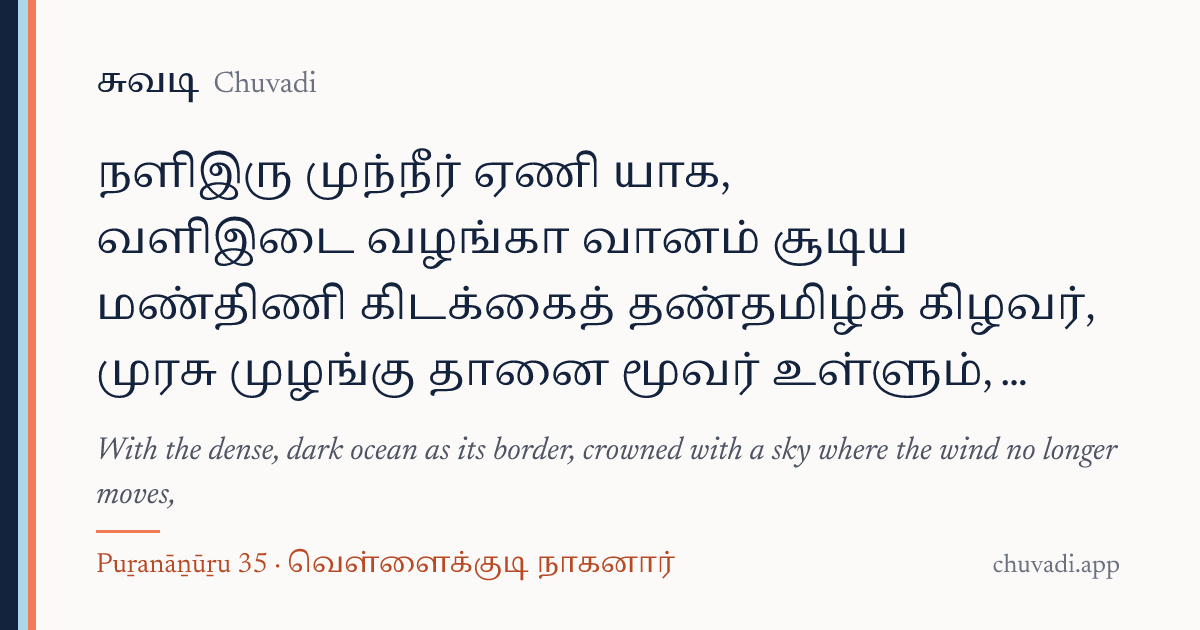
- With the dense, dark ocean as its border,
- crowned with a sky where the wind no longer moves,
- on the earth's solid expanse, lords of the cool Tamil land,
- among the three whose armies roar with drums,
- the one that deserves the name of kingdom is yours, great one!
- Even if the fire of swaying rays should rise in all four quarters,
- even if bright-rayed Venus should move into the south,
- as the lovely cool Kāviri comes and spreads to feed it,
- like the look of spears with leaf-shaped blades,
- the white flowers of the jointed sugarcane sway:
- the one that deserves the name of country is yours, indeed; and so,
- O proud king with the wealth of such a land,
- I will speak of what concerns you; hear what I say!
- In the realm of your sceptre, straight as if it embraced virtue,
- those who, when they seek justice, find you easy to reach, here
- are like people who have rain when they want rain;
- as the massed and towering clouds that carry the sun
- stand in the middle of the great sky,
- your wide parasol that strikes the heavens, shining to dazzle the eyes,
- is it held to keep off the sun? It is not; the suffering
- people is what it shelters; Vaḷavaṉ of the sharp spear!
- With the fallen lying here and there like cut young palm trunks,
- on the wide battlefield where herds of elephants clashed,
- holding back the advancing host, roaring at its turned backs,
- the victory that brings back an army that fights — that too is the plough's,
- the fruit of what it yielded along the furrows it drove;
- if the rains fail, if the harvest falls short,
- if things against nature appear in men's doings,
- this wide world blames those who guard it;
- if you know that well, then you,
- not taking up the idle common talk of outsiders,
- guarding the burden of those who raise the oxen,
- if you protect the people, your
- feet will be tended even by those who never submit.
What the poem says
Veḷḷaikkuṭi Nākaṉār offers counsel to Cōḻaṉ Kiḷḷivaḷavaṉ. It is a pāṭāṇ poem with the turai ceviyaṟivuṟūu, 'informing the ear': a poet's direct advice to a king on how to rule.
The opening praises before it advises. Of the three crowned kings of the Tamil land, his alone is truly a kingdom, and his alone truly a country, because even if the heavens show bad omens (the sun rising in all four quarters, Venus moving south, both signs of drought), the Kāviri still waters his land and the sugarcane flowers sway like spear-blades.
Then the poet says, 'Hear me'. Justice must be easy to reach, so that the people who seek it feel like farmers given rain when they need it. The king's great white parasol is not for shade but to shelter the suffering. Even his victories on the battlefield, where the fallen (the poem leaves them unnamed) lie like felled palm trunks, are the fruit of the plough: the farmers sustain the realm.
The last section is a warning. When the rains fail or crops fall short or unnatural things happen, people blame their rulers. So the king should ignore the common talk of outsiders who have no stake in the realm, lighten the burden of those who keep the plough-oxen, and protect his people; then even rebels will bow at his feet. The poem is one of the clearest statements in Puṟanāṉūṟu of agriculture as the base of kingship.