



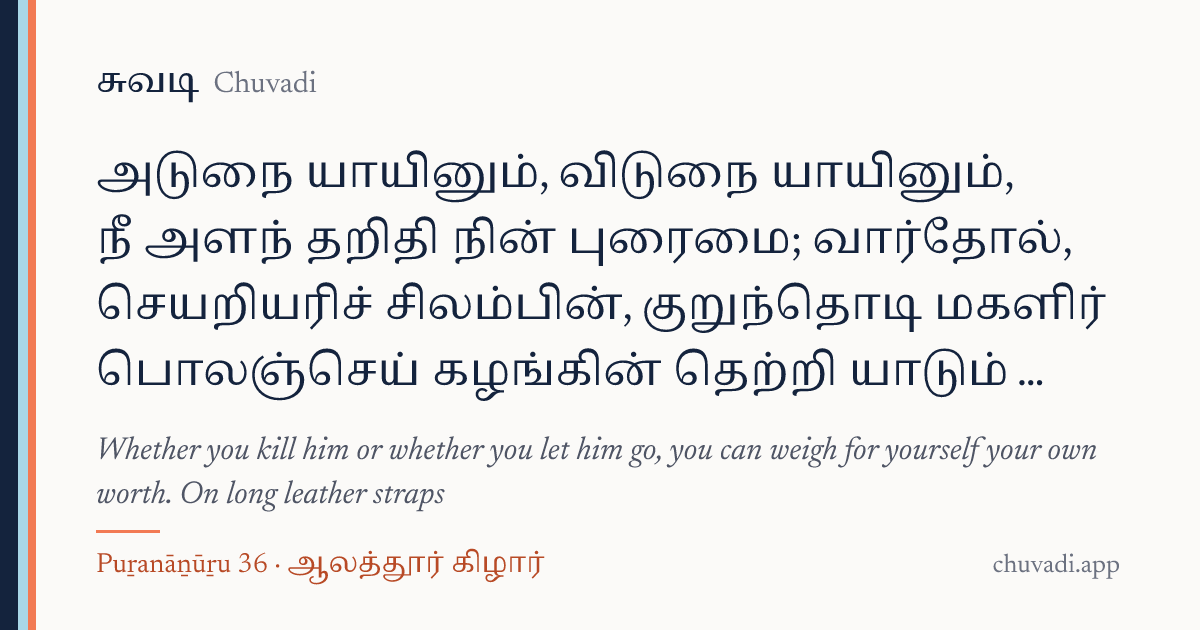
புறநானூறு 36
பாடல் · The poem
Tap a word to see where else it occurs.
பொருள் · Meaning in TamilAI
அவனைக் கொன்றாலும் சரி, விட்டுவிட்டாலும் சரி, உன் பெருமையை நீயே அளந்து அறிவாய். நீண்ட வாரில் அணிந்த பரல் நிறைந்த சிலம்புகளையும் சிறிய வளையல்களையும் உடைய சிறுமிகள் பொன்னாலான கழங்குகளைக் கொண்டு மேடுகளில் விளையாடும் குளிர்ந்த ஆன்பொருநை ஆற்றின் வெண்மணல் சிதையும்படி, கருங்கைக் கொல்லன் அரத்தால் தீட்டிய அழகிய வாயுடைய நீண்ட கைப்பிடி கோடரிகள் பாய்வதால் வேரோடு நிலைகுலைந்து, மலர் மணக்கும் நீண்ட கிளைகள் தனிமைப்படுகின்றன. சோலைதோறும் காவல் மரங்களை வெட்டும் ஓசை அவனுடைய ஊரின் நீண்ட மதிலுக்குள் உள்ள காவல் மாளிகையில் எதிரொலிக்கிறது; அங்கே அந்த வேந்தன் இனிதாக அமர்ந்திருக்கிறான். இங்கே உன் முரசும் முழங்குகிறது. இதை 'நீ அவனோடு போரிட்டாய்' என்று சொல்வது வெட்கப்பட வேண்டிய செயலாகும்.
இது வஞ்சித் திணை, துணை வஞ்சித் துறை: பகைவர் நாட்டின் மேல் படையெடுத்துச் செல்லும்போது புலவர் அரசனிடம் இடையிட்டுப் பேசுவது. பாடியவர் ஆலத்தூர் கிழார்; பாடப்பட்டோன் சோழன் குளமுற்றத்துத் துஞ்சிய கிள்ளிவளவன். பகை வேந்தனின் பெயர் பாடலில் இல்லை. 'வார்தோல்', 'செயறியரி' என்னும் சொற்களின் பொருளும் தொடர்பும் உறுதியாகத் தெரியவில்லை.
ஆங்கிலம் · English translationAI
Translation
- Whether you kill him or whether you let him go,
- you can weigh for yourself your own worth. On long leather straps
- are anklets filled with pebbles; girls with small bangles
- play with golden kaḻaṅku seeds on the raised banks
- of the cool Āṉ Poruṇai; its white sand is scattered
- as the black-handed smith's filed, lovely-edged,
- long-handled axes strike, and so, uprooted,
- the long branches fragrant with blossom stand bereft; in grove after grove
- the sound of the guarded trees being felled, in his own town,
- within its long walls, echoes in his guarded palace,
- while the king sits there at his ease; and here your
- drum, roaring, booms as well:
- to say 'you fought him' is a thing to be ashamed of.
What the poem says
Ālattūr Kiḻār speaks to Cōḻaṉ Kiḷḷivaḷavaṉ while he is laying waste an enemy's country. The tiṇai is vañci, the theme of invasion, and the turai tuṇai vañci; the label seems to cover a poet's intervention during a campaign, and here the intervention is a sharp rebuke.
The Cōḻa's men are cutting down the kaṭimaram, the guarded trees that were a ruler's protected emblems, in the groves along the cool Āṉ Poruṇai river, where girls play with kaḻaṅku seeds on the sandy banks. The axes of the black-handed smith tear up the sand and leave the flowering branches bare. The noise reaches the enemy king's guarded palace inside his walls, but he sits there comfortably. Meanwhile the Cōḻa's war drum keeps booming outside.
The poet's point is in the first and last lines. Kill him or spare him: the king knows his own standing and should decide. But to cut trees outside a city while its ruler sits at ease within, and call that a battle, is shameful. The enemy king is not named in the poem.
Line 2 ends with வார்தோல் and line 3 begins with செயறியரி; the second form is obscure (perhaps for செய்யரி, anklets with pebbles inside), and the link of 'long leather' with the anklets is a guess. The play of the girls is presumably meant to show how peaceful the place was.