



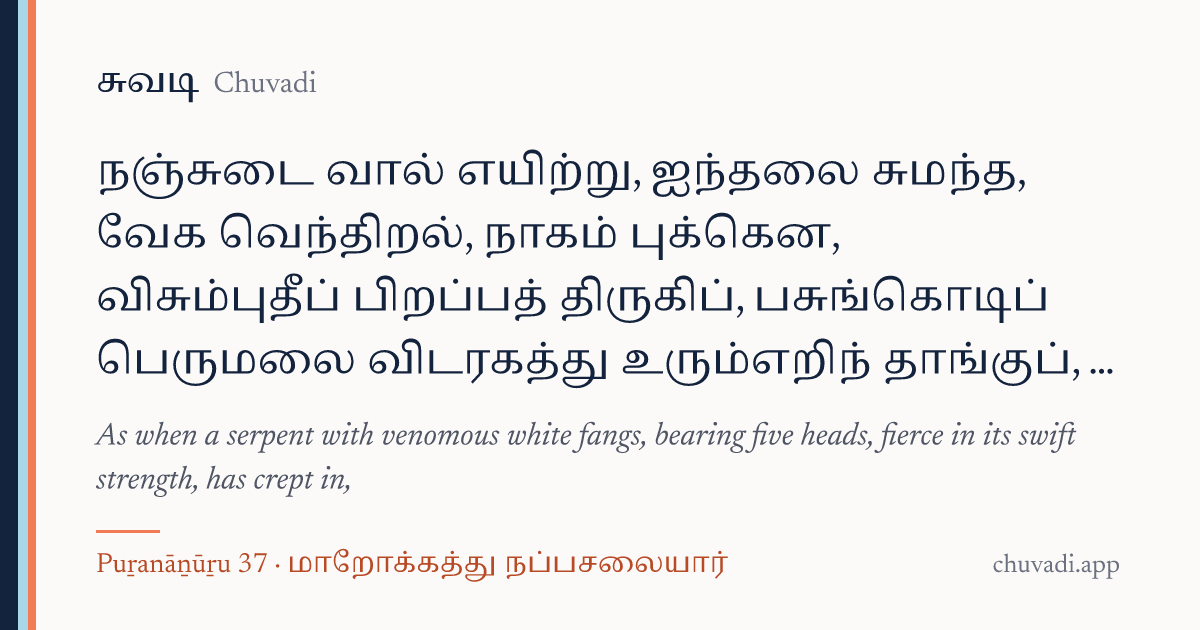
புறநானூறு 37
பாடல் · The poem
Tap a word to see where else it occurs.
பொருள் · Meaning in TamilAI
நஞ்சுடைய வெண்பற்களும் ஐந்து தலைகளும் கொண்ட, வேகமும் கொடிய வலிமையும் உடைய நாகம் உள்ளே புகுந்ததென்று, வானத்தில் தீப் பிறக்கும்படி முறுக்கிக் கொண்டு, பசுங்கொடிகள் படர்ந்த பெருமலையின் பிளவில் இடி தாக்குவது போல நீ தாக்குகிறாய். பறவைக்கு வந்த துன்பத்தைத் தீர்த்தவனும், வெண்வேலும் சினம் மிகுந்த படையும் உடையவனுமாகிய செம்பியனின் வழித்தோன்றலே! முதலைகள் நிறைந்த ஆழமான அகழி; அதன் அகன்ற கரிய ஆழங்களில் கூட்டமாகக் கூடி ஓடி, இரவுக் காவலர்கள் ஏந்திய விளக்குகளின் நிழலைக் கவ்வும் கொடிய முதலைகள் உள்ள ஆழ்ந்த நீர்நிலை; செம்பைப் போன்ற மதில்; பெருமைமிக்க பழைய ஊர். புதிய அணிகலன் அணிந்த யானைகளையுடைய வேந்தன் அதன் உள்ளே இருப்பதால், 'இவை அழகானவை' என்று எண்ணாமல், போரில் அவற்றை அழிப்பதில் நீ வல்லவன், பெருந்தகையே!
இது வாகைத் திணை, அரசவாகைத் துறை என்று குறிக்கப்பட்டுள்ளது; மதில் முற்றுகையைக் கூறும் உழிஞைத் திணை, குற்றுழிஞைத் துறை என்றும், முதல் வஞ்சி என்றும் வேறு பாடங்கள் உள்ளன. பாடியவர் மாறோக்கத்து நப்பசலையார்; பாடப்பட்டோன் சோழன் குளமுற்றத்துத் துஞ்சிய கிள்ளிவளவன். புறாவைக் காக்கத் தன் தசையை அளித்த சோழ மன்னனின் கதையோடு மரபு இதை இணைக்கிறது; பாடல் பறவையைப் பற்றி மட்டுமே குறிப்பிடுகிறது. பகைவரின் ஊரும் அரசனும் பெயர் சொல்லப்படவில்லை.
ஆங்கிலம் · English translationAI
Translation
- As when a serpent with venomous white fangs, bearing five heads,
- fierce in its swift strength, has crept in,
- and twisting so that the sky breaks into fire, in the cleft
- of a great mountain green with vines, the thunder strikes,
- you who ended the grief that came upon the bird, with white spears
- and an army full of rage, descendant of Cempiyaṉ!
- The moat, deep in the middle, teeming with crocodiles
- that run together in packs in its broad dark depths
- and snap at the reflected flames of the night watchmen's torches,
- fierce, savage crocodiles in a pool of deep water;
- the walls like copper; the proud old town —
- because the king of elephants decked in new trappings is inside,
- you do not say 'these are fine things', but to destroy them
- you are able, great one, in battle!
What the poem says
Māṟōkkattu Nappacalaiyār praises Cōḻaṉ Kiḷḷivaḷavaṉ for destroying a strongly defended city. The colophon gives vākai (victory) with the turai aracavākai, but notes other readings: uḻiñai, the theme of besieging a fort, with kuṟṟuḻiñai, or mutal vañci. The siege content fits uḻiñai well.
The king is called 'descendant of Cempiyaṉ', the ancestor who 'ended the grief that came upon the bird'. Tradition links this to the story of a Cōḻa king who gave his own flesh to save a dove from a hawk; the poem itself alludes only to the bird.
The opening simile sets the tone: as thunder twists down from a burning sky and strikes a five-headed venomous serpent that has crept into a mountain cleft, so the king falls upon his enemy. The enemy city is drawn with care: a moat so deep and full of crocodiles that they snap at the reflections of the night guards' torches, walls the colour of copper, an old and proud town. Because the hostile king with his richly decked elephants is shut inside, the Cōḻa does not stop to admire any of this: he can and does destroy it.
The city and its king are not named. The phrase வம்புஅணி யானை வேந்து (line 12) is read as 'the king with elephants in new trappings'.