



புறநானூறு 341
பாடல் · The poem
Tap a word to see where else it occurs.
பொருள் · Meaning in TamilAI
அரசன் வேண்டிக் கேட்டபோதும் அவன் கொடுக்கவில்லை. உயர்த்திக் கட்டிய அழகிய பூமாலையும் தழையுடையும் அணிந்த இடையையும், சிவந்த புள்ளிகளையுடைய சிலம்பையும் உடைய இளம்பெண்ணின் தந்தை, குறுக்குச் சட்டங்கள் பொருத்திய உறுதியான கதவுகளையும், அன்றைய கொடிகள் அசையும் மதிலையும், புலிக்கூட்டம் போன்ற கொடிய பார்வையுடைய சுற்றத்தாரையும் உடையவன். அவன் போருக்கு எழுந்த சினத்துடன் எந்தப் பதிலும் சொல்லாமல், 'பூக்கோள்' என்று அறிவித்துக் குளத்தில் இறங்கி நீராடினான். 'ஒளிவீசும் அணிகலன்களால் பொலிந்த, இன்னும் மணமாகாத மென்மையானவளாகிய, தேமல் படர்ந்த அழகிய முலைகளையுடைய அவளோடு நாளை மணநாள் அமைவது ஒன்று; அல்லது அரிய போரைக் கலக்கும் வீரம் கிளரும் வலிமையுடன், நீண்ட இலையுடைய வேல் பாய்ந்த உடலுடன், திரும்பி வர முடியாத உலகத்துக்குச் செல்வது மற்றொன்று' என்று சொல்லி, அந்தத் தலைவனும் படைக்கருவியை எடுத்தான். இவர்களுக்கு இடையே, யானைகள் போரிட்டுக் கலக்கிய குளிர்ந்த குளம் போல, மென்மையான நீர் பாயும் நிலத்தில் உள்ள இந்தக் குளிர்ந்த வயல் சூழ்ந்த ஊர் தன் பேரழகை இழந்துவிடுமோ?
இது காஞ்சித் திணையில், மகட்பாற் காஞ்சி என்னும் துறையில் அமைந்த பாடல்; பாடியவர் பரணர். 'பூக்கோள்' என்பது போருக்குச் செல்லும் முன் போர்ப்பூவைச் சூடும் சடங்கு. ஐந்தாம் அடியில் 'அனரமண்' என்ற சொல் பிழைபட்டதாகத் தோன்றுகிறது; எட்டாம் அடியில் குளத்தில் இறங்கியவன் தந்தையா, மணக்க விரும்பியவனா என்பதும் உறுதியில்லை.
ஆங்கிலம் · English translationAI
Translation
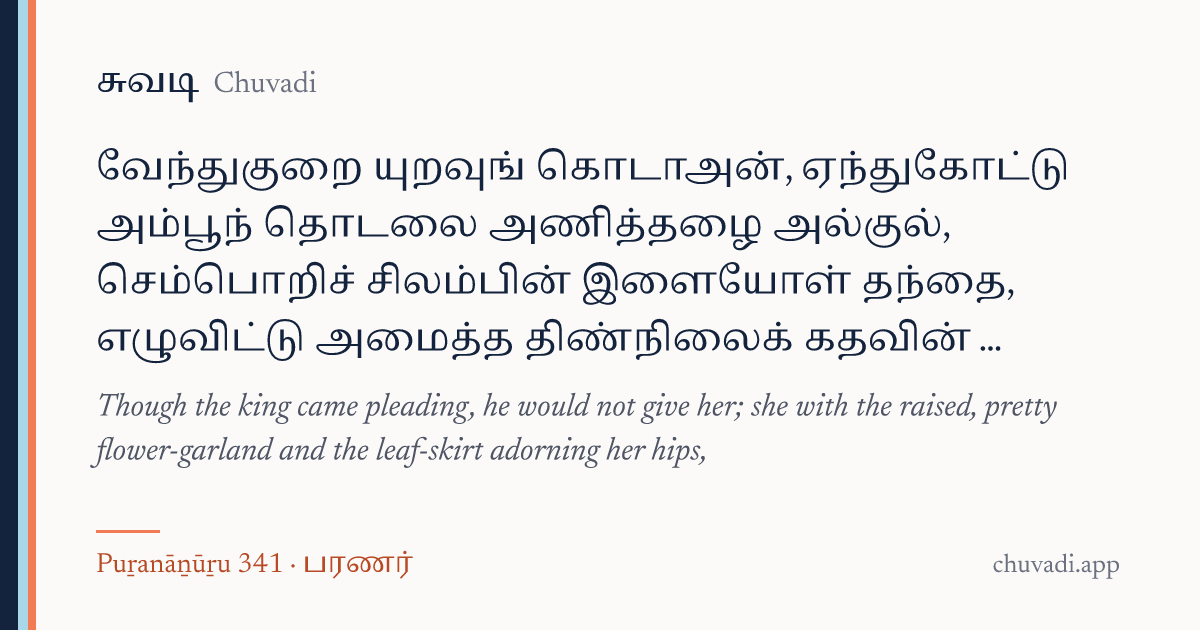
- Though the king came pleading, he would not give her; she with the raised,
- pretty flower-garland and the leaf-skirt adorning her hips,
- the young girl with red-spotted anklets — her father,
- with doors of firm frame barred with crossbeams,
- with walls … where the day's banners flutter,
- with kinsmen fierce-eyed like a pack of tigers,
- gave no answer back, his anger ready to fight;
- calling out, 'The taking of the flower!', he went into the pool;
- 'With the soft one, gentle, unwed, resplendent in bright jewels,
- with lovely breasts flecked with gold, with her, tomorrow,
- to come to the day of our wedding — that is one thing;
- or, with strength that stirs up valour from churning hard battle,
- with a body marked by the long-bladed spear,
- to enter the world from which none returns — that is the other,' saying this,
- the lord took up his weapon; and between them,
- like a cool pool muddied when elephants fight in it,
- will it lose its great beauty, I wonder,
- this cool, well-watered town in its land of gentle streams?
What the poem says
Paraṇar tells the story of a refused proposal in a few strokes. A king has asked for a young girl, and asked insistently, but her father will not give her. Behind his barred gates and bannered walls, with kinsmen fierce as a pack of tigers, he makes no reply; he calls out for the ritual taking of the war-flower and goes into the pool to bathe before battle. The suitor, on his side, swears that tomorrow will bring either his wedding with her or his death on the enemy's spears, and takes up arms. The speaker fears for the lovely, well-watered town between them, which will be churned up like a pond where elephants fight.
The tiṇai is kāñci, the poetry of transience and the losses of war, and the turai makaṭpāṟ kāñci.
Some points are uncertain. Line 5 ('aṉaramaṇ iñci') looks corrupt; only 'walls' is clear. The subject of line 8 is taken as the father, though it could be the suitor. 'Maṟutta' in line 13 is read as 'marked' or 'scarred' by the spear. 'Vēḷā' in line 9 is taken as 'unmarried'. 'Pūkkōḷ', the 'taking of the flower', is the ceremony of wearing the battle-flower before going to war.