



புறநானூறு 342
பாடல் · The poem
Tap a word to see where else it occurs.
பொருள் · Meaning in TamilAI
'காட்டுக் காக்கையின் துடிக்கும் சிறகைப் போன்ற, மயிலைப் பூமாலை அணிந்த, பெரிய தோள்களையுடைய இந்த இளம்பெண் யாருடைய மகள்?' என்று ஆர்வத்துடன் வெற்றி வேலையுடைய பெருந்தகை என்னிடம் கேட்கிறான். திருமகளும் விரும்பத்தக்க பண்புகளையுடைய இவள் அழகு, போர்வீரர்களுக்கு அல்லாமல் வேறு யாருக்கும் உரியதாகாது. பசிய கால்களையுடைய கொக்கின் பிளந்த வாயுடைய குஞ்சு, மென்மையான சேறுடைய கரையில் மேய்ந்து உண்டபின், ஆரல்மீன் இட்ட சிறிய முட்டைகளைக் கூரிய நல்ல இறாலின் குஞ்சுகளோடு பெறும் குளிர்ந்த வயல்நாட்டின் தலைவனே இவள் தந்தை. அரசர்களும் இவளைப் பெற முடியாததால் பெரும் போர் செய்கின்றனர். அப்போது, வீழ்ந்த பிணங்களின் குவியலைக் கதிர்க்கட்டுப் போராகவும், அழிந்த யானைகளை எருதுகளாகவும் கொண்டு, தகுந்த வாள்களால் நாள்தோறும் போர்க்களத்தைக் கதிரடிப்பது போல உழக்குகின்ற பெருமையுடையவர்கள் இவளுடைய அண்ணன்மார்.
இது காஞ்சித் திணையில், மகட்பாற் காஞ்சி என்னும் துறையில் அமைந்த பாடல்; பாடியவர் அரிசில் கிழார். காக்கைச் சிறகு என்னும் உவமை அவளுடைய கூந்தலைக் குறிக்கிறதா மாலையைக் குறிக்கிறதா என்பது தெளிவாக இல்லை.
ஆங்கிலம் · English translationAI
Translation
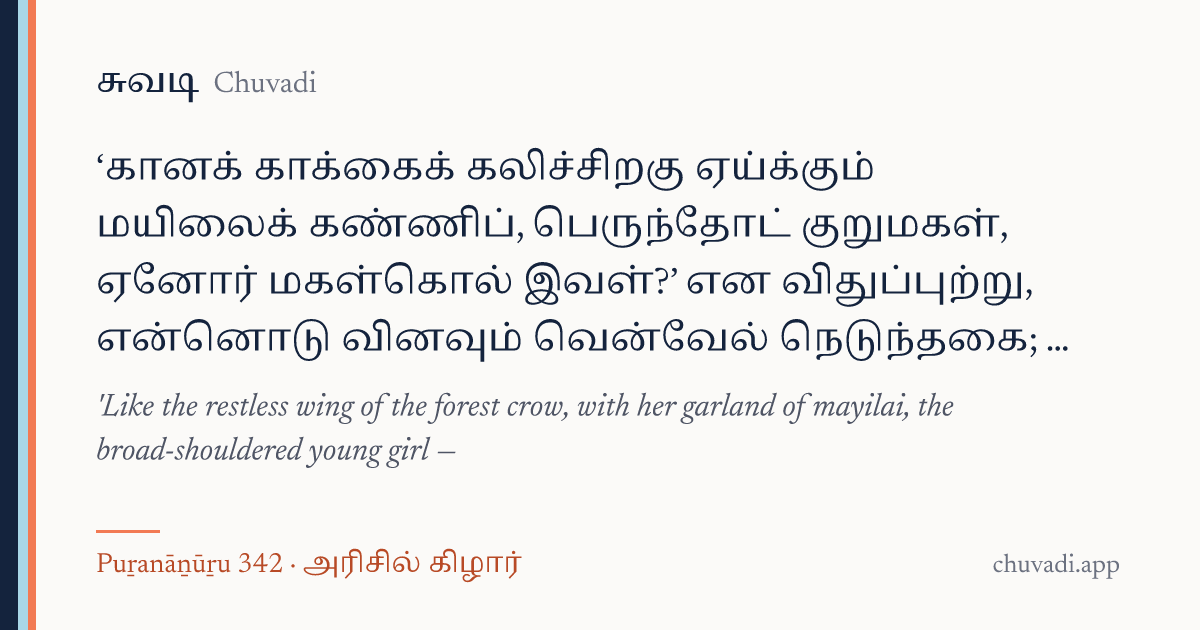
- 'Like the restless wing of the forest crow,
- with her garland of mayilai, the broad-shouldered young girl —
- whose daughter is she?' so, eagerly,
- the noble one with the victorious spear asks me;
- the beauty of this girl, with qualities that fortune itself would desire,
- is for none but warriors, and for no one else;
- the gape-mouthed chick of the green-legged heron,
- after feeding on the soft muddy shore,
- gets the tiny eggs that the āral fish has laid
- together with the young of the sharp, fine prawn —
- her father is the lord of such cool, well-watered land; and the kings,
- since they could not have her, wage great war;
- with heaps of the fallen dead piled like stacks of sheaves, and ruined elephants for oxen,
- their swords fit for the work, every day they thresh the field —
- such is the glory of this girl's brothers.
What the poem says
Aricil Kiḻār's speaker reports a question: a noble warrior, seeing a broad-shouldered young girl wearing a garland of mayilai flowers, has eagerly asked whose daughter she is. The reply is a warning. Her beauty is only for warriors. Her father is the lord of rich wetlands, where even a heron chick can feed on fish eggs and baby prawns from the mud. Kings who failed to win her have gone to war, and her brothers work the battlefield every day like a threshing floor, with heaps of the slain as their stacks of sheaves and the broken elephants as their oxen.
The tiṇai is kāñci, the poetry of transience and the losses of war, and the turai makaṭpāṟ kāñci.
The opening comparison with the crow's wing probably refers to the dark glossy colour of her hair or garland; the construction does not make clear which. 'Mayilai' is a flower used in garlands. The threshing image of lines 13–14 is one of the strongest pictures of war in this group: the work of the farm turned into slaughter.