



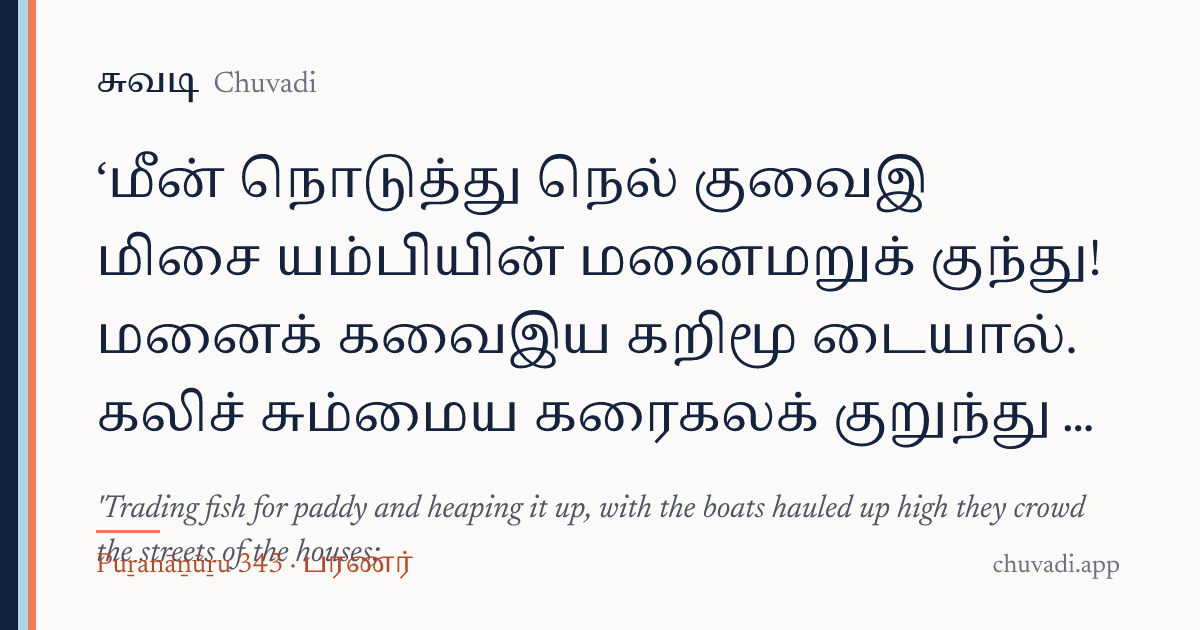
புறநானூறு 343
பாடல் · The poem
Tap a word to see where else it occurs.
பொருள் · Meaning in TamilAI
'மீனை விற்று நெல்லைக் குவித்து, மேலே ஏற்றி வைத்த படகுகளால் வீட்டுத் தெருக்கள் நெருக்கமடைகின்றன. வீடுகளைச் சுற்றிக் குவித்த மிளகு மூட்டைகளால், ஆரவாரம் மிகுந்த கடற்கரை கலங்குகிறது. கப்பல்கள் கொண்டுவந்த பொன்னைக் கூலியாகக் கழியில் செல்லும் தோணிகள் கரைசேர்க்கின்றன. மலையில் விளையும் பொருள்களையும் கடலில் கிடைக்கும் பொருள்களையும் ஒன்றாகக் குவித்து, வருபவர்களுக்கெல்லாம் கொடுக்கும், ஆறுபோலப் பெருகும் கள்ளையும் பொன்மாலையையும் உடைய குட்டுவனின், கடல் முழவு போல முழங்கும் முசிறி என்னும் ஊரைப் போன்ற சிறந்த செல்வத்தைப் பணிந்து கொடுத்தாலும், தனக்கு ஒப்பில்லாதவர்களை இவள் மணக்கமாட்டாள்' என்று சொல்லி அவள் தந்தையும் கொடுக்கமாட்டான். அப்படியானால், வந்த பகைவர்கள் மதிலில் ஏணிகளை உறுதியாகச் சாத்திவிட்டனர். பருந்துகள் ஓய்வெடுத்து மதிலின் நடுவே தங்கும், மதில் சூழ்ந்த, படைகள் கலந்து நிறைந்த அரிய வழிகளையுடைய இந்த உயர்ந்த நல்ல ஊர் இனித் துன்பப்படுமோ?
இது காஞ்சித் திணையில், மகட்பாற் காஞ்சி என்னும் துறையில் அமைந்த பாடல்; பாடியவர் பரணர். குட்டுவனும் முசிறியும் உவமையில் மட்டுமே குறிக்கப்படுகின்றனர். 'பொற் பரிசம்' என்பது வணிகத்துக்காகத் தரப்பட்ட பொன் என்று கொள்ளப்பட்டுள்ளது; 'பரிசம்' மணப்பெண்ணுக்குத் தரும் பொருளையும் குறிக்கலாம்.
ஆங்கிலம் · English translationAI
Translation
- 'Trading fish for paddy and heaping it up,
- with the boats hauled up high they crowd the streets of the houses;
- with sacks of pepper heaped all round the houses,
- the shore, loud with clamour, is churned and stirred;
- the gold brought by the ships in payment
- is carried to the shore by the boats of the backwater;
- the riches of the hills and the riches of the sea
- he heaps together and gives to all who come,
- Kuṭṭuvaṉ of the golden garland and of toddy flowing like a stream;
- like his Muciṟi, where the sea roars like a drum,
- even if they bow down and offer excellent wealth,
- she will not be wed to men who are not her equals' — so
- her father will not give her; and if so, those who have come
- have set up their ladders firmly; and so, there,
- will it suffer, I wonder — where the kite rests its breath
- and roosts upon the middle of the wall, within its ramparts,
- this tall, good town, its hard paths thronged with armies?
What the poem says
Paraṇar opens with a busy port. Fish are bartered for paddy, boats are pulled up into the streets, sacks of pepper lie heaped by the houses, the beach is loud with traffic, and gold that ships have brought in payment is ferried ashore by small boats from the backwaters. This is Muciṟi, the port of Kuṭṭuvaṉ, who gathers the goods of hill and sea and gives them away to all who come. The girl of the poem is compared to this town in wealth and worth: even if suitors bow and offer such riches, her father will not give her to anyone who is not her equal. The enemy have already set their scaling ladders against the walls. Will her tall town, its walls so high that kites perch there, suffer now?
The tiṇai is kāñci, the poetry of transience and the losses of war, and the turai makaṭpāṟ kāñci, the refused proposal. Kuṭṭuvaṉ and Muciṟi are named as the poem gives them, in a simile.
'Poṟ paricam' in line 5 is taken as gold brought as payment for goods; 'paricam' can also mean a bride-price, which would echo the theme, but here it seems commercial. The quotation is closed at line 12, giving the father's words; the edition's marks support this. 'Paruntu uyirttu' in line 15 is read as the kite resting on the wall.