



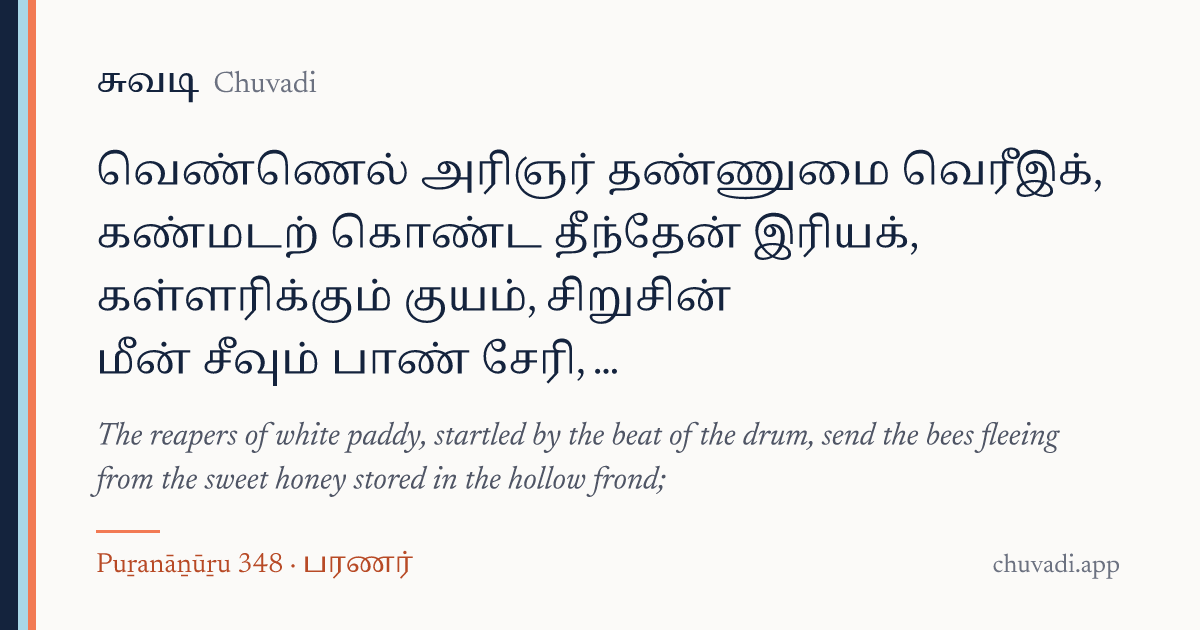
புறநானூறு 348
பாடல் · The poem
Tap a word to see where else it occurs.
பொருள் · Meaning in TamilAI
வெண்ணெல் அறுப்பவர்கள் அடிக்கும் தண்ணுமைப் பறையின் ஒலிக்கு அஞ்சி, பனை மடலின் குழியில் சேர்த்த இனிய தேனை விட்டு வண்டுகள் ஓடுகின்றன; கள்ளின் அருகே அரிவாள் அறுக்கிறது; பாணர் சேரியில் சிறு மீன்கள் செதிள் சீவப்படுகின்றன. இப்படிப்பட்ட, சொன்ன சொல் தவறாத தழும்பனுடைய ஊணூரைப் போன்றவள், குவளை மலர் போன்ற மையுண்ட கண்களை உடைய இவள். இவளைத் தாய் பெறாமல் இருந்திருந்தால், ஒவ்வொரு நிழலிலும் நெடிய தேர்கள் நிற்கவும், ஒவ்வொரு இடத்திலும் சிவந்த நெற்றியுடைய யானைகள் கட்டப்படவும், நம் பெருந்துறையில் உள்ள மரங்கள் இப்படி ஓயாமல் வருந்தியிருக்க மாட்டா.
இது காஞ்சித் திணை, மகட்பாற் காஞ்சித் துறை: பெண் கேட்டு வந்த வேந்தரால் ஊருக்கு நேரும் துன்பம் பற்றியது. பாடியவர் பரணர். மூன்றாம் அடியில் உள்ள 'கள்ளரிக்கும் குயம்' என்பதன் பொருள் உறுதியாகத் தெரியவில்லை.
ஆங்கிலம் · English translationAI
Translation
- The reapers of white paddy, startled by the beat of the drum,
- send the bees fleeing from the sweet honey stored in the hollow frond;
- there the sickle cuts by the toddy, and a few small
- fish are scaled in the bards' quarter —
- like Ūṇūr of Taḻumpaṉ, whose word holds true,
- is this girl with eyes like kuvaḷai flowers. If her mother
- had never given birth to her, then, endlessly,
- with tall chariots standing in every patch of shade, and in every place
- red-browed elephants tethered,
- they would not be suffering — the trees of our great river-landing!
What the poem says
Paraṇar's poem is another of the makaṭpāṟ kāñci group: kings have come to win a girl, and the settlement braces for what their anger may bring. The speaker looks at the trees of the village landing, crowded with the suitors' chariots and elephants, and wishes the girl had never been born.
The first half is a picture of Ūṇūr, the town of Taḻumpaṉ 'whose word is true', and the girl is said to be like it, rich and desirable. Harvesters of white paddy are startled by a drum and the bees fly off from honey gathered in a palm-frond; toddy, sickles and the fish that bards' families scale for food fill out the scene. Line 3 is obscure ('kaḷ arikkum kuyam'); 'the sickle cuts by the toddy' is a guess, and the line may describe something else being cut or strained.
The ending turns the praise of her beauty into grief: because she exists, every shady place holds a tall chariot and every spot a tethered elephant, and the trees themselves suffer the strain.