



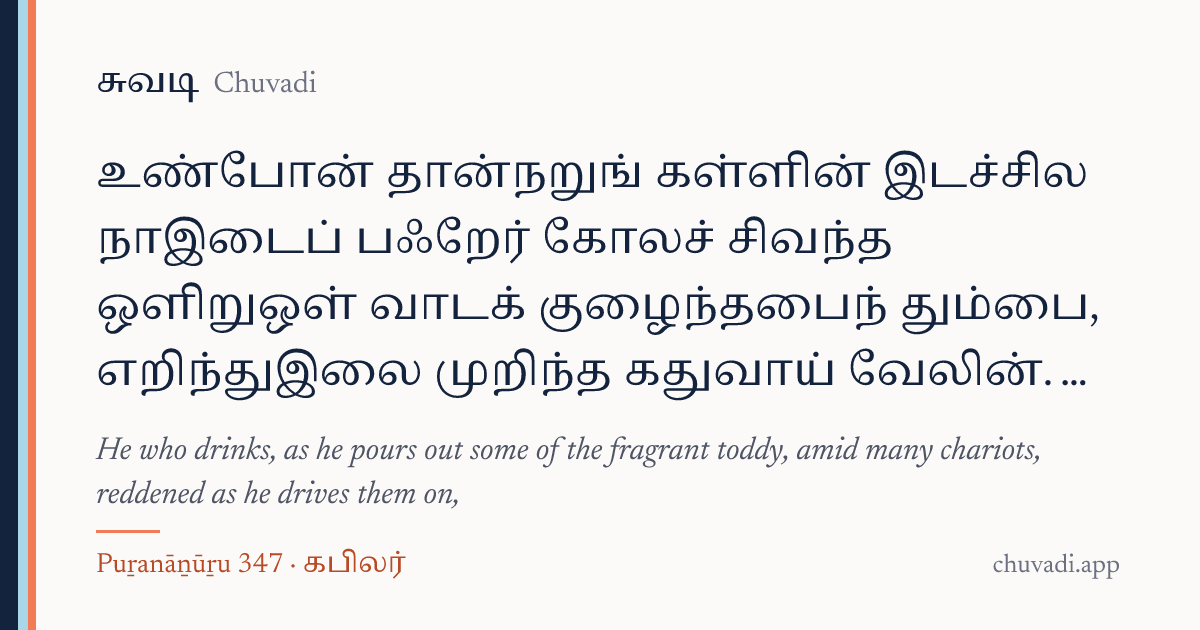
புறநானூறு 347
பாடல் · The poem
Tap a word to see where else it occurs.
பொருள் · Meaning in TamilAI
அவன் நறுமணக் கள்ளை உண்பவன்; உண்ணும்போது அதில் சிறிது சிந்துகிறான் போலும்; பல தேர்களிடையே செலுத்திச் சிவந்தவன்; அவனுடைய ஒளிவீசும் பசுந்தும்பை மாலை வாடிக் கசங்கியிருக்கிறது; எறிந்ததனால் இலை முறிந்து பல் விழுந்த வேல் அவனிடம் உள்ளது. மணம் கமழும் மார்பும் வீரப் போரும் உடைய அகுதை என்பவனின், ஆழ்ந்த நீர் சூழ்ந்த கூடல் நகரைப் போன்றவள் இவள்; அடர்ந்த கரிய கூந்தலும் வளரும் முலைகளும் உடையவள். இவளை மணம் கேட்டு வருகிறார்கள்; இதனால் என்ன ஆகுமோ? … பருத்த அடிமரத்தோடு விளங்கும் மரங்களாக இருந்தாலும், வேந்தர்களின் போர்ப்பயிற்சி பெற்ற யானைகளை அவற்றில் கட்டுவதால், நம் ஊரில் உள்ள மரங்கள் வேரோடு அசைகின்றன.
இது காஞ்சித் திணை, மகட்பாற் காஞ்சித் துறை: பெண்ணை மணம் கேட்டு வேந்தர் வர, அவள் வீட்டார் மறுக்க, ஊருக்கே அழிவு நேருமோ என்று அஞ்சுவதைச் சொல்வது. பாடியவர் கபிலர். முதல் இரண்டு அடிகளின் பொருள், சிறப்பாக 'நாஇடை' என்ற சொல், உறுதியாகத் தெரியவில்லை; எட்டாம் அடியில் சில சொற்கள் விடுபட்டுள்ளன.
ஆங்கிலம் · English translationAI
Translation
- He who drinks, as he pours out some of the fragrant toddy,
- amid many chariots, reddened as he drives them on,
- his bright, shining garland of green tumpai wilted and crushed,
- his notched spear, its blade broken from hurling —
- Akutai of fierce battles, whose chest breathes fragrance:
- like his Kūṭal, ringed by deep waters,
- is she of thick dark hair and rising breasts; as they ask for her,
- what will come of it? …
- Though they stand bright on their thick trunks, as the kings'
- war-trained elephants are tethered to them,
- they are shaken to the roots, the trees in our town.
What the poem says
Kapilar's poem belongs to kāñci, the theme of impermanence and danger, in the turai 'makaṭpāṟ kāñci': kings come demanding a girl in marriage, her family refuses, and a war threatens the whole settlement. The speaker, probably someone of the girl's town, wonders aloud what will come of it.
The opening lines are the hardest. They seem to picture a fighter fresh from battle: he drinks toddy and pours some out, his tumpai garland (the flower worn in battle) is crushed, his spear-blade is notched and broken. Whether this is a suitor king or one of the girl's own kin is not clear, and line 2 ('nā iṭai', literally 'between the tongue'?) is doubtful; the rendering here is a guess. The girl herself is compared to Kūṭal ringed by deep water, the town of the warrior Akutai, a way of saying she is a prize as rich as a famous city.
Line 8 has a gap after the question. The closing image carries the poem's dread: the trees of the town, strong as they are, are shaken to their roots by the war-elephants the kings have tied to them while they wait for an answer.