



புறநானூறு 351
பாடல் · The poem
Tap a word to see where else it occurs.
பொருள் · Meaning in TamilAI
ஒலிக்கும் மணிகளைப் பக்கங்களில் கட்டிய, பருத்த கால்களை உடைய யானைகளும், மேலே கொடிகள் அசையும் தேர்களும், குதிரைகளும், படைக்கலம் ஏந்திய வீரர்களோடு ஆரவாரத்துடன் நெருங்கியுள்ளன. கடலைக் கண்டது போல அகன்று பரந்த படையும், வெற்றிக்காக முழங்கும் முரசும் உடைய வேந்தர்கள், வள்ளன்மை மிக்க கையையுடைய எயினனின் வாகை என்ற ஊரைப் போன்ற இவளுடைய அழகைத் தங்களுக்குத் தராவிட்டால் ஒருநாளும் அமைதியடைய மாட்டார்கள். தெளிந்த நீருடைய பொய்கையில் இரை தேடும் செவ்வரி நாரை, தேன் நிறைந்த மருத மரத்தின் பூங்கிளையில் இருந்து அலுத்தால், அழகிய காஞ்சி மரத்தில் சென்று தூங்கும். அப்படிப்பட்ட காவல் நிறைந்த சிறப்புடைய, வயல்கள் சூழ்ந்த இந்த நல்ல ஊர் என்ன ஆகுமோ?
இது காஞ்சித் திணை, மகட்பாற் காஞ்சித் துறை: பெண் கேட்டு வந்த வேந்தரின் படையால் அமைதியான ஊருக்கு வரும் அச்சம் பற்றியது. பாடியவர் மதுரைப் படைமங்க மன்னியார். எயினனைப் பற்றி இப்பாடல் வேறு எதுவும் சொல்லவில்லை.
ஆங்கிலம் · English translationAI
Translation
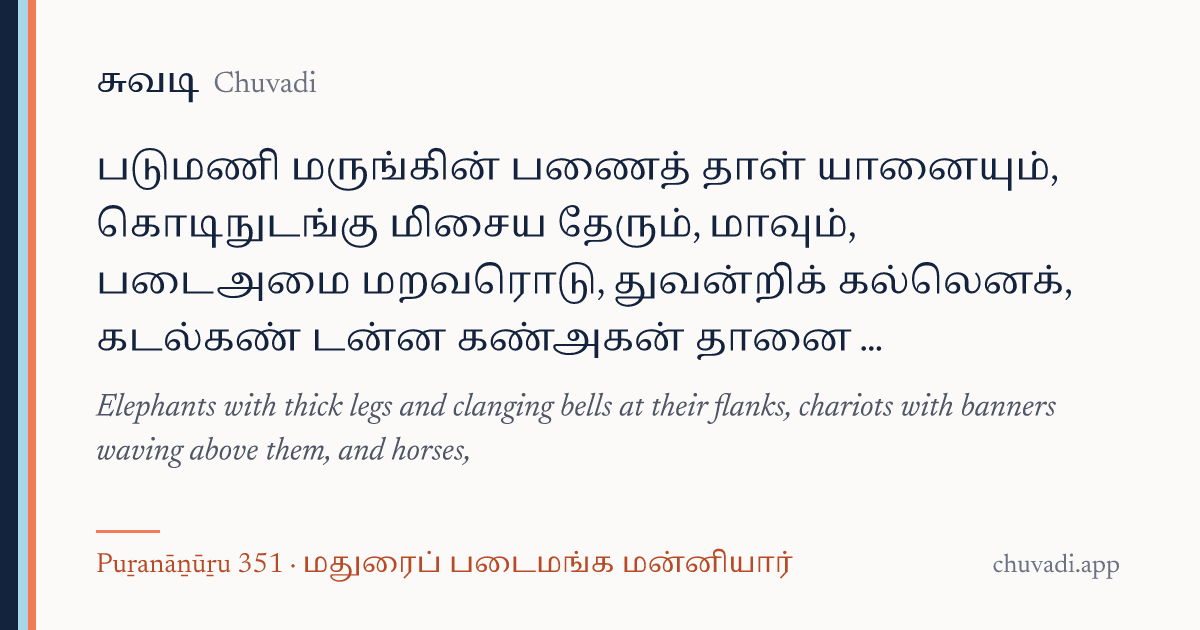
- Elephants with thick legs and clanging bells at their flanks,
- chariots with banners waving above them, and horses,
- with warriors armed for battle, all crowding in uproar —
- an army spread wide, like a sight of the sea,
- the kings whose drums are beaten for victory will never,
- her beauty, like Vākai of Eyiṉaṉ of the generous hand,
- unless it is given to them, be content.
- What will become of it, then — where in clear water
- the red-striped heron that feeds in the pool,
- when it tires of the flowering boughs of the honeyed marutu,
- goes to sleep in the lovely kāñci tree —
- this fine town of fields, so rich in safety?
What the poem says
Maturaip Paṭaimaṅka Maṉṉiyār writes another poem of makaṭpāṟ kāñci, the fear a village feels when kings come demanding one of its daughters.
The first half fills the scene with the suitors' army: bell-hung elephants, bannered chariots, horses and armed men, spread out like the sea. These kings, whose drums have sounded for many victories, will not go away content unless they are given the girl. Her beauty is compared to Vākai, a place belonging to the generous Eyiṉaṉ; the poem gives no more about him.
The second half is a quiet counter-picture: a heron feeds in a clear pool, and when it tires of the flowering marutu it goes to sleep in the kāñci tree. The town is a place of fields and safety where even birds rest without fear. The question 'what will become of it?' sets that peace against the army at its edge. The kāñci tree here may also nod to the poem's theme, kāñci, whose name it shares.