



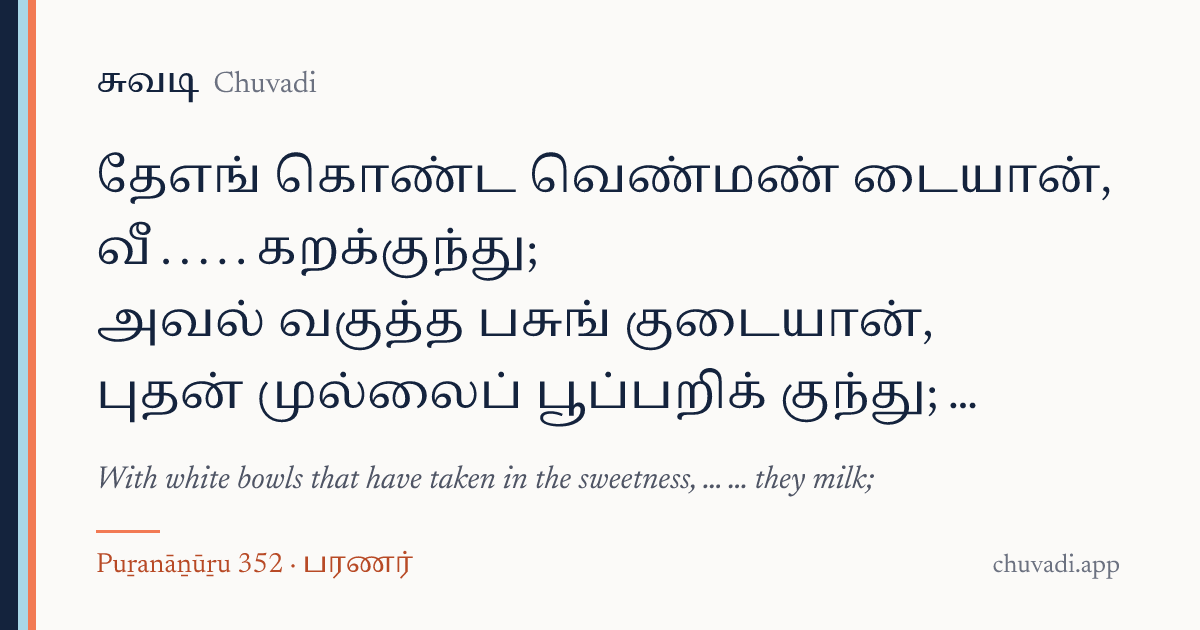
புறநானூறு 352
பாடல் · The poem
Tap a word to see where else it occurs.
பொருள் · Meaning in TamilAI
தேன் போன்ற இனிமையைக் கொண்ட வெள்ளைக் கலயங்களில் … பால் கறக்கிறார்கள்; அவல் இடுவதற்காகச் செய்த பசுமையான இலைக் குடைகளில் புதர்களில் உள்ள முல்லைப் பூக்களைப் பறிக்கிறார்கள்; ஆம்பல் தண்டு போன்ற வளையல் அணிந்த கைகளை உடைய பெண்கள் மேட்டின் மேல் ஏறி நீரில் பாய்ந்தால், வெள்ளம் கரையை நோக்கித் தள்ளப்படுகிறது. … விற்பனைக்குரிய கள்ளும், பெருங்கொடையும் உடைய தித்தனின், வெண்ணெல் வயலையே வேலியாகக் கொண்ட உறந்தையைப் போன்ற புகழ்பெற்றவள் இவள். அரிய நல்ல அணிகலன்களைக் கொடுத்தாலும் அவன் ஏற்றுக்கொள்ள மாட்டான் … புதிதாகப் பூத்த இளம் வேங்கை மரம் போல, ஒளி வீசும் நுண்ணிய பல தேமல்களும், கருமுனை விரிந்த முலைகளும் உடையவள் அவள். அவளுடைய அண்ணனும் சிறு கோலும் தலையாட்டமும் உடைய குதிரைகளோடு … போர் …
இது காஞ்சித் திணை, மகட்பாற் காஞ்சித் துறை. பாடியவர் பரணர். இப்பாடலில் பல அடிகள் சிதைந்து விடுபட்டுள்ளன; இறுதி அடியில் கடைசி எழுத்துகள் மட்டுமே உள்ளன. ஏழாம் அடியின் பொருள் உறுதியாகத் தெரியவில்லை; முழுப் பாடலின் கருத்தையும் மீட்க முடியவில்லை.
ஆங்கிலம் · English translationAI
Translation
- With white bowls that have taken in the sweetness,
- … … they milk;
- with fresh leaf-cups shaped for beaten rice,
- they pluck the flowers of the jasmine on the bushes;
- women whose bangled arms are like āmpal stems,
- when they climb the mound and leap into the water,
- push the flood back against its banks with the outer edge;
- … … toddy for barter,
- Tittaṉ of great giving, whose white paddy is his fence —
- like his Uṟantai, famed and fine; though rare jewels
- are offered, he will not take them …
- … like a young vēṅkai tree just come into bloom,
- with many fine spots that shine with radiance,
- her dark-tipped breasts have opened; and her brother, too,
- horses with plumes and small whips …
- … … … battle.
What the poem says
This poem of Paraṇar, again in the makaṭpāṟ kāñci theme, survives only in pieces. Lines 2, 8, 11, 12, 15 and 16 are broken in the edition, and line 16 keeps only its last syllables, which may contain the word 'amar', battle. What follows is a reading of what remains, not of a whole poem.
The opening describes a rich pastoral and riverside settlement: people milk into white bowls, gather jasmine in leaf-cups, and women with bangled arms leap from a mound into the river. Line 7 ('puṟavāyāl puṉal varai untu') is obscure; the rendering is a guess. The town is then compared to Uṟantai of Tittaṉ, a lavish giver whose fields of white paddy are said to be his only hedge.
In the second half someone, probably the girl's father, refuses rich jewels offered for her. The girl is pictured like a young vēṅkai in first flower, her skin bright with the spots of youth, and her brother appears with horses, perhaps ready for the fight that the last line seems to name. The general shape matches the other poems of this group, but the details cannot be recovered.